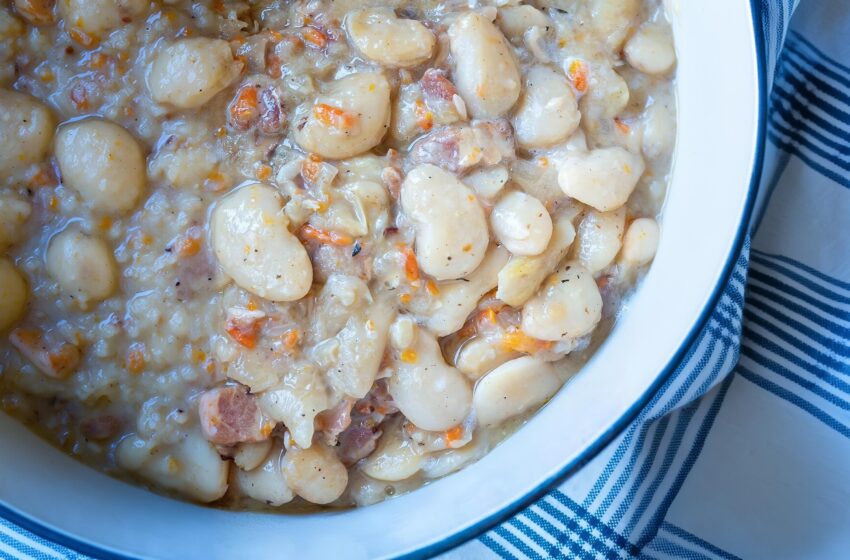
Lima beans have a reputation problem. Somewhere along the way, they became the stereotypical vegetable that kids push around their plate, but that reputation has nothing to do with how good these beans actually are. Cooked low and slow with sweet aromatics, herbs, and a stick of butter, they turn creamy, tender, and deeply savory, closer to a rich, comforting stew than the bland canned version most people remember.
This Southern-style preparation takes dried lima beans, sometimes called butter beans depending on where you live, and simmers them with onion, carrots, garlic, thyme, and vegetable broth until the beans are soft and the liquid reduces into a thick, flavorful pot likker. The recipe serves six, and while it does take some time on the stove, the actual hands-on work is minimal. This guide covers the complete recipe, the reasoning behind each ingredient, the details that keep the beans creamy instead of mushy or tough, and plenty of ideas for variations, storage, and serving.
Butter Beans or Lima Beans? What’s the Difference?
They are, for practical purposes, the same bean, just at different stages and under different regional names. Lima beans usually refers to the smaller, green version most commonly found frozen or canned. Butter beans usually refers to the larger, more mature, cream-colored version of the same bean. In the South and in many other regions, the larger dried version is almost always called butter beans, which is also a nod to their naturally rich, buttery texture once cooked.
Whatever you call them, dried lima or butter beans are what this recipe uses, and their starchy, creamy interior is exactly what makes this dish so satisfying.
Why You’ll Love This Recipe
- Deeply flavorful. Aromatics, herbs, and a full stick of butter build a rich, savory base without any meat.
- Naturally gluten-free and vegetarian. A comforting side that fits a wide range of dinner tables.
- Feeds a crowd. The recipe serves six as a hearty side dish.
- Mostly hands-off. Once the beans go into the pot, they simmer largely unattended.
- A pantry-friendly dish. Dried beans and basic aromatics are easy to keep on hand.
- Great for meal prep. The flavor deepens overnight, so leftovers are just as good, if not better.
- A true Southern classic. This is the kind of dish that turns skeptics into lima bean fans.
- Freezer friendly. A big batch can be portioned and frozen for later.
Ingredients You’ll Need
The ingredient list is simple, and each item has a role to play.
Dried Lima Beans
You need 1 pound of dried lima beans. Dried beans, rather than canned, are essential here, since they slowly absorb the broth and butter as they simmer, developing a much deeper flavor and creamier texture than canned beans ever could.
Butter (for sautéing)
You need 2 tablespoons of butter for sautéing the vegetables at the start, in addition to the butter added later. Without bacon fat to cook the aromatics in, butter carries that same rich base flavor.
Yellow Onion
You need 1 yellow onion, diced. Onion adds sweetness and savory depth, softening completely as it cooks.
Carrots
You need ½ cup of shredded carrots. Shredded carrots melt into the background of the dish, adding a subtle sweetness and a little color without standing out as a distinct vegetable.
Garlic
You need 2 cloves of garlic, minced. Garlic rounds out the savory base alongside the onion.
Dried Thyme
You need ½ teaspoon of dried thyme. Thyme brings an earthy, slightly floral note that is classic in Southern bean dishes.
Garlic Powder and Onion Powder
You need ½ teaspoon each of garlic powder and onion powder. These reinforce the fresh onion and garlic, layering the flavor rather than repeating it.
Smoked Paprika (Optional, Recommended)
You need ½ teaspoon of smoked paprika. Since bacon is gone, a little smoked paprika helps bring back some of that deep, smoky backbone the dish would otherwise miss. This is optional, but it makes a real difference.
Bay Leaves
You need 2 bay leaves. Bay leaves add a subtle background depth as the beans simmer. Remove them before serving.
Butter
You need ½ cup, or 1 stick, of butter. Butter is what earns these beans their name and their rich, silky finish. It melts into the broth as the beans cook, coating each bean in a glossy, savory richness. With no bacon, the butter carries even more of the dish’s richness, so don’t be tempted to reduce it.
Vegetable Broth
You need 4 cups of vegetable broth (or chicken broth, if you don’t need the dish to stay vegetarian). Broth forms the cooking liquid, infusing the beans with savory flavor as they simmer low and slow. Keep extra broth or water on hand in case the pot needs topping off during cooking.
Salt and Pepper
Kosher salt and freshly ground black pepper, to taste. Without bacon’s built-in saltiness, season a little more generously and taste as you go.
Equipment
- A large heavy-bottomed pot or Dutch oven
- A colander for rinsing and draining
- A cutting board and knife
- A wooden spoon for stirring
- A ladle for serving
How to Make Southern-Style Butter Beans (No Bacon), Step by Step
Step 1: Prepare the Beans
Rinse the dried beans well, picking through them to remove any discolored beans or small stones, which can sometimes hide in a bag of dried beans.
You have two options for softening them before cooking. You can soak them in cold water overnight and drain them the next day, in which case you can skip ahead to Step 3. Or you can use the quick-soak method: place the beans in a large heavy-bottomed pot or Dutch oven, cover them by about 1 inch of water, and bring them to a boil. Once boiling, remove the pot from the heat, cover it, and let the beans rest for 1 hour. Drain and rinse them with cold water.
Step 2: Sauté the Aromatics
In the same large pot, melt the 2 tablespoons of butter over medium heat. Add the diced onion, shredded carrots, minced garlic, thyme, garlic powder, onion powder, and smoked paprika if using. Season lightly with salt and pepper, and sauté for about 5 minutes, until the vegetables are soft and fragrant.
Step 3: Add the Beans and Liquid
Stir in the soaked and drained beans, the bay leaves, the remaining stick of butter, and the vegetable broth. Add enough water so that the beans are fully covered by liquid, since dried beans need to stay submerged to cook evenly.
Step 4: Simmer Low and Slow
Reduce the heat so the beans are gently simmering, not boiling hard. A vigorous boil can cause the bean skins to split and turn the texture grainy, while a gentle simmer lets them soften evenly and hold their shape.
Continue simmering until the beans are tender and the liquid has thickened and reduced significantly, about 1 hour to 1 hour and 30 minutes. Check the liquid level occasionally throughout the cooking time, and add more water or broth as needed to keep the beans mostly covered until they are fully tender.
Step 5: Season and Serve
Once the beans are soft and the liquid has reduced into a thick, savory pot likker, remove the bay leaves. Taste and season generously with salt and pepper as needed, then serve hot.
Recipe Card
Southern-Style Butter Beans (No Bacon)
- Yield: 6 servings
- Prep time: 10 minutes
- Inactive time: 1 hour (for quick-soaking)
- Cook time: 1 hour 45 minutes
- Course: Side dish
- Diet: Gluten-Free, Vegetarian
Ingredients
- 1 lb dried lima beans
- 2 tablespoons butter, for sautéing
- 1 yellow onion, diced
- ½ cup carrots, shredded
- 2 cloves garlic, minced
- ½ teaspoon dried thyme
- ½ teaspoon garlic powder
- ½ teaspoon onion powder
- ½ teaspoon smoked paprika (optional)
- 2 bay leaves
- ½ cup (1 stick) butter
- 4 cups vegetable broth (or chicken broth)
- Kosher salt and freshly ground black pepper, to taste
Instructions
- If desired, soak the beans in cold water overnight and drain. If soaking overnight, skip to step 3.
- In a large heavy-bottomed pot, cover the beans with 1 inch of water and bring to a boil. Remove from heat, cover, and let rest 1 hour. Drain and rinse with cold water.
- Melt 2 tablespoons of butter over medium heat. Add the onion, carrots, garlic, thyme, garlic powder, onion powder, and smoked paprika if using. Season with salt and pepper and sauté until soft, about 5 minutes.
- Stir in the beans, bay leaves, the remaining stick of butter, and the broth. Add water as needed so the beans are covered.
- Reduce heat to a gentle simmer and cook until the beans are soft and the liquid has thickened and reduced, 1 hour to 1½ hours, checking the liquid level occasionally and topping off with water or broth as needed.
- Season generously to taste with salt and pepper and serve.
Tips for the Best Butter Beans
Sort Through the Dried Beans
Dried beans sometimes contain small stones or shriveled, discolored beans. A quick sort before rinsing prevents any unpleasant surprises.
Do Not Skip the Soak
Whether you soak overnight or use the quick-soak method, softening the beans first helps them cook more evenly and reduces the overall simmering time.
Season More Generously Without Bacon
Bacon normally does a lot of the seasoning work in this dish. Without it, taste as you go and don’t be shy with the salt.
Lean on Smoked Paprika for Depth
A little smoked paprika goes a long way toward replacing the smoky note that bacon would otherwise bring.
Keep the Simmer Gentle
A hard boil can cause the bean skins to split and the texture to turn mushy or grainy. A gentle simmer keeps the beans creamy while holding their shape.
Check the Liquid Level
Dried beans can absorb more liquid than expected. Check the pot every 20 to 30 minutes and add water or broth as needed so the beans stay mostly submerged until they are fully tender.
Remove the Bay Leaves
Bay leaves add flavor but are not meant to be eaten. Fish them out before serving.
Troubleshooting Common Problems
My Dish Tastes Bland Without the Bacon
Add more salt than you might expect, a bit more smoked paprika, and consider a small splash of soy sauce or a spoonful of nutritional yeast for extra savory depth.
My Beans Are Still Firm After the Full Cooking Time
Older dried beans can take longer to soften. Continue simmering in 15-minute increments, adding more liquid as needed, until they reach a tender, creamy texture.
My Beans Turned Mushy or Fell Apart
The liquid was likely boiling too vigorously rather than gently simmering. Keep the heat low enough that the surface only shows the occasional gentle bubble.
My Liquid Didn’t Thicken
Some batches release more starch than others. If the liquid is thinner than you’d like once the beans are tender, remove the lid and let it simmer uncovered for the last 15 to 20 minutes to reduce further.
Variations to Try
Smoky Version Without Meat
Add a splash of liquid smoke along with the smoked paprika for an even deeper smoky flavor without any meat at all.
Spicy Kick
Add a pinch of red pepper flakes or a diced jalapeño along with the onion and garlic.
Extra Vegetables
Stir in diced celery along with the onion and carrots for a fuller aromatic base, in the spirit of a classic mirepoix.
Herb Variations
Fresh thyme sprigs can replace the dried thyme, added along with the bay leaves and removed before serving. A little fresh parsley stirred in at the end adds brightness.
Slow Cooker Version
After sautéing the aromatics on the stovetop, transfer everything to a slow cooker with the soaked beans, broth, and butter. Cook on low for 6 to 8 hours, until the beans are tender.
What to Serve With Southern-Style Butter Beans
This dish is a classic Southern side, and it pairs naturally with other comfort food staples.
Main Dishes
- Roasted or grilled chicken
- Baked tofu or tempeh, for a fully vegetarian meal
- Grilled vegetables
- Cornbread as a light main with a salad
Other Sides
- Buttermilk cornbread
- Collard greens or turnip greens
- Fried okra
- Coleslaw
- Rice, to soak up the pot likker
To Drink
Sweet tea, lemonade, or a simple glass of buttermilk all suit the down-home character of this dish.
Make-Ahead, Storage, and Freezing
Make ahead: The beans can be cooked a day or two in advance. Their flavor deepens as they sit, so this dish is a great one to prepare ahead of a gathering.
Refrigerating leftovers: Store cooled beans in an airtight container in the refrigerator for up to 4 to 5 days.
Freezing: Cooled beans freeze very well. Transfer them, with some of their liquid, to freezer-safe containers or bags, leaving room for expansion, and freeze for up to 3 months.
Reheating: Warm gently on the stovetop over low heat, adding a splash of broth or water if the beans have thickened too much in the fridge or freezer. Reheat until steaming hot throughout.
Frequently Asked Questions
Will this taste as good without bacon?
It will taste different, but still very good. The smoked paprika and generous butter help fill in for the smoky, savory richness bacon normally provides.
Can I use canned lima beans instead of dried?
You can, but the texture and flavor will be quite different, since canned beans are already fully cooked and will not absorb the broth and butter flavors the same way. Reduce the simmering time significantly if using canned beans.
Do I have to soak the beans first?
Soaking, whether overnight or with the quick-soak method, helps the beans cook more evenly and can shorten the final simmering time. It is strongly recommended for the best texture.
Can I use frozen lima beans instead of dried?
Frozen lima beans are already partially prepared and will cook much faster than dried beans. Skip the soaking step and reduce the final simmer time significantly, checking for tenderness after about 20 to 30 minutes.
How do I know when the beans are done?
They should be fully tender all the way through, with no firm or chalky centers, and the cooking liquid should have thickened and reduced significantly.
Can I double the recipe?
Yes, though you may need a larger pot and a longer simmering time, since a fuller pot takes longer to reduce.
Allergen and Diet Note
This dish is naturally gluten-free and vegetarian. It contains milk from the butter. Always check the labels on your vegetable broth, since some brands include additives, and confirm it suits any dietary restrictions of the people you are serving.