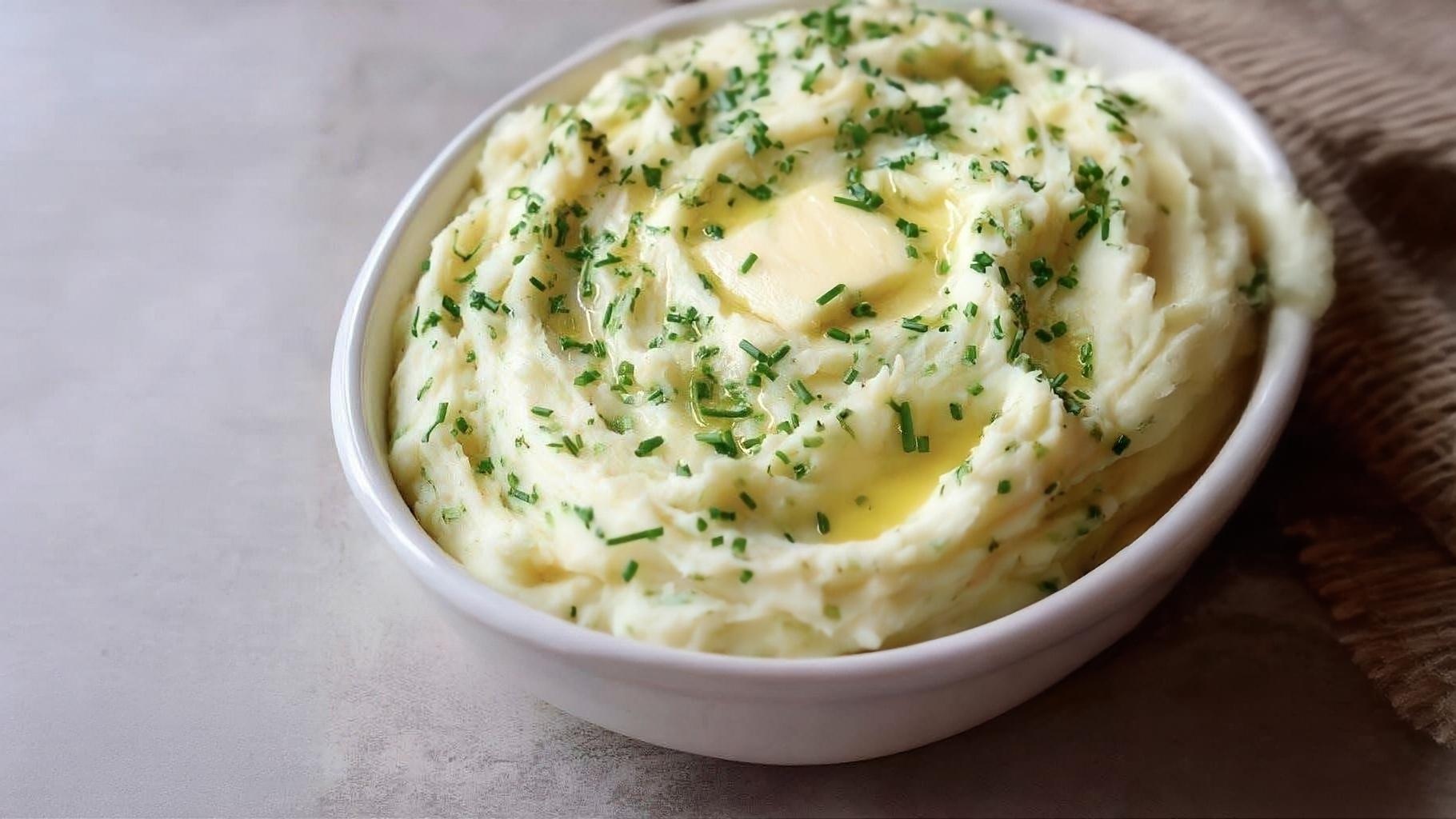
These creamy mashed potatoes are the ultimate comfort food. Buttery, smooth, and topped with fresh chives, they make the perfect side dish for any meal, from quick weeknight dinners to holiday feasts. The secret to their rich texture lies in the perfect balance of melted butter and rich cream, creating an irresistible, cloud-like consistency!
📸 The Texture and Flavor Dynamics
Achieving a restaurant-quality mash requires handling the potato starches gently while building a smooth dairy emulsion:
- Boiled Russet Potatoes (The Fluffy Base): High-starch Russets break down effortlessly into a light, floury texture, minimizing the risk of a gummy or pasty mash.
- Unsalted Butter & Cream (The Rich Matrix): Adding fat coats the potato starches, yielding a velvety mouthfeel and locking in structural moisture.
- Sour Cream (The Tangy Secret): Introduces a subtle, bright acidity that balances the heavy dairy fats while adding an extra layer of body.
- Fresh Chopped Chives (The Herbal Finish): Provides a delicate, mild onion note and a vibrant pop of color to cut through the rich depth of the spuds.
Recipe Overview
- Prep time: 15 minutes
- Cook time: 15 to 20 minutes
- Total time: ~35 minutes
- Yield: 4 to 6 Servings
What You’ll Need
- 2 lbs (about 4 large) Russet potatoes: Peeled and cut into uniform chunks.
- ½ cup Unsalted butter: Room temperature (plus an extra pat to drop on top when serving).
- ½ cup Whole milk or heavy cream: Warmed (adjust to match your desired level of looseness).
- ¼ cup Sour cream: Optional, for an ultra-creamy, premium finish.
- ¼ cup Fresh chives: Finely chopped.
- 1 tbsp Olive oil: Optional, drizzled over the top for extra richness.
- Seasonings: Kosher salt and freshly cracked black pepper to taste.
Step-by-Step Instructions
Step 1: Cook the Potatoes to Fork-Tender
Place your peeled and chopped potato chunks into a large pot and cover them completely with cold water. Ensure the water sits at least an inch above the spuds. Bring the pot to a rolling boil over high heat, then cook for 15 to 20 minutes. You will know they are ready when the largest chunks are completely fork-tender and yield easily through the center.
Step 2: Thoroughly Drain and Dry
Drain the potatoes thoroughly into a colander over the sink.
💡 Chef’s Trick: Return the drained potatoes immediately back into the warm, empty pot off the heat for 60 seconds. This allows any residual surface water to evaporate completely as steam. Eliminating this excess water ensures your spuds absorb the butter and cream fully rather than turning watery!
Step 3: Begin the Master Mash
Mash the hot potatoes right inside the pot using a sturdy potato masher or a hand mixer on low speed. Work the pieces thoroughly until they are completely smooth, fluffy, and free of any dense lumps.
Step 4: Incorporate the Butter and Warmed Cream
While the mash is still steaming hot, add the ½ cup of room-temperature butter, mixing gently until it is entirely melted and incorporated. Gradually pour in the warmed whole milk or heavy cream a little at a time, folding until you achieve your preferred velvety consistency. For an extra luxurious finish, fold in the ¼ cup of sour cream now.
Step 5: Season to Perfection
Season the smooth mash generously with kosher salt and freshly cracked black pepper according to your personal taste, giving it one final light whip to distribute the spices uniformly.
Step 6: Garnish and Serve Hot
Fold most of your chopped fresh chives directly into the warm potatoes. Transfer the mash into a beautiful serving bowl. Use the back of a spoon to create a few rustic swirls across the surface, drop a fresh pat of butter in the center to melt into the grooves, scatter the remaining chives over the top, and drizzle with a touch of olive oil if desired. Serve piping hot!
💡 Expert Tips for Success
- Always Start in Cold Water: Never drop raw potato chunks directly into a pot of pre-boiling water. Doing so cooks the outside of the potato rapidly, causing it to flake off and break apart before the dense inner core has a chance to soften. Starting in cold water ensures the potato pieces heat up and cook uniformly from edge to center.
- Warm Your Liquid Elements: Always warm your milk or heavy cream slightly before pouring it into the mashed potatoes. Pouring freezing-cold liquid straight from the refrigerator shocks the hot potato starches, causing the fats to seize and altering the silky texture of the mash.
- Avoid Over-Working the Dough: Whether using a manual masher or a hand mixer, stop mixing the exact second the lumps disappear. Over-processing or whipping potatoes too aggressively breaks open the vegetable’s cellular walls, releasing excessive starch that transforms a light, fluffy mash into a sticky, glue-like paste.
Variations and Substitutions
- The Roasted Garlic Upgrade: Roast a whole head of garlic in the oven with olive oil until the cloves are caramelized and soft, then mash the sweet paste directly into the potatoes along with the butter for a rich flavor profile.
- The High-Protein Light Twist: If you want a lighter version or are tracking macros, you can seamlessly substitute the sour cream and part of the milk for thick, plain Greek yogurt to introduce a beautiful tang and extra protein.
- The Loaded Farmhouse Style: Fold a handful of shredded sharp cheddar cheese and some crispy, crumbled beef bacon directly into the warm mash right before serving to create a spectacular, loaded potato feast.
❓ Frequently Asked Questions (FAQs)
How should I handle and store leftover mashed potatoes?
Slide any leftover mashed potatoes into an airtight container and store them inside the refrigerator within 2 hours of cooking. They stay exceptionally fresh, rich, and delicious for up to 3 to 4 days!
What is the best way to reheat them so they stay creamy?
Because potato starches tighten up and absorb moisture as they sit in the cold fridge overnight, leftovers can look a bit stiff the next day. To restore their original cloud-like texture, reheat them in the microwave or inside a saucepan over low heat on the stove, adding a fresh splash of warm milk or cream while stirring continuously to loosen the network back up perfectly!
Can I make this recipe with Yukon Gold potatoes instead of Russets?
Absolutely! Yukon Gold potatoes make an incredible substitution. While Russets yield a lighter, fluffier texture, Yukon Golds have an inherently waxier, yellow flesh that produces an exceptionally rich, buttery, and dense mash that tastes incredibly indulgent.

