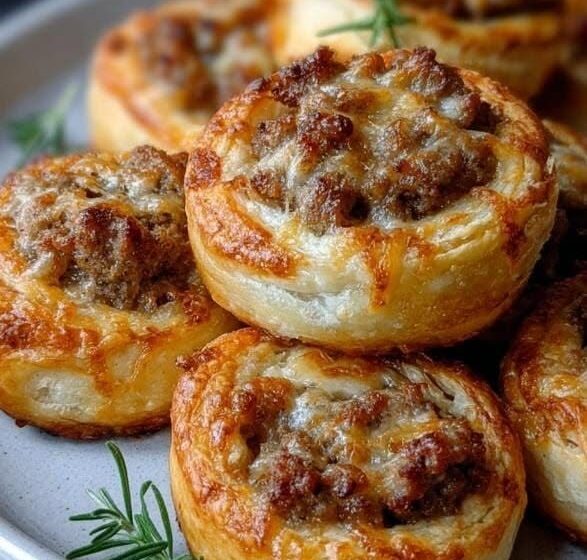
Few snacks are as satisfying as a warm sausage roll: crisp, flaky pastry on the outside and a juicy, seasoned filling on the inside. These Sausage Puff Pastry Rolls start with store-bought puff pastry, so there is no dough to make. The filling is a simple mix of ground sausage, breadcrumbs, onion, garlic, thyme, rosemary, and black pepper, with optional cheese. The pastry is cut into rectangles, rolled around the filling, brushed with egg wash, and baked at 400°F until puffed and golden.
They suit a party table, a picnic, a holiday gathering, or a casual family dinner, and they can be made ahead and frozen. The recipe lists 15 minutes of prep and 25 minutes of cooking.
This guide covers why you will love the recipe, what each ingredient does, the method step by step with the reasoning behind it, a recipe card, tips for handling puff pastry, variations, serving ideas, make-ahead, storage and freezing, troubleshooting, and answers to frequently asked questions.
Why You Will Love These Sausage Puff Pastry Rolls
- Flaky pastry, savory filling. The crisp layers contrast with the juicy, seasoned sausage.
- Store-bought puff pastry. No dough to make or fold.
- Simple filling. Mix everything in one bowl.
- Good for many occasions. Gatherings, casual dinners, picnics, and holiday parties.
- Easy to adapt. Choose pork, chicken, or turkey sausage, add cheese, or change the herbs.
- Eat them warm or at room temperature. The source says both work.
- Freezer friendly. Assemble and freeze them unbaked for a last-minute snack.
- Quick. The source lists 15 minutes of prep and 25 minutes of cooking.
At a Glance
| Detail | Amount |
|---|---|
| Course | Snack |
| Cuisine | British (as listed by the source) |
| Difficulty | Easy |
| Servings | 4 |
| Prep time | 15 minutes |
| Cook time | 25 minutes |
| Oven temperature | 400°F (200°C) |
| Bake time | 20 to 25 minutes |
| Pastry cut size | About 4×6-inch rectangles |
| Internal temperature | At least 160°F (71°C), according to the source (see the note on food safety) |
The source does not give a calorie count or say how many rolls the recipe makes. [Editor note: please add the number of rolls, which depends on the size of the pastry package, and the nutrition information if you have it.]
Ingredients for Sausage Puff Pastry Rolls
For the Rolls
- 1 package store-bought puff pastry, thawed
For the Sausage Filling
- 1 pound ground sausage (pork, chicken, or turkey)
- 1/2 cup breadcrumbs
- 1 small onion, finely chopped
- 1 clove garlic, minced
- 1 teaspoon dried thyme
- 1 teaspoon dried rosemary
- 1/2 teaspoon black pepper
- 1/4 teaspoon salt (optional, depending on the sausage)
- 1/2 cup shredded cheese (optional)
For the Egg Wash
- 1 egg, beaten
- 1 tablespoon water
[Editor note: the source does not give the size or weight of the puff pastry package, and sizes vary. Please add a weight or the number of sheets, since it determines how many rolls you can cut.]
A Closer Look at the Ingredients
Puff Pastry
The source calls for one package of store-bought puff pastry, thawed. For the best flavor and flakiness, it suggests choosing a high-quality pastry made with real butter. The pastry should be cold when you work with it to keep it from sticking.
Ground Sausage
One pound of ground sausage is the heart of the filling. The source says pork, chicken, or turkey will work, and suggests a well-seasoned sausage or adding extra spices if yours is mild. It also suggests flavored sausages, such as apple or maple, for a twist.
Breadcrumbs
Half a cup of breadcrumbs binds the filling and adds a little texture. The source says panko can be used for a lighter, crispier filling.
Onion
One small onion, finely chopped, adds sweetness. The source notes that sautéing the onion before adding it can deepen the flavor.
Garlic
One minced clove adds fragrance. The source says roasted garlic can be used for a milder, slightly sweet taste.
Dried Thyme and Dried Rosemary
One teaspoon of each brings earthy and piney notes that pair well with sausage. The source says fresh thyme can replace dried but the quantity should be doubled, and that crushed rosemary releases more flavor.
Black Pepper
Half a teaspoon adds heat and complexity. The source says freshly cracked pepper has a stronger aroma and flavor.
Salt
A quarter teaspoon is optional, depending on how well seasoned the sausage already is.
Shredded Cheese
Half a cup of shredded cheese is optional and turns the rolls into sausage and cheese pastries. The source suggests cheddar or mozzarella, and says sharp cheddar gives a more intense flavor.
Egg and Water
A beaten egg whisked with a tablespoon of water makes a wash that gives the pastry a glossy, golden finish. The source says milk can be used in place of the water.
How to Make Sausage Puff Pastry Rolls
Step 1: Preheat the Oven
Preheat the oven to 400°F (200°C) and line a baking sheet with parchment paper.
The parchment prevents sticking. A hot oven helps the pastry puff quickly and become flaky.
Step 2: Make the Sausage Filling
In a large mixing bowl, combine the ground sausage, breadcrumbs, onion, garlic, thyme, rosemary, black pepper, and salt. Mix until all the ingredients are well incorporated. If you like, add the shredded cheese.
Mix evenly so there are no clumps and the flavor is consistent. The source says letting the mixture sit for a few minutes allows the flavors to meld.
Step 3: Roll Out and Cut the Pastry
On a lightly floured surface, roll out the puff pastry to smooth out any creases. Cut it into rectangles of about 4×6 inches. Use a sharp knife or pizza cutter for clean edges.
Keep the pastry slightly chilled while you work. Cold pastry holds its structure and is easier to handle.
Step 4: Fill and Shape the Rolls
Place a generous spoonful of the sausage mixture onto one end of each rectangle. Roll the pastry around the filling, with the seam on the bottom. Press the edges to seal and place the rolls on the prepared baking sheet.
For a tight seal, the source says you can crimp the edges with a fork, which also adds a decorative touch. It also suggests making small cuts on top of each roll so steam can escape.
[Editor note: the source does not say how much filling a “generous spoonful” is, or which direction to roll the 4×6 rectangle. Please add a measure, such as a tablespoon amount, and the rolling direction, if you have tested them.]
Step 5: Apply the Egg Wash
In a small bowl, whisk the beaten egg and water together. Brush the tops of the rolls with the egg wash.
Brush lightly. The source warns that too much egg wash can make the pastry soggy, and says that brushing just before baking gives the best results.
Step 6: Bake
Bake the rolls in the preheated oven for 20 to 25 minutes, until the pastry is puffed and golden brown and the sausage filling is cooked through.
The source suggests using a thermometer to make sure the internal temperature reaches at least 160°F (71°C).
A note on food safety (general guidance, not from the source): food-safety guidance in the United States generally recommends 160°F for ground pork and 165°F for ground chicken and turkey. Because this recipe allows pork, chicken, or turkey sausage, please confirm the temperature you want to publish for each. [Editor note: the source gives 160°F for all three.]
Step 7: Cool and Serve
Allow the rolls to cool slightly before serving. They can be enjoyed warm or at room temperature.
The source says serving them fresh out of the oven keeps the pastry crisp and flaky, and that if you serve them later, you can reheat them briefly in the oven.
Sausage Puff Pastry Rolls Recipe Card
Course: Snack Cuisine: British Difficulty: Easy Servings: 4 Prep time: 15 minutes Cook time: 25 minutes Oven temperature: 400°F (200°C)
Ingredients
- 1 package store-bought puff pastry, thawed
- 1 pound ground sausage (pork, chicken, or turkey)
- 1/2 cup breadcrumbs
- 1 small onion, finely chopped
- 1 clove garlic, minced
- 1 teaspoon dried thyme
- 1 teaspoon dried rosemary
- 1/2 teaspoon black pepper
- 1/4 teaspoon salt (optional)
- 1/2 cup shredded cheese (optional)
- 1 egg, beaten
- 1 tablespoon water
Instructions
- Preheat the oven to 400°F (200°C). Line a baking sheet with parchment paper.
- In a large bowl, combine the sausage, breadcrumbs, onion, garlic, thyme, rosemary, pepper, and salt. Mix well. Add the cheese if using.
- On a lightly floured surface, roll out the puff pastry and cut it into rectangles of about 4×6 inches.
- Place a generous spoonful of filling on one end of each rectangle. Roll the pastry around the filling with the seam on the bottom. Press the edges to seal and place on the baking sheet.
- Whisk the egg and water. Brush the tops of the rolls.
- Bake for 20 to 25 minutes, until puffed and golden brown and the filling is cooked through (the source suggests an internal temperature of at least 160°F).
- Cool slightly. Serve warm or at room temperature.
Nutrition Information
The source does not provide nutrition information. Its calorie field is blank, so none is included.
Why This Recipe Works
Puff pastry does the hard work. Its many layers puff in a hot oven without any dough-making.
The filling is seasoned throughout. Onion, garlic, thyme, rosemary, and pepper flavor the sausage from the inside.
Breadcrumbs keep the filling together. They bind the meat and add a little texture.
A hot oven gives lift. The 400°F temperature helps the pastry rise quickly and brown.
Egg wash adds color. A thin coat gives a glossy, golden finish.
Cold pastry is easier to handle. Chilled layers hold their shape, and the butter stays in place for a flaky result.
Understanding the Method
Why Thaw the Pastry but Keep It Cold?
Frozen pastry cracks when you roll it, and warm pastry turns sticky and tears. The source says the pastry should be fully thawed but still cold.
Why Mix the Filling Thoroughly?
Even mixing spreads the seasoning and the binder through the meat. The source says it avoids clumps and ensures consistent flavor.
Why Let the Filling Sit?
The source says that letting the mixture sit for a few minutes allows the flavors to meld.
Why Roll the Pastry Out Lightly?
The source says to roll the pastry to smooth out any creases, not to thin it much. Over-rolling can press the layers together. This second point is my own and is general guidance.
Why Put the Seam on the Bottom?
The weight of the roll holds the seam closed during baking, so it does not open in the oven.
Why Cut Small Slits on Top?
The source says the cuts let steam escape and add a rustic look.
Why Brush Lightly with Egg Wash?
A thin coat browns the pastry without making it wet. The source warns against saturating it.
Why Use a Hot Oven?
The sudden heat turns the water in the pastry’s butter layers to steam, which lifts the layers apart. This explanation is general guidance.
Why Check the Temperature?
Sausage filling is raw when it goes into the oven. A thermometer confirms it is cooked through, which is hard to judge from the color of the pastry.
Planning Your Baking
Timing
The source lists 15 minutes of prep and 25 minutes of cooking. Most of the prep is chopping the onion, mixing the filling, and cutting the pastry.
A Simple Order of Work
- Thaw the pastry in the refrigerator, if it is frozen, so it stays cold.
- Heat the oven and line the pan.
- Mix the filling and let it sit a few minutes.
- Roll out and cut the pastry.
- Fill, roll, seal, and cut slits.
- Brush with egg wash just before baking.
- Bake, check the temperature, and cool slightly.
Equipment
You will need a baking sheet, parchment paper, a large mixing bowl, a rolling pin, a sharp knife or pizza cutter, a pastry brush, a small bowl for the egg wash, a fork for crimping if you like, and a food thermometer.
Working with Chilled Pastry
The source offers several tips for handling puff pastry. Work quickly to keep the butter layers intact, and if the pastry becomes too warm or hard to handle, put it back in the refrigerator for a few minutes. If it sticks, sprinkle a little flour on the work surface.
Expert Tips for Success
- Choose a good puff pastry. The source suggests one made with real butter.
- Keep the pastry cold. Return it to the refrigerator if it softens.
- Pick well-seasoned sausage. Add spices if yours is mild.
- Use a sharp knife or pizza cutter. Clean edges rise more evenly. The source recommends this for clean edges.
- Seal the edges. A fork crimp helps.
- Do not saturate the pastry with egg wash. Too much causes sogginess.
- Use a thermometer. It confirms the filling is cooked.
- Serve fresh. The pastry is crispiest straight from the oven.
Variations and Substitutions
Different Sausage
Try Italian or spicy sausage, mix different sausages together, or use chicken sausage for a lighter alternative, as the source suggests. The source does not provide nutrition figures to support “lighter.”
Flavored Sausage
Apple or maple sausage gives a sweet twist, according to the source.
Sausage and Cheese
Add 1/2 cup of shredded cheese, such as cheddar or mozzarella.
Herbed Sausage Rolls
Add fresh herbs such as parsley or sage to the filling. The source gives no amounts.
Cheesy Variation
The source suggests blue cheese or feta for a stronger flavor profile, or a mix of cheeses.
Vegan
Use a plant-based sausage alternative and vegan puff pastry. The source says vegan cheese can be added. Check the breadcrumbs and egg wash as well, since the source does not say how to replace the egg wash. [Editor note: please add a vegan egg wash replacement if you have one.]
Gluten-Free
Use gluten-free puff pastry and breadcrumbs, and check that the other ingredients are gluten-free.
Panko Breadcrumbs
Panko can replace regular breadcrumbs for a lighter, crispier filling.
Milk Instead of Water in the Egg Wash
The source says milk can replace water for a richer color.
What to Serve with Sausage Puff Pastry Rolls
- A fresh salad with a vinaigrette. The acidity cuts through the rich rolls.
- Mustard or aioli for dipping. The source suggests spicy mustard or tangy aioli, or honey mustard for a sweeter option.
- Crunchy breadsticks or crackers. They add texture to a party spread.
- A chilled white wine, a robust lager, or cider. The source’s drink pairings.
[Editor note: the source’s serving suggestions mention three other recipes from its own site by name. Those have been removed. You may want to link to your own related recipes instead.]
Make-Ahead, Storage, and Freezing
Make Ahead
The source says you can prepare and assemble the rolls, store them in the refrigerator, and bake them just before serving. It does not say how long they can be held. [Editor note: please add a time limit, such as how many hours.]
Freezing Unbaked Rolls
Assemble the rolls and freeze them unbaked. Bake them from frozen, adding a few extra minutes to the cooking time. The source says frozen rolls can be stored for up to a month. It does not say how many extra minutes to add or whether to apply the egg wash before freezing. [Editor note: please test and add these details.]
Storing Leftovers
Store leftover rolls in an airtight container in the refrigerator for up to 3 days. Reheat them in the oven at 350°F (175°C) for about 10 minutes. The source says to avoid the microwave, which can make the pastry chewy.
Freezing Baked Rolls
The source says baked rolls can also be frozen. Reheat them on a baking sheet in a 350°F (175°C) oven for about 10 minutes to restore their crispness. The source does not give a freezer time limit for baked rolls.
Troubleshooting Guide
The pastry is hard to handle
It is probably too warm. Chill it in the refrigerator for a few minutes. A little flour on the surface also helps.
The pastry tore
It may have been too cold and brittle or too warm and soft. Make sure it is fully thawed but still cold, as the source says.
The rolls opened in the oven
They may not have been sealed well, or the seam was not on the bottom. Press the edges firmly and crimp them with a fork.
The rolls are soggy
The egg wash may have been too heavy. Brush lightly. Reheating in the microwave also softens the pastry, so use the oven.
The pastry did not puff
The oven may not have been hot enough, or the pastry may have been warm. Preheat fully and keep the pastry cold until it goes in.
The pastry is browning too fast
Check your oven temperature. If the tops are dark before the filling is cooked, you can tent the pan loosely with foil. This is my own suggestion.
The filling is bland
The sausage may be mild. The source suggests a well-seasoned sausage or extra spices.
The filling is dry
Use a sausage with some fat, and avoid overmixing. This is my own suggestion.
The filling is not cooked through
Bake until the internal temperature reaches the safe level for your meat, and use a thermometer to check.
Frequently Asked Questions
How many does it serve?
The source says 4. It does not say how many rolls that is.
How long does it take?
15 minutes of prep and 25 minutes of cooking.
What oven temperature do I use?
400°F (200°C), for 20 to 25 minutes.
Can I use pre-cooked sausage?
Yes. The source says to crumble it before mixing with the other ingredients. It notes this also lets you taste and adjust the seasoning before filling. The source does not say whether baking time changes.
Can I freeze the rolls?
Yes, baked or unbaked. Bake unbaked rolls from frozen with a few extra minutes.
Can I make them in advance?
Yes. Assemble them, refrigerate, and bake just before serving.
How do I store leftovers?
In an airtight container in the refrigerator for up to 3 days.
How do I reheat them?
In the oven at 350°F (175°C) for about 10 minutes. Avoid the microwave.
What if the pastry is soft and hard to handle?
Chill it in the refrigerator for a few minutes and flour the surface lightly if needed.
What kind of sausage can I use?
Pork, chicken, or turkey, and flavored or spicy varieties.
Can I make them vegan or gluten-free?
The source gives suggestions for both. See the variations section.
Final Thoughts
Sausage Puff Pastry Rolls are an easy way to make a snack that looks and tastes special. Puff pastry from the store provides the flaky shell, and a herbed sausage filling provides the flavor. With cheese, flavored sausage, or a dipping sauce, they are easy to adapt.
Keep the pastry cold, seal the edges, brush lightly with egg wash, and use a thermometer to confirm the filling is cooked. Serve them warm, and keep a batch in the freezer for guests who drop by.