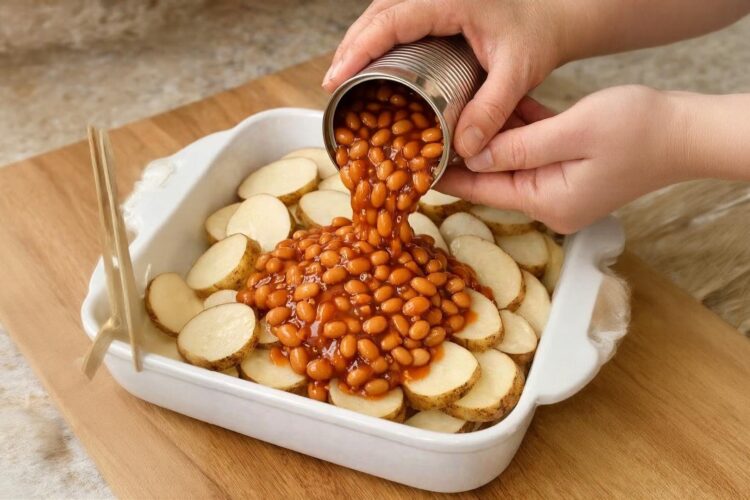
The Dump-and-Bake Weeknight Supper That Turns Raw Potatoes, Canned Beans, and Sharp Cheddar Into Something Hearty, Satisfying, and Genuinely Delicious
There is a particular kind of weeknight dinner dilemma that every home cook knows intimately — the one that arrives around 5pm when you are tired, the refrigerator looks uninspiring, and the idea of following a complicated recipe with twelve ingredients feels genuinely impossible. This 4-Ingredient Amish Baked Bean Potato Casserole is the answer to that exact dilemma, and it answers it so simply and so effectively that once you make it the first time, you will keep the ingredients permanently stocked in your pantry as insurance against every future evening that demands something hearty and satisfying with almost no effort whatsoever.
The premise is as direct as cooking gets. Slice raw russet potatoes into thin rounds and layer them in a buttered ceramic baking dish. Dump two cans of baked beans in tomato sauce over the top. Cover with foil and bake until the potatoes are tender and the beans are bubbling. Remove the foil, scatter a cup of sharp cheddar across the surface, and bake for fifteen more minutes until the cheese is melted and lightly browned and the entire casserole is making that deeply satisfying bubbling sound that signals dinner is ready. Four ingredients. One ceramic dish. Seventy minutes of mostly oven-unattended time. A supper that tastes like someone planned it and cared about it — because the oven, as it turns out, did all the caring on your behalf.
🥔 Why This Casserole Deserves a Permanent Spot in Your Weeknight Rotation
- 🫘 The Beans Do Extraordinary Work: As the baked beans bubble and cook over the raw potato slices for nearly an hour, they gradually soak into the surfaces of the potato rounds, flavoring them from the outside in with that characteristic sweet, slightly smoky tomato sauce. By the time the foil comes off, the potatoes taste not just cooked but genuinely seasoned throughout.
- 🧀 Sharp Cheddar on Top Changes Everything: A cup of freshly shredded sharp cheddar added for the final fifteen minutes melts into a golden, bubbly, slightly caramelized layer that gives the casserole visual appeal and a sharp, slightly tangy flavor contrast against the sweet beans underneath.
- 💰 Among the Most Economical Dinners Possible: Russet potatoes and canned baked beans are two of the least expensive items in any grocery store. A complete, filling dinner for four people from four ingredients that cost almost nothing is a promise this recipe keeps without compromise.
- ⏱️ Virtually No Active Cooking Time: Slice the potatoes, open the cans, scatter the cheese. Everything else is oven time that requires nothing from you.
- 🏡 Deeply Rooted in Practical Comfort Food Tradition: The Amish and Midwestern farmhouse cooking tradition that inspired this casserole has always prioritized honest ingredients, practical methods, and genuinely filling results — and this dish delivers all three without apology.
📖 The Amish Casserole Tradition and Why Simplicity Always Wins
The Amish and Mennonite communities of Pennsylvania, Ohio, and Indiana have produced some of the most consistently practical and genuinely delicious comfort food in American cooking history — not because of sophisticated technique or exotic ingredients, but because of an absolute, unsentimental commitment to using what is available, wasting nothing, and trusting that simple, honest preparation always produces satisfying results.
Casseroles occupy a central place in that tradition. A dish that can be assembled quickly from pantry and root cellar staples, placed in the oven to cook slowly while other work gets done, and served directly from the baking dish to the table without additional fuss is the embodiment of practical domestic cooking at its most functional and most comforting. The combination of potatoes and beans in particular has fed farming communities for generations — both are calorie-dense, filling, inexpensive, and capable of being stored through winter months when fresh produce is unavailable. The addition of a cheese topping reflects the dairy abundance common to many Amish households, and the use of commercially canned baked beans is a practical modern shortcut that the tradition would entirely approve of.
This casserole sits squarely in that heritage — honest, simple, filling, and genuinely good.
🛒 What You Will Need
Servings: 4 | Equipment: medium ceramic baking dish (2 to 2½ quart), aluminum foil
- 1 tablespoon unsalted butter, softened — used exclusively for greasing the ceramic baking dish before the potatoes go in. A properly buttered dish prevents the potato slices on the bottom layer from sticking to the ceramic surface and makes serving and cleanup significantly easier. Softened butter coats the dish more evenly and more completely than cold butter, which tends to leave gaps.
- 1½ lbs russet potatoes, scrubbed and thinly sliced to ⅛ to ¼ inch — the structural foundation of the entire casserole. Russet potatoes are the ideal choice here for their high starch content, which creates a tender, slightly creamy texture during the long covered bake and allows them to absorb the surrounding bean sauce effectively as the casserole cooks. Thin, even slicing is the single most important technical step in this recipe — uniformly thin slices cook through at the same rate, ensuring no piece is raw when the rest are done, and creating the layered, shingle-like structure that allows the beans to penetrate down through the layers during cooking. A mandoline slicer produces the most consistent results, but a sharp knife and patience work equally well. The skins can be left on for a rustic, more textured result or peeled off for a cleaner, more refined appearance — both are equally delicious.
- 2 cans (15–16 oz each) baked beans in tomato sauce — the flavor engine of the entire casserole. The tomato-based sauce surrounding the beans provides the cooking liquid that the potato slices absorb during the covered bake, the sweetness that gives the finished dish its characteristic comfort food character, and the body that creates the slightly saucy, clingy texture that makes each scoop so satisfying. Any brand of baked beans in tomato sauce works well — hickory-smoked or maple varieties add interesting additional flavor dimensions while staying within the spirit of the recipe.
- 1 cup shredded sharp cheddar cheese — the finishing layer that transforms a good casserole into a genuinely great one. Sharp cheddar provides the strongest, most pronounced cheese flavor for the least quantity used — mild cheddar would be lost against the assertive sweetness of the baked beans. Shred it yourself from a block rather than buying pre-shredded — freshly shredded cheese contains no anti-caking agents and melts more smoothly, more evenly, and more beautifully than the packaged variety.
- ½ tsp kosher salt and ¼ tsp black pepper, optional — sprinkled over the potato layers before the beans go on. The baked beans themselves contain significant sodium, so taste before adding — many people find the finished casserole perfectly seasoned without any additional salt.
👨🍳 Step-by-Step Method
Prep time: 15 minutes | Covered bake time: 45–55 minutes | Uncovered bake time: 10–15 minutes | Rest time: 5–10 minutes | Total time: approximately 1 hour 15 minutes | Servings: 4
Step 1 — Preheat and Grease: Preheat your oven to 375°F (190°C). Using a piece of parchment or your fingertips, spread the softened butter across the entire interior surface of your ceramic baking dish — bottom, sides, and corners — until it is evenly and completely coated. A thorough job here means potato slices that release cleanly from the dish at serving time.
Step 2 — Slice the Potatoes: Scrub the russet potatoes thoroughly under cold running water and pat them completely dry. Slice into rounds of consistent ⅛ to ¼ inch thickness — thin enough to cook through during the long covered bake time, thick enough to hold their structural integrity rather than dissolving entirely into the bean sauce. Work as consistently as possible across all the slices — a mandoline set to the correct thickness is the most efficient tool, though a sharp chef’s knife works perfectly well with care and attention.
Step 3 — Layer the Potatoes: Arrange the potato slices in the prepared ceramic baking dish in slightly overlapping layers, like shingles on a roof, working from one end of the dish to the other. Overlapping the slices slightly — rather than laying them flat and separate — creates a more cohesive structure that holds together when served and ensures the beans can settle between and around the layers rather than simply sitting on top of a flat surface. If using salt and pepper, sprinkle them lightly and evenly over the potato layers now.
Step 4 — Add the Beans: Open both cans of baked beans and stir each one briefly in the can to loosen and redistribute the sauce. Pour and spoon both cans evenly over the layered potato slices, spreading the beans gently with the back of a spoon to create an even layer that covers the potatoes as completely as possible. The bean sauce will immediately begin seeping down between the potato layers — this is exactly what you want.
Step 5 — Cover and Bake: Cover the baking dish tightly with aluminum foil, pressing the edges down firmly to create a proper seal all the way around the perimeter. A tight seal is critical — it traps the steam that builds up inside the dish as the beans heat and bubble, and that steam is what cooks the potato slices through during the covered bake time. Place the covered dish on the center rack of the preheated oven and bake for 45 to 55 minutes, until the potatoes yield completely when pierced with the tip of a sharp knife and the beans are visibly bubbling around the edges of the foil. At 45 minutes, carefully peel back one corner of the foil and test a potato slice from the center of the dish — it should offer no resistance when pierced. If any firmness remains, recover and bake for an additional 5 to 10 minutes.
Step 6 — Add the Cheese and Finish: Carefully remove the foil from the baking dish — it will release a significant burst of hot steam, so tilt it away from you as you peel it back. Scatter the shredded sharp cheddar cheese evenly across the entire surface of the hot beans and potatoes, distributing it all the way to the edges. Return the uncovered dish to the oven and bake for a further 10 to 15 minutes, until the cheese is completely melted, developing golden-brown spots across the surface, and the beans around the edges of the dish are actively bubbling.
💡 Pro Tip: For a more dramatically browned, slightly caramelized cheese topping, switch the oven to broil for the final 2 to 3 minutes after the cheese has fully melted — watch it constantly, as broil heat can take the cheese from perfectly golden to scorched very quickly.
Step 7 — Rest and Serve: Remove the casserole from the oven and allow it to rest on a heat-safe surface for 5 to 10 minutes before serving. The brief rest allows the bean sauce — which will be quite fluid immediately after baking — to thicken slightly as it cools, making each scoop hold its shape better on the plate. Serve directly from the ceramic baking dish using a large spoon, ensuring each portion includes potato layers from the bottom, plenty of beans and sauce from the middle, and a generous section of the melted cheese crust from the top.
🍽️ Serving Suggestions and Storage
Serve this casserole straight from the ceramic dish at the center of the table with a sharp green salad dressed in a vinaigrette alongside — the acidity cuts beautifully through the sweetness of the beans. Sliced cucumbers and tomatoes with salt and pepper provides an equally refreshing, virtually effortless fresh counterpoint. Cornbread or crusty bread alongside for scooping up the saucy beans is highly recommended and enthusiastically traditional. A simple tangy coleslaw balances the slight sweetness of the beans with welcome acidity and crunch. For storage, cool the casserole at room temperature for no more than 1 hour before covering and refrigerating — it keeps well for up to 3 days and reheats beautifully in the oven at 325°F for 20 minutes or in the microwave in short bursts until steaming throughout.
💡 Tips and Variations
For a smokier, more complex flavor dimension that requires no additional ingredients, choose canned baked beans labeled hickory smoked or maple and bacon — the additional flavoring notes in these varieties add remarkable depth to the finished casserole. For a creamier potato texture that holds its shape more distinctly than russets, substitute Yukon Gold potatoes — they have a naturally buttery flavor and a waxier flesh that stays more intact during the long bake while still absorbing the surrounding bean sauce effectively. For a different cheese character, smoked cheddar adds a wonderful campfire-adjacent depth that complements the bean sauce beautifully, or Colby Jack produces a milder, creamier melt that is more crowd-pleasing for mixed groups. For make-ahead preparation, assemble the entire casserole through the bean layer, cover tightly with foil, and refrigerate for up to 8 hours before baking — add approximately 10 extra minutes to the covered bake time to account for the cold start from the refrigerator.
❓ Frequently Asked Questions
My potatoes were still firm after 55 minutes of covered baking — what went wrong? The potato slices were too thick, the foil seal was not tight enough allowing steam to escape, or the oven temperature was slightly lower than indicated. For future batches, aim for the thinner end of the ⅛ to ¼ inch range, ensure the foil is pressed firmly around all edges of the dish, and verify your oven temperature with an oven thermometer if this problem recurs.
Can I add meat to this casserole? Yes — crumbled cooked bacon or diced cooked ham stirred into the beans before pouring them over the potatoes adds a smoky, meaty dimension that many people consider an improvement. Sliced cooked kielbasa or smoked sausage arranged over the bean layer before the cheese goes on is equally wonderful and turns the casserole into a more substantial, protein-forward meal.
The bean sauce seemed watery after baking — how do I prevent this? This is usually caused by potatoes that released more starch than expected or beans with a particularly thin sauce. The 5 to 10 minute rest after baking allows significant thickening — if the sauce still seems thin after resting, return the uncovered casserole to the oven for an additional 5 minutes to evaporate some of the excess moisture.
🌟 A Final Word
Four ingredients. One ceramic baking dish. Seventy minutes of mostly hands-off oven time. And a supper on the table that fills every bowl, satisfies every appetite at the table, and asks almost nothing of the person who made it.
That is the complete story of this casserole — and it is a story worth telling every time the week gets long and the dinner inspiration runs short and you need something that will genuinely come through for the people depending on you for a good meal. The Amish and Midwestern cooking tradition that gave us this dish understood something that elaborate, ingredient-heavy cooking occasionally forgets: that the most reliable, most consistently satisfying food is the food built from a short list of honest ingredients, assembled without fuss, and trusted to the steady, patient heat of a properly preheated oven. This casserole has been proving that truth for generations. On the night you first make it, it will prove it again — quietly, reliably, and deliciously.