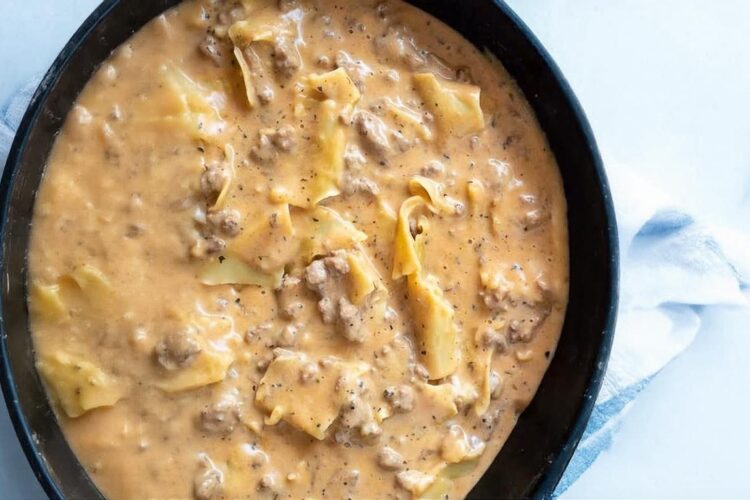
The From-Scratch Stovetop Dinner That Tastes Exactly Like the Box — Only Better, Faster, and Made Entirely From Pantry Staples You Already Have
There is a particular kind of nostalgia that belongs exclusively to Hamburger Helper. It is not the sophisticated, rose-tinted nostalgia of a grandmother’s slow-cooked Sunday roast or a holiday cookie recipe passed down through generations — it is something more immediate, more unpretentious, and in its own way just as powerful. It is the nostalgia of a weeknight dinner that appeared on the table in twenty minutes, that smelled like something genuinely good the moment it started simmering, that required one skillet and produced zero complaints from anyone at the table. If you grew up eating it, you know exactly what that smells like, tastes like, and feels like. And if the Lasagna variety was your box of choice, this recipe is going to make you very happy.
Because here is what most people do not realize until they try it: you do not need the box. Every single element that makes Hamburger Helper Lasagna so satisfying — the seasoned, savory beef, the tomato-herb sauce, the pasta cooked directly in the liquid until it absorbs everything and becomes creamy and rich, the melted cheese blanketing the whole thing — can be assembled from scratch in your own kitchen, from ingredients that are almost certainly already in your pantry right now, in the same twenty-five minutes that the boxed version takes. The result is identical in comfort, superior in flavor, and completely free of whatever unpronounceable additives are doing quiet work inside that silver packet of seasoning.
This is homemade fast food in the best possible sense — quick, effortless, deeply satisfying, and made entirely from real ingredients that you chose and measured yourself. One high-sided skillet. Twenty-five minutes. Four people fed and happy.
🍝 Why This Recipe Will Replace the Box Permanently
- 🏠 Pure Pantry Magic: Ground beef, chicken stock, tomato paste, dried herbs, milk, pasta, and mozzarella. Every single ingredient is a pantry or refrigerator staple that most home cooks already have on hand, meaning this dinner can happen on any night with no advance planning required.
- ⏱️ Twenty-Five Minutes Start to Finish: From turning on the burner to setting the skillet on the table — twenty-five minutes. This is not a simplified weeknight dinner recipe that somehow takes an hour. It is genuinely fast.
- 🧀 That Creamy, Cheesy Finish: Mozzarella stirred in at the very end, off the heat, with the lid on — it melts completely into the saucy pasta and creates a creaminess that the boxed version always hinted at but never quite delivered.
- 💸 More Economical Than the Box: The from-scratch version costs less per serving than buying the packaged helper, and it makes a noticeably more generous quantity that actually feeds four people satisfyingly rather than stretching desperately to do so.
- 🎯 Precisely the Flavor You Remember: The combination of tomato paste, oregano, basil, onion powder, garlic powder, and a pinch of sugar is the exact flavor profile that defined the lasagna variety. Tasting it for the first time, most people stop and say — yes, that is exactly it.
🛒 What You Will Need
Servings: 4 | Equipment: one large high-sided skillet with a lid
The Meat
- 1 lb lean ground beef — lean ground beef is recommended here because the recipe does not call for draining a large amount of fat, and excess grease in the sauce will make the finished dish feel heavy and greasy rather than rich and satisfying. An 85% or 90% lean ground beef produces the best result — enough fat for good flavor and browning, not so much that it overwhelms the sauce.
The Sauce Base
- 2 tablespoons tomato paste — concentrated, deeply savory, and intensely tomato-flavored, tomato paste provides the backbone of the sauce’s color and flavor. It is not the same as tomato sauce and cannot be substituted with it without significantly altering both the consistency and intensity of the finished dish.
- 2 cups chicken stock — forms the cooking liquid that the pasta will absorb and that creates the saucy, rich base of the dish. Chicken stock rather than beef stock keeps the flavor clean and rounded rather than heavy.
- 1 tsp dried oregano + 1 tsp dried basil — this herb combination is the defining flavor signature of the lasagna variety. Together they create that specific Italian-herb warmth that makes the first bite taste immediately familiar and comforting.
- 1 tsp onion powder + ½ tsp garlic powder — the savory depth builders that round out the sauce and give it the layered, full-bodied flavor that makes it taste like more than the sum of its parts.
- ½ tsp sugar — a tiny amount that does something disproportionately important: it balances the natural acidity of the tomato paste and rounds off any sharp edges in the flavor, creating a sauce that tastes complete and harmonious rather than slightly sharp or one-dimensional.
- Kosher salt and black pepper to taste — added throughout the cooking process to build and balance flavor at each stage.
The Pasta
- 2½ cups dry Mafalda pasta or broken lasagna noodles — Mafalda pasta, sometimes called mafaldine, are small, ruffled-edge noodles that look exactly like miniature lasagna strips — which is precisely what makes them the ideal choice for this recipe both visually and texturally. Their ruffled edges grip the sauce beautifully and their flat surfaces create that authentic lasagna aesthetic in each forkful. If you cannot find Mafalda at your grocery store, regular dry lasagna noodles broken into rough 1 to 2-inch pieces work perfectly as a substitute and produce an identical result.
- 2 cups whole milk — added off the heat to prevent curdling, the milk contributes creaminess and body to the sauce as the pasta cooks and absorbs the liquid around it. Do not substitute with reduced-fat milk — the fat content in whole milk is what creates the rich, creamy consistency of the finished sauce.
The Finish
- 1 cup shredded mozzarella — stirred in at the very end, off the heat, and allowed to melt under the lid for five minutes. Mozzarella melts more smoothly and creates a silkier, more cohesive texture in this sauce than cheddar or any other harder cheese would. Freshly shredded from a block melts more evenly than pre-shredded from a bag.
👨🍳 Step-by-Step Method
Prep time: 5 minutes | Cook time: 20 minutes | Total time: 25 minutes | Servings: 4
Step 1 — Brown the Beef: Place your high-sided skillet over medium-high heat and add the ground beef. Cook, breaking it apart with a spoon or spatula, until it is completely browned and cooked through with no pink remaining — about 5 to 6 minutes. If there is a significant amount of fat pooled in the pan, carefully drain or spoon most of it off, leaving just a thin coating to carry the flavor of the meat forward into the sauce.
Step 2 — Build the Sauce: To the same skillet with the browned beef, add the tomato paste, chicken stock, onion powder, garlic powder, dried oregano, dried basil, sugar, and a generous pinch each of kosher salt and black pepper. Stir everything together thoroughly until the tomato paste is fully dissolved into the stock and no red streaks remain. Increase the heat to bring the mixture to a boil, then let it cook at a steady boil for approximately 5 minutes, until the liquid has reduced by roughly half and the sauce looks noticeably thicker and more concentrated than when you started. This reduction step is critical — it concentrates the flavor of the seasoning and tomato paste dramatically and ensures the finished dish is deeply savory rather than thin and watery.
Step 3 — Add the Pasta and Milk: This step requires a specific sequence that matters more than it might seem. First, reduce the heat to low and remove the skillet from the burner entirely. With the pan off the heat, stir in the dry pasta and pour in the 2 cups of whole milk. Stirring the milk into a pan that is still on the hot burner risks curdling the milk on contact with the hot surface — removing the pan from the heat first allows the milk to temper gently and mix with the hot liquid without seizing or separating.
Step 4 — Cover and Cook the Pasta: Return the skillet to the burner over low to medium-low heat — do not go higher than medium-low at any point during this stage. Cover the skillet with the lid and cook for approximately 10 minutes, stirring every 2 to 3 minutes to prevent the pasta from sticking to the bottom of the pan and to ensure even cooking throughout. The pasta will absorb the liquid as it cooks, gradually transforming the thin sauce into something thick, creamy, and richly coating. If the liquid absorbs completely before the pasta is fully al dente, add a small splash of hot water and stir it in — the pasta simply needs more moisture to finish cooking and this is a perfectly normal and easily solved situation.
💡 Pro Tip: The temptation to raise the heat to speed up the pasta cooking is understandable but must be resisted. Medium-low is the maximum safe temperature for a milk-based sauce — higher heat will cause the milk proteins to separate and curdle, giving you a grainy, broken sauce instead of the smooth, creamy one you are aiming for.
Step 5 — Finish with Mozzarella: Once the pasta is al dente — tender throughout with just a barely perceptible firmness at the very center — remove the skillet from the heat completely. Add the shredded mozzarella and stir it briefly into the pasta and sauce. Place the lid back on the skillet and let everything rest completely off the heat for 5 minutes. During this resting period, the residual heat melts the mozzarella fully into the sauce, the pasta absorbs the last of the excess liquid and swells to its final perfect texture, and the entire dish comes together into the creamy, cohesive, deeply satisfying result you have been building toward.
Step 6 — Taste and Serve: Remove the lid, taste the finished dish, and adjust the seasoning with additional salt and black pepper as needed. Serve directly from the skillet into shallow bowls or onto plates, making sure each serving gets a generous amount of the cheesy, saucy pasta. Serve immediately while it is at its creamiest and hottest.
🍽️ Serving Suggestions and Storage
This dish is satisfying enough to be a complete meal entirely on its own, but a simple green salad with a sharp vinaigrette alongside cuts beautifully through the richness and rounds the meal into something more complete. Warm garlic bread or thick slices of crusty Italian bread for scooping up the extra sauce at the bottom of the bowl are always welcome. For storage, transfer leftovers to an airtight container and refrigerate for up to 3 days. The pasta will continue absorbing the sauce as it sits and may appear quite thick when reheated — stir in a small splash of milk or chicken stock while reheating over low heat on the stovetop and it will loosen back to its original creamy consistency within minutes.
💡 Tips and Variations
For extra richness, stir a tablespoon of cream cheese into the sauce along with the mozzarella at the end — it adds a subtle tang and an incredibly silky texture. For a spicier version, add ¼ teaspoon of red pepper flakes to the sauce along with the other seasonings. For a more substantial vegetable presence, stir in a handful of baby spinach immediately after removing the skillet from the heat — the residual warmth will wilt it perfectly within 2 minutes. For a different cheese character, substitute half the mozzarella with shredded provolone for a slightly sharper, more Italian-deli flavor. For feeding a larger crowd, this recipe doubles beautifully in a larger skillet — simply double every ingredient and add 3 to 4 extra minutes to the pasta cooking time.
One skillet. Twenty-five minutes. A dinner that tastes like the best parts of your childhood — only made entirely by you, from real ingredients, in your own kitchen. The box was never the point. The comfort always was.