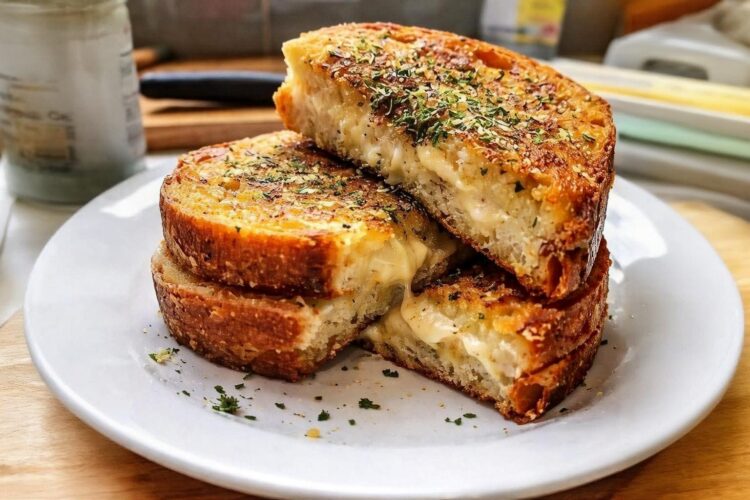
How One Simple Addition — Slow-Caramelized Onions — Transforms the Humblest Sandwich Into Something Rich, Complex, and Genuinely Café-Worthy
Some of the best cooking advice in the world comes not from chefs or cookbooks but from unexpected sources — a neighbor who makes something once and changes the way you think about a dish forever, a food memory from a childhood trip that reframes a familiar flavor, or in this particular case, a viral moment involving one of Hollywood’s most iconic actors and a grilled cheese sandwich that became something significantly more interesting than the sum of its parts. Harrison Ford’s Grilled Cheese is exactly what it sounds like and also somehow much more than that — a classic grilled cheese elevated by the single addition of slow-caramelized onions into something that genuinely deserves the word gourmet, while remaining completely achievable on any weeknight with a pan, a spatula, and about twenty-five minutes of patience.
At its core, this sandwich keeps everything that makes a classic grilled cheese so enduringly beloved — the shattering golden crust, the oozing, molten cheese, the butteriness that coats your fingers the moment you pick it up — and adds one layer of deep, sweet, savory caramelized onion that transforms the flavor profile from simple and satisfying into genuinely complex and memorable. The onions, cooked low and slow until they collapse into soft, jammy, golden strands with a sweetness and depth that raw onions could never suggest, balance the richness of the cheese and the butter in a way that makes every bite feel more complete than a standard grilled cheese. There is also a mayonnaise technique — spread on the outside of the bread rather than butter — that produces a crust of exceptional crispness and golden color that once you try, you will never make a grilled cheese without again.
🧀 Why This Grilled Cheese Is Worth Making Every Week
- 🧅 The Caramelized Onion Effect: Twenty minutes of patient, low-heat cooking transforms a raw onion into something entirely different — soft, golden, slightly sweet, deeply savory, and rich with a complexity that adds a genuinely gourmet dimension to the simplest sandwich without complicating the eating experience in any way.
- 🍞 The Mayonnaise Crust Technique: Spreading mayonnaise on the outside of the bread rather than butter alone creates a crust that is more uniformly golden, crispier, and more shatteringly crunchy than butter alone can achieve — a small technique change with a large and immediately noticeable impact on the finished sandwich.
- 🔥 Double Cheese Layering: Placing cheese both beneath and above the caramelized onions means the onions are held in place by molten cheese on both sides, ensuring they stay put in the sandwich rather than sliding out with each bite, and that every forkful delivers cheese, onion, and bread simultaneously.
- ⏱️ Still Weeknight-Friendly: The caramelized onions take twenty minutes, which sounds significant until you realize they require almost no active attention — just occasional stirring while you do other things. The actual sandwich assembly and cooking takes under ten minutes.
- 🌿 A Finishing Touch That Changes Everything: A small sprinkle of fresh thyme or a grind of black pepper over the finished sandwich is optional in the strictest sense but recommended in every practical one — the herbal note ties all the flavors together and makes the sandwich taste intentional and complete.
📖 The Simple Science Behind Caramelized Onions
Understanding what actually happens to an onion during the twenty-minute caramelization process explains why this single addition is so transformative, and why the patience required is genuinely worth it.
Raw onions are sharp, slightly bitter, and pungent — qualities that come from sulfur compounds released when the cells of the onion are cut or damaged. When onions are cooked slowly over low heat with butter, three things happen simultaneously. The cell structure softens and collapses completely, releasing the water content and concentrating all the sugars within each cell. Those natural sugars undergo caramelization and Maillard browning reactions, developing entirely new flavor compounds — hundreds of them — that did not exist in the raw onion. And the sulfur compounds that create the raw onion’s sharpness convert into sweeter, milder forms that contribute depth rather than pungency to the finished product.
The result is an ingredient that is almost unrecognizable from what went into the pan twenty minutes earlier — soft, jammy, deeply golden, with a sweetness and complexity that make it one of the most flavor-efficient things you can add to any savory dish. Against the richness of melted cheese and buttered bread, they provide a counterpoint that makes the whole greater than the sum of its already very good parts.
🛒 What You Will Need
Servings: 1 sandwich | Equipment: small pan for onions, larger pan or skillet for the sandwich, spatula
The Bread
- 2 slices good-quality sourdough or rustic bread — bread quality matters more in this recipe than in a standard grilled cheese because the flavor and structure of the bread are not hidden behind a dominant sauce or filling — they are central to the experience. Sourdough’s slight tang complements the sweetness of the caramelized onions beautifully. A thick-cut rustic loaf provides the structural integrity to hold the generous filling without collapsing. Whatever bread you choose, it should be thick enough to provide a proper bite but not so thick that the heat cannot reach and melt the cheese at the center before the exterior burns.
The Cheese
- 2 to 3 slices cheddar, Swiss, or Gruyère — each cheese produces a meaningfully different result. Sharp cheddar melts smoothly and provides the most familiar, classic grilled cheese flavor with a pronounced tang. Swiss contributes a mild, slightly nutty sweetness that complements the caramelized onions particularly well. Gruyère — the most elevated choice — melts into a supremely silky, slightly earthy, nutty pool that transforms this sandwich into something that genuinely belongs on a French bistro menu. Any combination of these cheeses works beautifully — mixing sharp cheddar and Gruyère is particularly outstanding.
The Fats
- 1 tablespoon butter — added to the pan for flavor during cooking rather than spread directly on the bread’s exterior.
- 1 tablespoon mayonnaise — spread in a thin, even layer on the outside of both bread slices before the sandwich goes into the pan. The oil in mayonnaise is more stable at the cooking temperature than butter alone, meaning it browns more evenly across the entire surface of the bread without developing dark spots over the pan’s hot points. The emulsifiers in mayonnaise also create a crust that is noticeably crisper and more uniform than butter alone produces.
The Twist
- ¼ cup caramelized onions — made from approximately one medium yellow onion sliced thin and cooked in butter over low heat for 15 to 20 minutes until completely soft, deeply golden, and sweet. This quantity of finished caramelized onions comes from an onion that looks far too large at the start of cooking — onions reduce dramatically in volume during caramelization, which is one of the reasons patience is required.
The Finishing Touch
- Fresh thyme or black pepper, optional — a small sprinkle of fresh thyme leaves or a generous grind of black pepper over the finished, plated sandwich adds an herbal or spiced note that elevates the overall flavor profile from very good to genuinely restaurant-quality.
👨🍳 Step-by-Step Method
Caramelization time: 15–20 minutes | Assembly and cook time: 8–10 minutes | Total time: approximately 30 minutes | Servings: 1
Step 1 — Caramelize the Onions: Thinly slice one medium yellow onion into half-moon rounds. In a small pan over low heat, melt a small knob of butter and add the sliced onions with a pinch of salt. Cook, stirring occasionally, for 15 to 20 minutes — do not rush this with higher heat, which would brown the onions unevenly and produce a bitter rather than sweet result. The onions are ready when they have completely collapsed in volume, turned a deep, even golden color throughout, and smell intensely sweet and savory with none of the sharp raw onion aroma remaining. Set aside.
💡 Pro Tip: If at any point during cooking the onions look like they are starting to stick or burn at the bottom of the pan, add a very small splash of water — just a tablespoon — and stir it in. The water loosens any stuck bits and incorporates them back into the onions, adding even more flavor to the finished product.
Step 2 — Prep the Bread: Spread a thin, even layer of mayonnaise on one side of each bread slice — this is the side that will make contact with the pan. The layer should be thin and uniform, covering the entire surface right to the edges, so the browning is consistent across every part of the crust.
Step 3 — Assemble the Sandwich: Place one slice of bread in the pan, mayonnaise side down. Add half the cheese in an even layer directly onto the bread. Spoon the caramelized onions evenly over the cheese. Add the remaining cheese on top of the onions — this second layer of cheese above the onions is what holds them in place as the sandwich cooks and creates that beautifully unified, melted interior. Top with the second bread slice, mayonnaise side facing up and outward toward the pan.
Step 4 — Cook the First Side: Add the tablespoon of butter to the pan around the sandwich and cook over medium-low heat for 3 to 4 minutes, pressing the sandwich very gently with the spatula once or twice to encourage even contact between the bread and the pan surface. The first side is done when it is a deep, even golden brown with a clearly audible crunch when you press it lightly — lift one edge to check the color before flipping.
Step 5 — Flip and Finish: Carefully flip the sandwich and cook the second side for another 3 to 4 minutes over the same medium-low heat until equally golden and crisp. The cheese should be completely melted and the caramelized onions should be warm and fragrant throughout. If the bread is browning too quickly before the cheese is fully melted, reduce the heat slightly and continue cooking — patience at this stage is the difference between a perfectly melted interior and a brown exterior with a still-cold center.
Step 6 — Finish and Serve: Transfer the finished sandwich to a cutting board and let it rest for 60 seconds before slicing — this brief rest allows the molten cheese to set very slightly so it does not run completely out the moment you cut. Sprinkle fresh thyme leaves or a generous grind of black pepper over the top. Slice diagonally and serve immediately while the crust is at its crispiest and the cheese is at its most perfectly molten.
🍽️ Serving Suggestions
The most natural and beloved pairing for any elevated grilled cheese is a bowl of classic tomato soup — the bright acidity of the soup against the rich, cheesy, sweet-onion sandwich is one of the most satisfying flavor contrasts in all of comfort food. A simple green salad with a sharp vinaigrette alongside provides freshness and lightness that balances the richness of the sandwich without competing with its flavors. For a more substantial meal, serve with a bowl of roasted tomato bisque, French onion soup to echo the onion theme of the sandwich, or a handful of kettle-cooked potato chips for an effortless, casual, deeply satisfying lunch that requires almost no additional effort.
💡 Tips and Variations
For the most complex, most satisfying cheese flavor in this sandwich, combine sharp cheddar and Gruyère in equal proportions — the cheddar provides familiar tangy richness while the Gruyère adds a nutty, slightly earthy sophistication that pairs extraordinarily well with caramelized onions. For an even more indulgent version, add a very thin spread of Dijon mustard on the inside of one bread slice before adding the cheese — the mustard’s heat and tang cut through the richness of everything else and add a layer of flavor complexity that is immediately noticeable and deeply welcome. For a heartier sandwich that turns this into a more complete meal, add two thin slices of good-quality ham between the cheese layers — the saltiness and savory depth of the ham alongside the sweet onions creates a flavor profile reminiscent of a French Croque Monsieur. For a vegetarian French onion soup-inspired version, use Swiss or Gruyère exclusively and add a small spoonful of rich beef-style vegetable broth brushed inside the sandwich before grilling.
❓ Frequently Asked Questions
Why does mayonnaise work better than butter on the outside of the bread? Butter contains water — approximately 15 to 20% of its content — which steams off during cooking and can create uneven browning as it evaporates from different areas at different rates. Mayonnaise is nearly pure oil and egg emulsifier with almost no water, which means it browns more evenly, more consistently, and slightly more crisply across the entire bread surface. The flavor difference is minimal in the finished sandwich — the mayonnaise taste is not detectable — but the textural improvement is immediately noticeable.
My caramelized onions turned out bitter and dark rather than sweet and golden — what went wrong? The heat was too high. True caramelization requires low, patient heat — medium or medium-high heat will brown the surface of the onions quickly before the interior has had time to soften and the sugars have had time to develop, producing a burnt rather than caramelized result. Start over on the lowest heat setting your stove can manage, add a pinch of salt, and give it the full twenty minutes.
Can I make the caramelized onions ahead of time? Absolutely — and this is one of the most practical things you can do to make this sandwich truly weeknight-fast. Caramelized onions keep in an airtight container in the refrigerator for up to five days and freeze beautifully for up to three months. Make a large batch on the weekend and use them throughout the week in sandwiches, on pizzas, in omelets, and stirred into pasta.
🌟 A Final Word
A grilled cheese is one of those recipes that every cook thinks they already know how to make — and most of them are right. But knowing how to make a grilled cheese and knowing how to make the best possible grilled cheese are two meaningfully different things, and the distance between them is filled almost entirely by caramelized onions, a thin layer of mayonnaise on the bread’s exterior, and the patience to cook both at the temperature they actually need rather than the temperature that feels fastest.
Harrison Ford’s viral twist on this humble classic is a reminder that the most impactful cooking improvements are often the simplest ones — not additional ingredients or complex techniques, but a single thoughtful addition that reframes everything around it. The caramelized onions do not make this sandwich complicated. They make it complete. And once you taste what they do to the flavor of melted cheese between two slices of golden, shatteringly crispy sourdough, you will wonder how you ever made grilled cheese without them. Some upgrades are optional. This one is permanent.