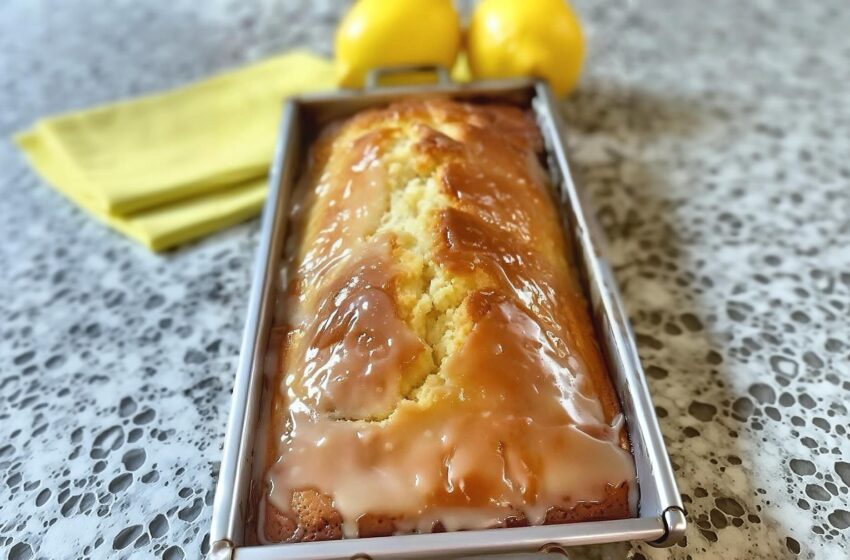
Lemon and blueberry might be one of the most reliably pleasing flavor pairings in baking, and this loaf makes the case for why. Bright citrus tang balanced against sweet, juicy bursts of blueberry, wrapped in a tender, moist crumb and finished with a simple lemon glaze — it’s the kind of recipe that looks impressive enough to serve guests, while actually being approachable enough for someone who doesn’t bake often at all.
Whether it ends up on a brunch table, sliced as an afternoon snack alongside coffee, or served as a light dessert, this loaf tends to earn the same response every time: people go back for a second slice, and then ask where the recipe came from.
Why Tossing the Blueberries in Flour Actually Matters
It would be easy to skip the step of tossing the blueberries in a bit of flour before folding them into the batter, but this small trick solves a real problem. Fresh blueberries are heavier than the surrounding batter, and left completely bare, they tend to sink straight to the bottom of the loaf pan as it bakes, leaving you with a loaf that’s blueberry-dense at the base and comparatively bare through the rest of the crumb.
A light coating of flour changes that. The flour clings to the blueberries’ slightly damp surface, creating just enough friction against the batter to help the berries stay suspended as the loaf bakes, rather than dropping straight down. It’s a small step, but it’s the difference between blueberries distributed evenly through every slice and a loaf where the bottom bite gets all the fruit.
Why the Loaf Gets Glazed After Full Cooling, Not While Warm
Patience matters at the end of this recipe. Waiting until the loaf has cooled completely before applying the lemon glaze isn’t just about texture — it’s about function. A warm loaf will cause the glaze to melt and run straight off, soaking in unevenly or pooling at the base rather than setting as a distinct, slightly firm layer on top. Only once the loaf has fully cooled does the glaze hold its shape properly, settling into an even coating rather than disappearing into the crumb.
Poking small holes into the top of the cooled loaf before pouring on the glaze — using a chopstick or the handle of a small spoon — adds one more layer of flavor delivery. Those holes let a bit of the glaze seep just beneath the surface, adding pockets of extra lemony sweetness throughout the top portion of each slice rather than leaving all of the glaze’s flavor sitting purely on the exterior.
Why Lemon Zest and Juice Both Matter, and Do Different Jobs
This recipe uses lemon in two separate forms, and each one contributes something different. Lemon zest, whisked directly into the dry ingredients, carries the fruit’s aromatic oils — the actual citrus fragrance and flavor compounds are concentrated in the zest far more than in the juice itself. Lemon juice, meanwhile, contributes the acidic tang that balances out the loaf’s sweetness, both mixed into the batter and reserved separately to build the glaze. Using both, rather than relying on juice alone, is what gives this loaf its full, well-rounded lemon flavor rather than a flat, one-dimensional tartness.
The Recipe
Total time: 1 hour 5 minutes
Yield: 8 servings
Ingredients
- 2 large eggs
- ½ cup butter
- ¾ cup white sugar
- 1½ cups plus 1 tablespoon all-purpose flour
- ½ cup milk
- Zest and juice of 1 lemon
- 1 teaspoon baking powder
- ½ teaspoon salt
- 1½ cups fresh blueberries
For the glaze:
- ¼ cup powdered sugar
- Fresh lemon juice (leftover from the batter)
Instructions
- Preheat and prep. Preheat the oven to 350°F and grease a 5×9-inch loaf pan.
- Cream the butter and sugar. Using an electric mixer, cream the butter and sugar together, then add the eggs and milk, mixing until combined.
- Add lemon juice. Stir in a tablespoon of lemon juice, setting the rest aside for the glaze.
- Whisk the dry ingredients. In a separate bowl, whisk 1½ cups of the flour with the salt, baking powder, and lemon zest.
- Combine. Mix the flour mixture into the wet mixture until just combined — avoid overmixing.
- Add the blueberries. Toss the blueberries in the remaining tablespoon of flour, then use a slotted spoon to transfer one cup of them into the batter, folding gently to distribute.
- Transfer to the pan. Pour the batter into the prepared loaf pan and top with the remaining ¼ cup of blueberries.
- Bake. Bake for 50 to 60 minutes, until a toothpick inserted into the center comes out clean.
- Cool completely. Let the loaf cool fully on a wire rack before glazing.
- Make the glaze. Stir the powdered sugar and remaining lemon juice together until smooth.
- Glaze the loaf. Use a chopstick or small spoon handle to poke a few holes into the top of the cooled loaf, then pour the glaze over the top, spreading it evenly with a spatula.
Tips for the Best Results
- Don’t overmix the batter. Combining the wet and dry ingredients just until they come together keeps the crumb tender rather than dense or tough.
- Toss every blueberry in flour, not just some. An even coating across all the berries is what keeps them suspended evenly throughout the loaf.
- Test for doneness with a clean toothpick, not just visual color. Because the top can look done before the center is fully set, a toothpick test is the more reliable indicator.
- Let the loaf cool fully before glazing. Rushing this step results in a glaze that runs off rather than setting properly on top.
- Use fresh lemon zest, not bottled juice or dried zest. Fresh zest carries considerably more aromatic flavor than either substitute.
Make-Ahead Notes
The batter can be prepared ahead of time, but it’s important to give it a good stir just before baking, since the blueberries will slowly sink toward the bottom of the bowl if the batter sits for any length of time.
Storage Instructions
Store leftovers in an airtight container in the refrigerator, where the loaf will keep well for up to 5 days.
Variations Worth Trying
- Swap the citrus. Orange juice and zest can replace the lemon for a milder, sweeter citrus flavor throughout the loaf.
- Use frozen blueberries if fresh aren’t available. Just make sure they’re fully thawed and well-drained on paper towels first — excess moisture from frozen berries can throw off the batter’s consistency.
How to Serve It
This loaf pairs naturally with a cup of coffee or tea, whether served as part of a brunch spread, a sweet afternoon snack, or a light dessert. Sliced and served on its own, the glaze provides enough sweetness that it doesn’t need much else alongside it.
Why This Loaf Wins People Over Every Time
Part of what makes this lemon blueberry loaf so consistently well received is how balanced it is — sweet but not cloying, tangy but not sharp, moist enough to feel indulgent without being heavy. It’s straightforward enough for a first-time baker to make with confidence, yet the finished result looks and tastes like something considerably more polished. For a recipe that regularly gets requested after just one slice, that combination of ease and payoff is exactly the point.

