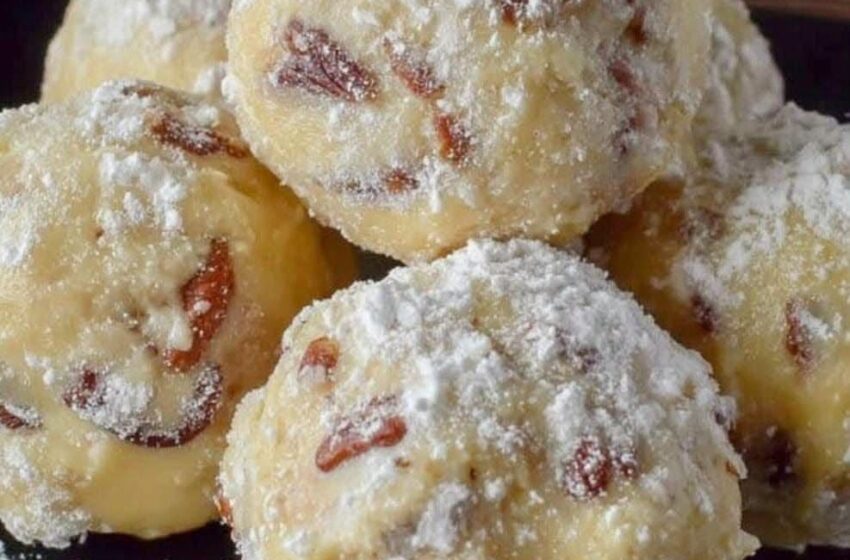
Small, pale, and generously dusted with powdered sugar, pecan butterballs are the kind of cookie that disappears from a tray faster than anything else on it. The crumb is tender and buttery, finely chopped pecans run all the way through, and a splash of vanilla ties the butter and nuts together. One bite and the cookie crumbles delicately, leaving a little sugar on your fingers.
This recipe uses familiar baking ingredients: butter, flour, powdered sugar, vanilla, salt, and pecans. There are no eggs and no chemical leaveners such as baking powder or baking soda. The delicate structure comes entirely from the butter, flour, sugar, and nuts, so the details of how you measure, mix, and bake really do matter.
The cookies also get two coatings of powdered sugar. The first settles onto the warm surface as a base layer, and the second gives the cooled cookies their snowy finish.
In this guide you will find everything you need: what pecan butterballs are, a closer look at each ingredient, how the dough should look and feel, step-by-step instructions with the reasoning behind each step, a recipe card, tips, variations, serving ideas, storage and freezing advice, troubleshooting, and answers to common questions.
Why You Will Love These Pecan Butterballs
- Simple ingredients. The recipe uses familiar baking staples you may already have in the kitchen.
- Pecan flavor throughout. Finely chopped nuts spread evenly through the dough instead of sitting in a few large pockets.
- Tender texture. The cookies hold together but crumble delicately when bitten.
- Make-ahead friendly. Baked cookies can be stored or frozen, then refreshed with sugar.
- Made for sharing. Their small size works well on cookie trays, dessert boards, or alongside coffee and tea.
- No eggs, no leavening. Fewer ingredients to manage, and a classic, shortbread-like character.
- A generous batch. The recipe makes about 36 cookies.
What Are Pecan Butterballs?
Pecan butterballs are small butter cookies filled with chopped pecans and rolled in powdered sugar. They resemble cookies often called pecan snowballs or wedding cookies, although recipes and names vary from kitchen to kitchen.
Because they contain no eggs or leavening, they do not puff up like drop cookies. They keep the shape you give them: a small round ball. That is why careful measuring and properly softened butter are so important. The butter is the glue that holds everything together.
At a Glance
| Detail | Amount |
|---|---|
| Yield | About 36 cookies |
| Prep time | 20 minutes |
| Bake time | 15 to 18 minutes |
| Cooling time | 30 minutes |
| Total time | 1 hour 8 minutes |
| Oven temperature | 325°F |
| Cookie size | About 1-inch balls |
Ingredients for Pecan Butterballs
The Ingredient List
- 1 cup unsalted butter, softened
- 1/2 cup powdered sugar
- 1 teaspoon vanilla extract
- 2 1/4 cups all-purpose flour
- 1/4 teaspoon salt
- 1 cup finely chopped pecans
- 1 cup powdered sugar, for rolling
A Closer Look at the Ingredients
Softened Unsalted Butter
Butter is the foundation of this cookie. Softened butter should give under gentle finger pressure while staying matte and shaped. If it looks shiny or greasy, it is too warm.
The temperature matters in both directions. Cold butter makes the dough difficult to combine, while overly warm butter encourages the cookies to spread. Aim for butter that is soft but still holds its form.
Powdered Sugar
Powdered sugar sweetens the dough without adding a coarse, gritty texture. You use it twice in this recipe: a half cup goes into the dough, and a separate cup builds the white exterior.
All-Purpose Flour
Flour provides structure, but too much of it makes the cookies dry. For the most accurate measurement, spoon the flour into the measuring cup and level it off, or weigh it when possible. Scooping directly from the bag packs in extra flour.
Pecans
Finely chopped pecans fit inside the cookies without causing deep cracks. Toasting the nuts is optional, but they must cool completely before they go into the dough, because warm nuts would soften the butter.
Vanilla and Salt
Vanilla rounds out the butter and pecans, while a small amount of salt balances the sweetness. Do not skip the salt. In a cookie this simple, it makes the other flavors taste fuller.
How the Dough Should Look and Feel
The dough can look crumbly when the flour first goes in. Once mixed, it should hold when pressed together without feeling wet, sticky, or oily.
A good test is to squeeze a small piece in your hand. If it holds together, you are ready to shape. If it falls apart, mix a little longer before changing anything else.
Do not add milk automatically. If the dough seems dry, first check the butter temperature, the way you measured the flour, and whether the dough holds when squeezed. Those three things are the usual reasons.
Why Finely Chopped Pecans Matter
Small pecan pieces distribute evenly and help each portion stay round. Large chunks can split the dough, leaving cracks and cookies that fall apart as you shape or move them.
Stop chopping before the nuts become flour or paste. They should still have some texture. If you use a food processor, pulse in short bursts and check often.
How to Make Pecan Butterballs
Step 1: Prepare the Oven and Pans
Preheat the oven to 325°F. Line baking sheets with parchment paper.
A moderate oven bakes the cookies gently, setting the dough without browning the tops. Parchment keeps the buttery bottoms from sticking and makes cleanup easy.
Step 2: Beat the Butter and Sugar
In a large mixing bowl, beat the softened butter and 1/2 cup powdered sugar until smooth. Mix in the vanilla extract.
Beating until smooth ensures the sugar is fully blended in, so the dough has an even texture from the start.
Step 3: Add the Flour and Salt
Gradually add the flour and salt, mixing just until a soft dough forms.
Adding the flour in stages helps it blend in without flying out of the bowl. Mixing just until the dough comes together keeps the cookies tender.
Step 4: Fold in the Pecans
Fold in the finely chopped pecans until evenly distributed.
Folding rather than beating keeps the nuts intact and prevents overworking the dough.
Step 5: Shape the Cookies
Shape the dough into approximately 1-inch balls. Arrange them on the prepared baking sheets, leaving a little space between each cookie.
Keeping the portions consistent means they all bake at the same rate. The space between them lets heat circulate.
Step 6: Bake
Bake for 15 to 18 minutes, until the cookies are set and the bottoms are lightly golden. The tops should remain fairly pale.
Step 7: Cool Briefly, Then Roll While Warm
Let the cookies cool on the baking sheets for approximately 5 minutes. While they are still warm, carefully roll each cookie in the powdered sugar reserved for coating.
The cookies are fragile when warm, so handle them gently.
Step 8: Cool Completely and Roll Again
Transfer the cookies to a wire rack and cool completely. Roll them in powdered sugar a second time before serving.
Pecan Butterballs Recipe Card
Yield: About 36 cookies Prep time: 20 minutes Cook time: 18 minutes Cooling time: 30 minutes Total time: 1 hour 8 minutes
Ingredients
- 1 cup unsalted butter, softened
- 1/2 cup powdered sugar
- 1 teaspoon vanilla extract
- 2 1/4 cups all-purpose flour
- 1/4 teaspoon salt
- 1 cup finely chopped pecans
- 1 cup powdered sugar, for rolling
Instructions
- Preheat the oven to 325°F. Line baking sheets with parchment paper.
- In a large mixing bowl, beat the softened butter and 1/2 cup powdered sugar until smooth. Mix in the vanilla extract.
- Gradually add the flour and salt, mixing just until a soft dough forms. Fold in the finely chopped pecans until evenly distributed.
- Shape the dough into approximately 1-inch balls. Arrange them on the prepared baking sheets, leaving a little space between each cookie.
- Bake for 15 to 18 minutes, until the cookies are set and the bottoms are lightly golden. The tops should remain fairly pale.
- Let the cookies cool on the baking sheets for approximately 5 minutes. While they are still warm, carefully roll each cookie in the powdered sugar reserved for coating.
- Transfer the cookies to a wire rack and cool completely. Roll them in powdered sugar a second time before serving.
Notes
- Use softened butter, not melted butter.
- Measure the flour carefully and chop the pecans finely.
- Do not wait for the tops to become deeply golden.
- Roll the cookies once while warm and again after they have cooled completely.
- Optional: If a warm kitchen makes the dough unusually soft or greasy, chill the shaped dough briefly before baking. Chilling is not required for the standard method.
How to Tell When Pecan Butterballs Are Done
These cookies should stay pale on top. Look for dry, set surfaces and lightly golden bottoms. You can gently lift one with a spatula to peek underneath.
Deeply colored tops usually mean the centers have dried out. Once you take the pan from the oven, let the fragile cookies rest briefly before moving them.
Why the Cookies Are Rolled in Powdered Sugar Twice
The two coatings do different jobs.
The first coating goes on while the cookies are still warm. The heat softens the surface slightly, so the sugar settles into it and creates a base layer.
The second goes on after the cookies have cooled completely. It covers any translucent spots left by the first coating and builds a thicker, snow-white finish. Handle the warm cookies gently during the first roll, since they are still delicate.
Why This Recipe Works
Butter does the heavy lifting. With no eggs or leavening, the butter provides richness, tenderness, and the structure that holds the dough together.
Powdered sugar keeps the crumb fine. It dissolves smoothly into the butter, giving a delicate texture rather than a grainy one.
Careful flour measuring prevents dryness. Too much flour is the most common reason these cookies turn out dry.
Finely chopped nuts keep the cookies round. Small pieces spread evenly and do not break the dough apart.
Pale baking protects the texture. Stopping when the tops are set and the bottoms are lightly golden keeps the centers tender.
Two sugar coatings give the classic look. The warm coat sticks, and the cool coat makes the cookies look snowy.
Expert Tips for the Best Results
- Soften the butter, but do not melt it. Melted butter changes the structure of the dough.
- Measure the flour carefully. This keeps the dough from becoming dry.
- Chop the pecans finely. Small pieces help the small cookies hold together.
- Keep the portions consistent. Even sizes bake evenly.
- Leave some space between the dough balls. A little room helps the heat circulate.
- Judge doneness by set tops and lightly golden bottoms. Do not wait for deep browning.
- Let the cookies rest briefly, then coat them gently while warm. About five minutes on the pan is enough.
- Apply the second coating only after the cookies have cooled completely. Sugar rolled onto warm cookies melts into patches.
- Chill briefly if needed. If a warm kitchen makes the dough greasy, a brief optional chill can help.
Variations and Substitutions
These ideas are optional changes to the standard recipe.
- Walnuts instead of pecans. Finely chopped walnuts can replace the pecans, though the flavor and texture will differ.
- Almond extract. Replace part of the vanilla with almond extract.
- Orange zest. Add a little to the dough for a bright, fresh note.
- Cinnamon coating. Mix cinnamon into the final powdered sugar coating.
- Toasted pecans. Toast the nuts for deeper flavor, and let them cool completely before mixing them in.
What to Serve with Pecan Butterballs
Pecan butterballs are a natural fit for:
- Coffee or tea. Their buttery crumb pairs well with a hot drink.
- A holiday cookie tray. The snowy look suits festive spreads.
- Dessert boards. Their small size works alongside fruit, chocolate, and other bite-sized treats.
- Gift boxes. Pack them with parchment between layers.
Paper liners help contain loose sugar when you serve them.
Make-Ahead, Storage, and Freezing
Storing
Cool the cookies completely before storing them in an airtight container with parchment between the layers. Trapped warmth causes condensation and patchy sugar. At cool room temperature, the cookies generally keep for several days.
Freezing Baked Cookies
Baked cookies can be frozen airtight. For a neat finish, freeze them before the second coating, thaw them completely, and roll them in fresh powdered sugar.
Freezing the Dough
Unbaked dough balls may also be frozen. When baking from frozen, use the visual doneness cues, such as set tops and lightly golden bottoms, rather than relying on a fixed time adjustment.
Troubleshooting Guide
The dough is crumbly
A crumbly look is normal at first, but the dough should hold when pressed. Check for too much flour, cold butter, coarse nuts, or insufficient mixing before adding any liquid.
The cookies spread
The butter or the baking sheet may have been too warm. If the portions feel greasy or very soft, a brief chill is an optional fix.
The cookies are dry
Overmeasured flour and overbaking are the likely causes. Keep the tops pale and look for lightly golden bottoms.
The sugar coating looks patchy
The cookies may have been stored while still warm, which creates condensation. Cool them completely, then roll them again in fresh powdered sugar.
The cookies break when rolled
They are fragile while warm. Let them rest on the pan for about five minutes and handle them gently.
The dough will not hold together
Check the butter temperature, the flour measurement, and the size of the pecan pieces before changing the recipe.
Frequently Asked Questions
Why is my pecan butterball dough crumbly?
A crumbly appearance is normal at first, but the dough should hold when pressed. Check for excess flour, cold butter, coarse nuts, or insufficient mixing before adding liquid.
Why did my cookies spread?
The butter or baking sheet may have been too warm. If the portions feel greasy or very soft, a brief chill is an optional correction.
Can I toast the pecans first?
Yes. Toasting deepens their flavor, but cool them completely before adding them to the dough.
Should I roll the cookies in powdered sugar while they are hot?
Rest them for about five minutes. Coat them carefully while warm, then roll them again only after they cool.
Can I use walnuts instead of pecans?
Finely chopped walnuts work, but the flavor and texture will differ.
Why are my cookies dry?
Overmeasured flour and overbaking are likely causes. Keep the tops pale and look for lightly golden bottoms.
Do I need to chill the dough?
No. Chilling is not required for the standard method. It is only an optional fix for dough that has become soft or greasy in a warm kitchen.
Do these cookies contain eggs?
No. The recipe uses no eggs and no chemical leaveners.
How many cookies does the recipe make?
About 36 cookies, shaped into roughly 1-inch balls.
Can I freeze them?
Yes, both baked cookies and unbaked dough balls can be frozen in airtight containers.
How should I store leftovers?
Store them airtight with parchment between layers at cool room temperature. They generally keep for several days.
Final Thoughts
Pecan butterballs prove that a short ingredient list can produce something special. Softened butter, a careful hand with the flour, finely chopped pecans, and a double coating of powdered sugar give you tender, nutty, snow-covered cookies that look as good as they taste.
Pay attention to the small details, such as the butter temperature, the flour measurement, pale tops, and cooling before the second coat, and you will get a tray of delicate butter cookies worth sharing.