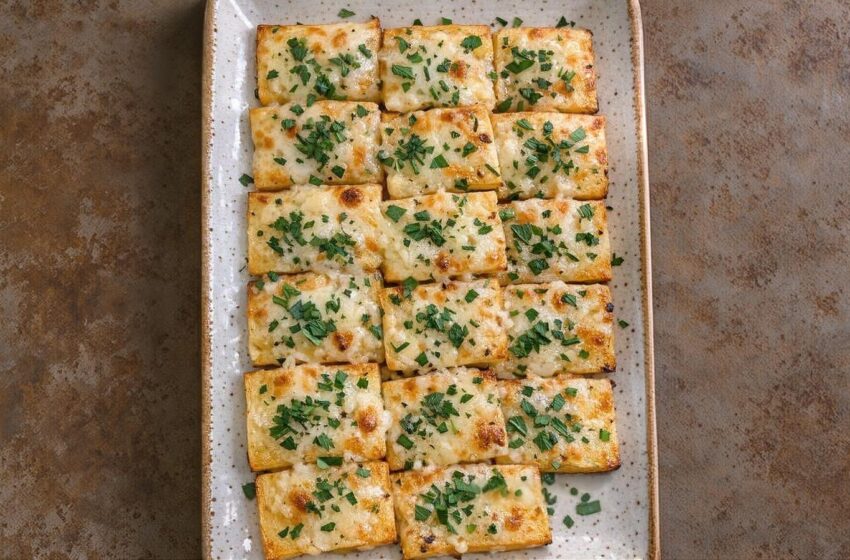
There’s a specific kind of dish that makes a luncheon table feel put-together without actually demanding much from the cook — humble ingredients, arranged with a little care, dressed up just enough to feel special. These muenster herb potato tiles fit that description exactly. Four ingredients, a sheet pan, and a bit of neat slicing turn plain russet potatoes into something that looks considerably more polished than the effort behind it, with melted cheese and fresh herbs finishing off each individual tile.
It’s the kind of side dish that quietly steals attention at a garden club luncheon or a Sunday dinner — practical, pretty, and easy enough to make in one baking dish.
Why Cutting the Potatoes Into “Tiles” Matters
The distinct rectangular shape here isn’t just a visual choice — it directly affects how the potatoes cook. Slicing peeled russets into even ¼-inch planks, then trimming the edges into neat rectangles, creates pieces with a consistent thickness throughout. That uniformity matters enormously for even baking: pieces of wildly different thickness cook at different rates, leaving some tender and others still firm by the time the dish comes out of the oven. Keeping the tiles close in size ensures every piece finishes cooking at roughly the same moment, with the same tender interior and crisp edge.
The rectangular shape also happens to be practical for presentation — these tiles arrange neatly on a platter and are easy to portion, unlike an irregular scoop of roasted potato chunks.
Why the Potatoes Bake in Two Stages
Rather than adding the cheese from the very start, this recipe bakes the potato tiles on their own first, giving them 20 to 25 minutes to develop a lightly golden bottom and begin turning tender before the cheese ever goes on. That sequencing matters because cheese and potatoes don’t need the same amount of oven time to reach their best texture. Potatoes need a longer, steady bake to cook through properly; cheese only needs a shorter burst of heat to melt and turn golden without overcooking or drying out.
Splitting the process into two stages — bake the potatoes first, then add the cheese and herbs for a shorter second bake — lets each component finish exactly when it should, rather than forcing a compromise where the potatoes are undercooked by the time the cheese is perfectly melted, or the cheese is overcooked and rubbery by the time the potatoes are done.
Why Muenster Is a Smart Cheese Choice Here
Muenster brings a mild, buttery flavor and an especially smooth, reliable melt — qualities that matter for a dish built around thin slices of it draped over individual potato tiles. A sharper or more crumbly cheese might overpower the potato’s flavor or fail to melt as evenly across the surface. Muenster’s gentle flavor lets the herbs and the potato itself remain the focus, while its melting quality ensures a smooth, cohesive layer over each tile rather than uneven clumps.
The Recipe
Servings: 6
Ingredients
- 2 pounds russet potatoes, peeled
- 8 ounces muenster cheese, sliced or shredded
- 2 tablespoons mixed fresh herbs, finely chopped (such as parsley, chives, or dill)
- 2 tablespoons melted butter
Directions
- Preheat and prep. Heat the oven to 400°F. Lightly brush a baking sheet or rectangular baking dish with a little of the melted butter.
- Slice and trim the potatoes. Slice the peeled potatoes into even planks about ¼ inch thick, then trim the edges as needed to create neat rectangular tiles. Pat dry with a clean kitchen towel.
- Arrange and butter. Arrange the potato tiles in a single layer on the prepared pan, then brush the tops with the remaining melted butter.
- First bake. Bake for 20 to 25 minutes, until the bottoms are lightly golden and the potatoes are just beginning to turn tender.
- Add cheese and herbs. Remove the pan from the oven, top each tile with muenster cheese, and sprinkle the chopped herbs over the top.
- Second bake. Return to the oven and bake for 8 to 10 minutes more, until the cheese is melted and the potatoes are fully tender with crisp golden edges.
- Serve. Transfer to a platter and serve warm.
Tips for the Best Results
- Cut the tiles as uniformly as possible. Even thickness is the key to consistent cooking across every piece.
- Pat the potato slices dry before baking. Removing surface moisture helps them brown properly rather than steam in the oven.
- Don’t rush the first bake. Giving the potatoes time to develop color and tenderness on their own, before the cheese goes on, is essential to the finished texture.
- Save the trimmed potato scraps. Rather than discarding the edges cut away to square off each tile, set them aside for soup or hash so nothing goes to waste.
- For extra crispy edges: give the tiles a few extra minutes in the oven before adding the cheese, so the centers stay tender while the corners turn deeply golden.
Variations Worth Trying
- Try Yukon gold potatoes. They offer a creamier, richer interior, though they may not trim as sharply into clean rectangles as russets do.
- Adjust the herb blend. Chives and parsley give a clean, bright flavor, while dill adds an old-fashioned, luncheon-style charm. A single fresh herb works perfectly well if that’s all you have on hand.
Serving Suggestions
These potato tiles are a natural side for baked ham, roast beef, pork chops, or a simple roast chicken, adding a bit of richness and visual polish to the plate. They also fit beautifully into a brunch spread alongside eggs and fresh fruit. For a lighter meal, pairing them with a green salad dressed in a tart vinaigrette helps balance out the richness of the melted muenster.
Serving for Company
These potato tiles are especially well suited to entertaining. They can be baked ahead on a sheet pan and transferred to a serving platter just before guests arrive, with a final sprinkle of fresh herbs added right before serving to make them look freshly made and garden-fresh. It’s a small finishing touch that goes a long way toward making a simple potato dish feel special enough for company.
Why This Simple Side Wins Over a Crowd
What makes these potato tiles such a reliable hit isn’t complexity — it’s the careful, deliberate simplicity of the whole approach. Neatly cut potatoes, a two-stage bake that lets each component finish properly, and a mild, reliably melting cheese finished with fresh herbs all add up to a dish that looks considerably more thoughtful than its four-ingredient list would suggest. For a luncheon, a holiday side, or any table that could use a little extra polish without much extra effort, it’s easy to see why these disappear fast.