An Introduction to a Showstopping, Deceptively Simple Dessert
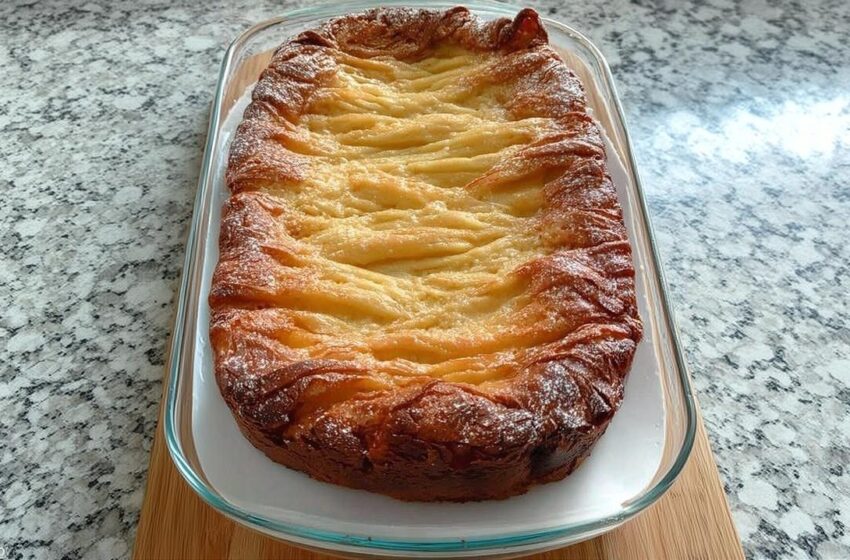
There’s a particular category of dessert that manages to look far more complicated than it actually is, and Crinkle Cake belongs firmly in that category. At first glance, with its golden, crackled, diamond-scored top glistening under a soak of vanilla syrup, it looks like the kind of elaborate pastry-shop creation that would take hours of careful lamination and technique to pull off. In reality, it comes together from a handful of pantry staples and a box of store-bought phyllo dough, and most of the “work” involved is really just repetitive, meditative layering rather than anything technically demanding.
What makes Crinkle Cake so visually and texturally distinctive is the way it bridges two different dessert traditions. On one hand, it borrows the delicate, paper-thin layering technique associated with phyllo-based pastries found throughout the Mediterranean, Middle Eastern, and Balkan baking traditions—the same dough used in dishes like baklava and spanakopita. On the other hand, it incorporates a poured custard-like batter in the middle, giving it a moist, tender interior more reminiscent of a Western-style cake or bread pudding. The result, once baked and soaked in syrup, is a dessert with crisp, shattering top layers, a soft, custardy center, and a sweet, fragrant syrup running through every scored crevice.
This article takes an in-depth look at everything worth knowing about Crinkle Cake: where its technique comes from, why phyllo behaves the way it does in the oven, tips for handling this notoriously finicky dough, ways to customize the flavor, storage advice, answers to frequently asked questions, and the full, detailed recipe to make it yourself.
Where This Style of Dessert Comes From
While “Crinkle Cake” as a specific name is a fairly modern, internet-recipe-era title, the underlying technique it relies on has deep roots. Layered phyllo pastries soaked in sweet syrup are a hallmark of dessert traditions across Greece, Turkey, the broader Levant, and the Balkans, where dishes like baklava, galaktoboureko, and kadayif all rely on a similar core principle: thin, crisp pastry layers combined with a filling, baked until golden, and then finished with a hot or warm sugar syrup that soaks into the layers once the pastry comes out of the oven.
That syrup-soaking step is a defining, non-negotiable feature of this entire family of desserts, and it’s worth understanding why it happens in this particular order. Pouring syrup over a pastry while it’s still hot, rather than incorporating sugar into the batter or dough beforehand, allows the syrup to be absorbed deeply and evenly into every layer, including the scored crevices cut into the top. If you tried to add all of that sweetness before baking instead, you’d end up with a very different, denser, and less texturally interesting result—the syrup-soak method is specifically what creates the glistening, saturated, almost sticky-sweet quality found throughout this entire category of dessert.
Crinkle Cake takes that same syrup-soaked, layered-phyllo foundation and adds its own twist: a poured, custard-like batter sandwiched between two sets of phyllo layers, flavored with warm spices like cardamom and a combination of vanilla and almond extract. This gives the finished dessert a more substantial, cake-like center than a typical all-phyllo pastry like baklava, while still preserving that same crisp, syrup-soaked top layer that defines the broader tradition it draws from.
Understanding Phyllo Dough (And Why It Behaves the Way It Does)
Phyllo dough is a paper-thin, unleavened pastry dough that’s stretched or rolled to an almost translucent thinness before being layered, brushed with fat, and baked. Because it contains no leavening agent and very little fat within the dough itself, phyllo relies entirely on the butter brushed between each layer, combined with the heat of the oven, to create its signature crisp, flaky texture. As the layers bake, the moisture in the butter creates steam that helps separate the sheets slightly, while the thinness of each individual layer allows it to dry out and crisp up quickly and evenly.
This is also exactly why phyllo dough has a reputation for being finicky to work with. Because the sheets are so thin, they dry out and become brittle extremely quickly once exposed to air, often within just a few minutes. A sheet that dries out too much will crack, tear, and crumble rather than folding or layering smoothly, which is why virtually every phyllo-based recipe, including this one, insists on keeping the unused sheets covered with a damp towel at all times while you work. It’s a small step, but skipping it is the single most common reason home bakers find themselves frustrated with torn, unworkable phyllo dough partway through a recipe.
Crinkle Cake: The Full Recipe
Category: Dessert Cuisine: Mediterranean-inspired, fusion
Ingredients
For the cake:
- 1 (1-pound) box of phyllo dough, thawed
- 1 cup butter, melted
- 1 cup milk
- 2 large eggs
- 1 cup granulated sugar
- 1 tablespoon vanilla extract
- 1 teaspoon almond extract
- 1 teaspoon ground cardamom
For the syrup:
- 1 cup granulated sugar
- 1 cup water
- 1 teaspoon vanilla extract
Step-by-Step Instructions
- Preheat the oven and prepare your pan. Preheat your oven to 350°F (175°C). Grease a 9×13-inch baking dish thoroughly with butter or non-stick cooking spray.
- Prepare your workspace for the phyllo. Unroll the thawed phyllo dough and keep it covered with a damp kitchen towel at all times when you’re not actively handling a sheet to prevent it from drying out and becoming brittle. Place one sheet of phyllo into the bottom of your prepared baking dish, allowing the edges to hang over the sides of the pan. Brush this sheet lightly and evenly with melted butter.
- Build the bottom layers. Continue layering phyllo sheets one at a time, brushing each one with melted butter before adding the next, until you’ve used roughly half of the total phyllo dough in the box.
- Make the cake batter. In a mixing bowl, whisk together the milk, eggs, granulated sugar, vanilla extract, almond extract, and ground cardamom until fully combined and smooth.
- Pour the batter over the phyllo. Pour the prepared batter evenly over the layered phyllo sheets in the baking dish, making sure it spreads out and reaches all corners of the pan.
- Build the top layers. Layer the remaining phyllo sheets over the batter, continuing to brush each individual sheet with melted butter as you go, just as you did for the bottom layers.
- Score the top. Using a sharp knife, carefully score the top layers of phyllo into a diamond or square pattern, cutting through the top layers but being careful not to cut all the way down through the bottom of the dish. This scoring step is important, both for presentation and because it will later help the syrup soak evenly into the finished cake.
- Bake. Place the dish in your preheated oven and bake for 45 to 50 minutes, or until the top is deeply golden brown and crisp, and the center of the cake feels set rather than jiggly.
- Make the syrup. While the cake bakes, combine the sugar, water, and vanilla extract in a small saucepan. Bring the mixture to a boil over medium heat, stirring occasionally, until the sugar has fully dissolved into a clear syrup. Remove from the heat and let it cool slightly while the cake finishes baking.
- Soak the hot cake in syrup. As soon as the cake comes out of the oven, while it’s still hot, carefully and evenly pour the prepared syrup over the entire top, letting it seep down into the scored lines and soak into the layers below.
- Cool and serve. Let the cake rest and cool in the baking dish for at least 15 to 20 minutes before slicing along your scored lines. Serve warm or at room temperature, optionally garnished with a dusting of powdered sugar or a dollop of whipped cream.
Tips for the Best Results
Always keep unused phyllo covered. This cannot be overstated: a damp towel draped over the stack of phyllo sheets you aren’t currently working with is the single most important tool for successfully handling this dough. Even a few minutes of open-air exposure can dry out the top sheet enough to make it crack and tear.
Don’t skimp on the butter between layers. The butter brushed between each sheet isn’t just there for flavor—it’s what allows the individual layers to crisp and separate properly in the oven. Aim for a light, even coating across the entire surface of each sheet rather than leaving dry patches.
Pour the syrup while the cake is still hot. This timing matters more than it might seem. A hot cake straight from the oven will absorb the syrup far more readily and evenly than a cake that’s been allowed to cool first, which is why the recipe specifically calls for pouring the syrup immediately after baking rather than waiting.
Score before baking, not after. Scoring the top layers of phyllo before the cake goes into the oven, rather than trying to cut through the crisp, baked layers afterward, gives you much cleaner lines and helps prevent the delicate baked top from shattering unevenly when you eventually slice the cake.
Let it rest before slicing. While it’s tempting to dig in immediately, giving the cake 15 to 20 minutes to rest after the syrup soak allows the layers to settle and the syrup to distribute more evenly throughout, resulting in cleaner slices.
Work with a partner if it’s your first attempt. Because phyllo dries out quickly and needs to be handled fairly briskly, having a second person to hand you sheets, hold the damp towel, or handle the butter-brushing while you place layers can make your first attempt considerably less stressful.
Flavor Variations to Try
While the classic cardamom-and-almond flavor profile is a hallmark of this dessert, there’s plenty of room to make it your own:
Different spice combinations. Cinnamon, nutmeg, or ginger can be used in place of, or alongside, the cardamom for a different but equally warm and fragrant flavor profile.
Nutty layers. Sprinkling a layer of finely chopped almonds, pistachios, or walnuts between some of the phyllo sheets—particularly in the middle, closer to the batter layer—adds extra crunch and a flavor reminiscent of baklava.
Citrus notes. Adding a teaspoon of orange blossom water or a bit of lemon or orange zest to either the batter or the syrup introduces a bright, floral note that pairs beautifully with the warm spices.
Chocolate variation. A light dusting of cocoa powder between a few of the middle layers, or a drizzle of melted chocolate over the finished, syrup-soaked cake, can add a richer, more dessert-forward twist.
Alternative syrup flavors. Swapping a portion of the water in the syrup for orange juice, or adding a cinnamon stick and a few cloves while the syrup simmers, can layer in extra complexity.
Serving Suggestions
Crinkle Cake is versatile enough to work in a range of settings:
- As an elegant dessert following a dinner party, sliced into small diamond or square portions
- Alongside a cup of strong coffee or tea, in the same spirit as many syrup-soaked Mediterranean pastries traditionally served with coffee
- As a centerpiece dessert for a holiday gathering or celebration, thanks to its impressive visual presentation
- Garnished with a scoop of vanilla ice cream for a warm-and-cold contrast
- Paired with fresh fruit, like sliced oranges or a handful of pomegranate seeds, to echo the dessert’s Mediterranean influences
Because individual portions are relatively rich and sweet, small diamond- or square-cut slices tend to be more appropriate than large wedges, especially when serving a crowd.
Storage Advice
Store any leftover Crinkle Cake in an airtight container at room temperature for up to two days. It can also be refrigerated for longer storage, though it’s worth knowing that the crisp, golden phyllo layers will gradually lose some of their signature crispness over time in the fridge, softening slightly as they continue to absorb moisture from the syrup. If you’d like to prepare the cake a day ahead of when you plan to serve it, that works well—simply store it in the refrigerator and then warm it briefly in the oven before serving to help restore some of that original crispness.
This cake isn’t an ideal candidate for freezing, as the delicate, syrup-soaked phyllo layers tend to become soggy and lose their structural integrity once thawed.
Frequently Asked Questions
Can I use store-bought phyllo dough? Yes, absolutely—in fact, that’s the standard approach for this recipe. Just be sure to thaw it fully according to the package instructions before you begin working with it, since frozen or partially frozen phyllo will tear rather than unroll smoothly.
How should I store leftovers? Keep leftover cake in an airtight container at room temperature for up to two days, or refrigerate it for longer storage. Just note that refrigeration will cause the top layers to soften and lose some crispness over time.
Can I make this cake ahead of time? Yes, though it’s generally best enjoyed the same day it’s made, while the top layers are at their crispiest. If you do need to make it in advance, store it in the refrigerator and reheat it briefly in the oven before serving to help bring back some of that original texture.
Can I skip the syrup or use a different topping instead? Yes. While the syrup is what gives this style of dessert its signature moist, sweet quality, you can omit it if you prefer a drier result or substitute a drizzle of honey, maple syrup, or a fruit compote for a different flavor and texture altogether.
Why did my phyllo tear while I was working with it? This almost always comes down to the dough drying out. Phyllo needs to stay covered with a damp towel whenever you aren’t actively handling a sheet, since even brief exposure to open air can dry it out enough to cause cracking and tearing.
Do I need any special equipment to make this? No specialized equipment is required—just a 9×13-inch baking dish, a pastry brush for applying the butter, a sharp knife for scoring, and a small saucepan for the syrup.
Can I add nuts or other mix-ins between the layers? Yes, this is a popular variation. Chopped almonds or pistachios sprinkled between a few of the phyllo layers, particularly closer to the center of the cake, add extra crunch and flavor without disrupting the overall structure of the dessert.
Final Thoughts
Crinkle Cake is one of those rare desserts that delivers a genuinely impressive result for a relatively modest amount of hands-on skill, provided you respect phyllo dough’s one real demand: keep it covered, work with it briskly, and don’t panic if a sheet or two tears along the way (a little imperfection disappears once the layers are buttered, baked, and soaked in syrup anyway). What you end up with is a dessert that manages to be crisp and delicate on top, soft and custardy in the middle, and sweet and syrupy throughout—a genuine crowd-pleaser that draws on centuries of Mediterranean pastry tradition while still feeling approachable enough for a home baker to tackle on a weekend afternoon. Whether you stick with the classic cardamom-and-almond flavor profile or start experimenting with your own spice and syrup variations, Crinkle Cake is the kind of recipe that’s likely to earn a permanent spot in your dessert rotation once you’ve made it once.