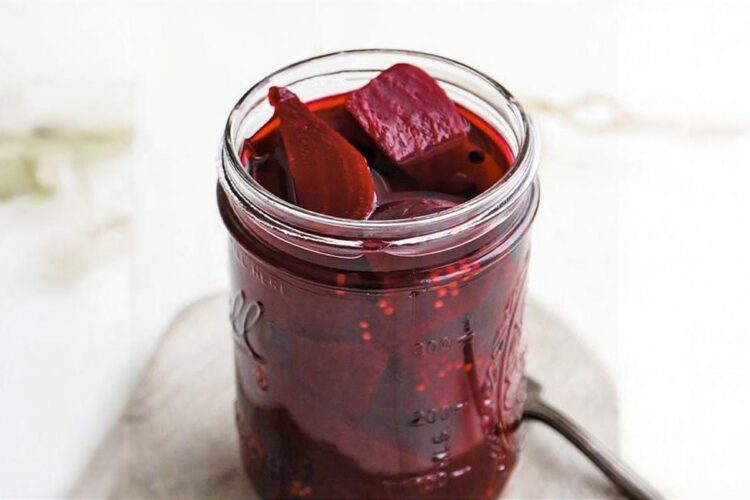
Pickled beets are a masterclass in culinary science, demonstrating how simple, earthy root vegetables can be completely transformed through heat treatment, acid stabilization, and osmotic flavor exchange. What begins as a dense, fibrous bulb evolves into a vibrant, tangy-sweet delicacy boasting an entirely new structural personality.
Historically cherished across European and Mediterranean preservation cultures to safeguard vital nutrients through lean winters, pickling remains an essential technique for elevating food flavor profiles. This master recipe is meticulously detailed to unlock the deep physical chemistry behind home preservation, yielding pickled beets that are perfectly tender yet structured, beautifully balanced between sweet and sour, and deeply saturated with aromatics.
📸 The Equilibrium of Osmosis & Preservation
Crafting a premium pickled beet relies on balancing thermal breakdown with calculated pH control:
- Thermal Softening (Cellular Shift): Cooking dense beets dissolves tough cell-wall pectins. This initial heat treatment is absolutely vital—without it, the cellular network remains too dense to permit brine absorption.
- The Acidification Shield (pH Safety): Utilizing a precise blend of high-quality vinegar establishes an environment below a pH of 4.6. This specific acidity prevents spoilage microorganisms from taking root, stabilizing shelf life.
- The Osmotic Flavor Matrix: Submerging the warm, porous beets in hot brine initiates a fluid exchange. Over hours and days, natural sugars, salts, and essential spice oils diffuse inward to the vegetable’s core while drawing out excess water.
- Betalain Pigment Preservation: The intense ruby-red color of the beet stems from highly sensitive pigments called betalains. Maintaining a highly acidic brine environment chemically stabilizes these pigments, preserving their eye-catching brilliance.
Recipe Overview
- Prep time: 20 minutes
- Cook time: 30 to 45 minutes (for boiling)
- Maturation time (Inactive): 24 to 72 hours (highly recommended)
- Total time: ~1 hour (plus chilling)
- Yield: 2 to 3 Pint Jars
What You’ll Need
The Primary Root Structural Base:
- 800g to 1kg (approx. 5 to 8 medium) Beets: Firm, smooth-skinned, and uniform in size.
The Preserving Brine & Sweet-Acid Balancer:
- 1 to 1 ½ cups Vinegar: (Distilled white vinegar provides a sharp, clean zip; apple cider vinegar introduces a softer, fruity undertone).
- 1 to 1 ½ cups Water: Used to soften the harshness of pure acid.
- ⅓ to ¾ cup Granulated sugar: Balances the vinegar while accentuating the beet’s natural sweetness.
- 1 to 2 teaspoons Kosher salt: Enhances flavor and supports osmotic cellular exchange.
The Aromatic Complexity Layer (Choose your favorite blend):
- 2 to 3 Garlic cloves, peeled and lightly smashed
- 1 teaspoon Black peppercorns
- 1 to 2 Dry bay leaves
- 1 teaspoon Whole mustard seeds
- 3 to 4 Whole cloves
- 1 small Cinnamon stick
Step-by-Step Instructions
Step 1: Selection and Clean Prep
Select medium-sized beets that feel heavy and firm to the touch. Wash them thoroughly under cool running water to scrub away loose soil.
💡 Pro Tip: Use a knife to trim away the long leafy greens, but ensure you leave at least 1 inch of the stem and the entire long taproot intact at the bottom. Leaving these anchors attached prevents the beets from “bleeding” out their precious sweet sugars and vibrant pigments into the cooking water!
Step 2: Thermal Softening Phase
Place the scrubbed whole beets into a large pot and cover them completely with cold water. Bring to a rolling boil over high heat, then lower the flame to medium, cover, and simmer for 30 to 45 minutes. They are ready when a fork slides smoothly into the center of the largest beet.
(Alternative Method: For an intensely rich, caramelized background flavor, wrap the trimmed beets in foil and roast them in a 180°C / 350°F oven for 45 to 60 minutes until tender).
Step 3: Peeling and Clean Geometry
Drain the hot water from the pot and immediately submerge the beets in a bowl of ice water. Let them sit for 2 minutes until safe to handle. Take a beet between your fingers and gently rub the skin—the outer peel will slip right off effortlessly! Cut away the remaining stem and taproot, then slice or wedge the peeled beets into uniform, bite-sized pieces to guarantee an even rate of pickling.
Step 4: Simmer the Master Brine
In a medium stainless-steel saucepan, combine your vinegar, water, sugar, salt, and chosen aromatics (garlic, peppercorns, bay leaves, mustard seeds, cloves, or cinnamon). Bring the mixture to a gentle boil over medium-high heat, stirring continuously until the sugar and salt crystals dissolve completely into a clear, smooth glaze. Lower the heat and let the brine simmer for 3 minutes to extract the aromatic spice oils.
Step 5: Pack and Submerge
Carefully pack your uniform beet slices into clean, sterilized glass canning jars, tucking the simmered garlic cloves and spices from the saucepan evenly among the layers. Slowly pour the piping-hot brine over the beets, ensuring all pieces are completely submerged beneath the liquid line. Leave about a half-inch of headspace at the top of the jar.
Step 6: The Maturation Rest
Let the jars sit open on the kitchen counter until they cool completely to room temperature. Wipe the rims clean, seal tightly with non-reactive lids, and slide the jars into the refrigerator. Let them marinate undisturbed for at least 24 hours.
🛑 Golden Rule: While you can sample them the next day, the true professional benchmark flavor peaks after 48 to 72 hours in the cold. This inactive rest gives the aromatic spices and acid matrix ample time to fully penetrate to the absolute core of the beet structure. Enjoy cold!
💡 Expert Tips for Success
- Avoid Over-Cooking: Guard against boiling the beets until they become mushy. Over-processing collapses the internal starch walls entirely, yielding a mealy pickled bite and dulling the brilliant betalain colors. Cook just until fork-tender to maintain a clean, crisp, and juicy snap.
- Keep Fully Submerged: When enjoying a spoonful from the jar, always ensure the remaining beets stay fully weighted down beneath the liquid brine. Any slices left exposed to air can oxidize, soften prematurely, and lose their balanced shelf life.
- Elite Table Pairings: These vibrant jewels serve as an incredible culinary component. Toss them into a fresh goat cheese salad with toasted walnuts, layer them inside gourmet sandwiches, arrange them across a charcuterie board next to sharp cheeses, or enjoy them as a refreshing standalone side dish!
Variations and Substitutions
❄️ The Spiced Winter Profile: Add a whole star anise, 4 cloves, and a fresh cinnamon stick into the boiling brine to create an elegant, warming winter pickle that pairs beautifully with holiday roasts.
🧄 The Sharp Herb & Garlic Fusion: Pack the jars with 4 extra smashed garlic cloves and several sprigs of fresh dill or rosemary to pivot away from heavy sweetness toward a savory, garden-fresh complexity.
🍊 The Citrus Brightener: Substitute ¼ cup of the water for fresh-squeezed orange juice and drop a strip of fresh orange zest directly into the pickling jar to infuse a spectacular, sunny brightness.
❓ Frequently Asked Questions (FAQs)
How long do these quick-pickled beets keep in the fridge?
Because this is a refrigerator pickle recipe (not processed in a boiling water bath for long-term pantry storage), the jars must be kept cold. Stored inside the refrigerator, they stay exceptionally fresh, crisp, and delicious for up to 3 to 4 weeks, with the flavor continuously deepening over time!
Can I make this recipe completely sugar-free or Keto-compliant?
Absolutely! Sugar plays a flavor-balancing role here rather than a fermenting role. To make this keto-friendly, you can easily swap the granulated sugar for an equal amount of your favorite heat-stable sugar substitute (such as an erythritol or monk fruit blend).
Why did my pickled beets turn a dull brown color after a few days?
This is typically caused by over-boiling the beets during your initial prep, which damages the delicate heat-sensitive betalain pigments. To maintain that breathtaking, deep ruby-purple shine, cook them gently just until tender and ensure your brine maintains a strong, high-quality vinegar-to-water ratio!