The Soft, Pillowy, Buttery Czech-Inspired Pastry That Has Won the Heart of Every Texas and Midwestern Bakery — and Every Person Who Has Ever Tasted One Fresh From the Oven
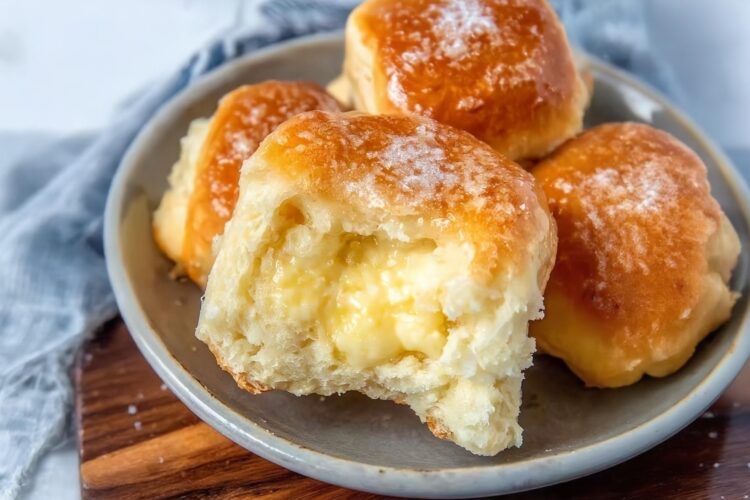
There are pastries you eat because they are available, and there are pastries you eat because once you have had one, you find yourself thinking about it at odd hours of the day for weeks afterward. Kolaches belong firmly and permanently in the second category. Soft, pillowy, slightly sweet yeasted dough rolls with a butter-brushed exterior that stays impossibly tender long after they leave the oven — each one pressed with a deep well in the center that holds a generous spoonful of cream cheese filling, a crown of cherry or blueberry pie filling, and a crumble of buttery posypka streusel on top. Or, in the savory version that has become a beloved Texas breakfast institution, wrapped snugly around a little smoky sausage link and baked until golden and fragrant. Both versions are completely, unreasonably irresistible.
Kolaches trace their roots to the Czech Republic, brought to Texas and the American Midwest by Czech immigrants in the 19th century who carried their baking traditions with them across the ocean and planted them so firmly in their adopted communities that today kolaches are as deeply embedded in Texas bakery culture as biscuits are in the South. Walk into any small-town Texas bakery on a Saturday morning and you will find trays of them cooling on the counter, the smell of warm butter and sweet dough filling the entire building, a line of regulars who have been coming in for the same order for twenty years. That is the kind of food this is — the kind that becomes tradition simply by being made well and shared generously.
Making kolaches at home requires time and patience — there are two rises, a streusel to make, fillings to prepare — but none of it is difficult, and none of it requires special skill or equipment beyond a stand mixer and the willingness to let the dough take the time it needs. What you get at the end of that investment is sixteen warm, golden, butter-glazed rolls that look and taste like they came from the best bakery you have ever visited. And the look on people’s faces when they take the first bite is worth every minute of the rise time.
🥐 Why These Kolaches Are Worth Every Minute of the Rise Time
- 🧈 That Dough Though: The enriched yeasted dough — made with whole milk, melted butter, egg yolks, and a touch of vanilla — produces a crumb that is so soft, so tender, and so pillowy that it genuinely melts in your mouth. This is not bread dough. This is something richer, more delicate, and more extraordinary.
- 🍒 Three Filling Options in One Recipe: Sweet cream cheese with fruit pie filling, or savory sausage — make all three varieties from a single batch of dough and serve a platter that has something for absolutely everyone at the table.
- ✨ The Posypka Streusel: This traditional Czech crumble topping of butter, flour, sugar, and cinnamon bakes into a delicately crunchy, sandy layer on top of the sweet kolaches that adds a textural contrast making each bite dramatically more interesting than a plain filled roll.
- 🧀 Real Cream Cheese Filling: Made from scratch with softened cream cheese, sugar, an egg yolk, and vanilla — silky, slightly tangy, and far superior to anything that comes in a packet.
- 🍽️ Perfect for Sharing: Sixteen kolaches on a tray, some sweet and some savory, is one of the most inviting breakfast or brunch spreads you can possibly set out for guests. They disappear faster than you can count them.
📖 The History of Kolaches in America
The story of how kolaches became a Texas institution is one of the most charming chapters in American food history. Czech immigrants began settling in central Texas in the 1840s and 1850s, establishing tight-knit communities in towns like West, Caldwell, and Schulenburg that maintained their language, their traditions, and — crucially — their baking culture for generations. The kolach, which in Czech simply means “cake” or “circle,” was a cornerstone of Czech celebration baking — made for weddings, holidays, and Sunday mornings, always sweet, always filled, always brushed with butter until glossy and golden.
As Czech communities established themselves in Texas, they brought their kolache recipes with them, and over generations the pastry became woven into the fabric of Texas breakfast culture far beyond the Czech communities that introduced it. Today, the town of West, Texas — self-proclaimed Kolache Capital of Texas — hosts an annual Czech heritage festival that draws visitors from across the state specifically to eat kolaches. Texas bakeries serve thousands of them every weekend morning. And the savory sausage kolache — a Texas innovation that would be unrecognizable to a traditional Czech baker — has become one of the most beloved grab-and-go breakfast items in the state, sold at gas stations, drive-throughs, and dedicated kolache shops from Houston to El Paso.
In the Midwest, kolaches followed a similar trajectory through Czech and Slovak immigrant communities in Nebraska, Iowa, and Kansas, where they remain a beloved staple at church fundraisers, family reunions, and community events. Every family has a slightly different version, a slightly different ratio of dough to filling, a slightly different streusel recipe — and every family is absolutely certain that their version is the correct one.
🛒 What You Will Need
Yield: 16 kolaches | Equipment: stand mixer with dough hook, two large baking sheets, parchment paper
The Dough
- 4 cups all-purpose flour — the structure of the entire pastry. Measured by spooning into the measuring cup and leveling off rather than scooping directly from the bag, which would pack the flour and result in a denser, tougher dough.
- ⅓ cup granulated sugar — sweetens the dough just enough to make it taste like a pastry rather than bread, without making it so sweet that it competes with the fillings.
- 2¼ tsp instant yeast (1 packet) — instant yeast works faster and more reliably than active dry yeast and can be added directly to the dry ingredients without proofing first. Make sure your yeast is fresh and within its use-by date — dead yeast means flat, dense kolaches regardless of how perfect everything else is.
- 1 tsp salt — balances the sweetness and strengthens the gluten structure of the dough.
- 1 cup whole milk, warmed — the liquid that activates the yeast and brings the dough together. Warm to approximately 110°F — warm enough to encourage yeast activity but not so hot that it kills it. If you do not have a thermometer, it should feel comfortably warm on the inside of your wrist, not hot.
- ½ cup unsalted butter, melted and slightly cooled — enriches the dough and contributes to the extraordinarily tender, soft crumb that defines a great kolache. Slightly cooled is important — butter that is too hot can kill the yeast.
- 2 large egg yolks — add richness, color, and a velvety quality to the crumb that whole eggs cannot replicate. The yolks specifically contribute fat and emulsifiers that make the dough more tender and the finished pastry more golden.
- 1 tsp pure vanilla extract — a subtle but important addition that gives the dough a warm, sweet, bakery-like fragrance that makes the entire kitchen smell extraordinary while they bake.
The Cream Cheese Filling
- 8 oz cream cheese, fully softened — must be genuinely room temperature, not just slightly less cold than refrigerator temperature. Properly softened cream cheese blends into a silky, smooth filling with no lumps. Cold cream cheese produces a lumpy, uneven filling no matter how long you beat it.
- ¼ cup granulated sugar — sweetens the filling to a level that complements rather than overwhelms the tangy cream cheese flavor.
- 1 egg yolk — sets the filling slightly during baking so it holds its shape in the well rather than running and spreading across the surface of the dough.
- ½ tsp vanilla extract — rounds out the flavor of the cream cheese filling beautifully.
The Fruit Filling
- 1 can (21 oz) fruit pie filling — cherry, blueberry, or apricot — spooned over the cream cheese layer for a gorgeous, glossy, jewel-colored topping. Cherry is the most traditional and popular choice, blueberry produces a beautiful deep purple color, and apricot gives a more delicate, slightly tart result that many people consider the most refined of the three options.
The Savory Filling
- 1 lb little smokies or breakfast sausage links — the Texas innovation that turned kolaches into a breakfast phenomenon. Little smokies require no preparation — simply place one on each dough ball and wrap the dough around it. Breakfast sausage links should be fully cooked before wrapping.
The Posypka Streusel
- ½ cup all-purpose flour + ¼ cup granulated sugar + ¼ cup cold cubed unsalted butter + ½ tsp cinnamon — worked together with fingertips until the mixture resembles coarse, sandy crumbs. The cold butter is essential — it is what creates the crumbly, distinct texture of the streusel rather than a smooth paste. Refrigerate until needed so the butter stays cold and the crumbs stay separate.
The Finishing Touch
- ½ cup unsalted butter, melted — brushed generously over every kolache the moment they come out of the oven while still hot. This single step is what gives kolaches their signature soft, rich, glossy exterior and distinguishes a great kolache from a merely good one.
👨🍳 Step-by-Step Method
Prep time: 30 minutes | Rise time: 2–2.5 hours total | Bake time: 15–18 minutes | Total time: approximately 3.5 hours | Yield: 16 kolaches
Step 1 — Make the Dough: In the bowl of your stand mixer fitted with the dough hook, combine the flour, sugar, yeast, and salt and mix briefly to combine. Add the warm milk, melted and slightly cooled butter, egg yolks, and vanilla extract. Mix on low speed for about 2 minutes until a shaggy, rough dough begins to form with all the dry ingredients incorporated. Increase the speed to medium and knead for 6 to 8 minutes until the dough is smooth, soft, elastic, and pulls cleanly away from the sides of the bowl. The finished dough will be slightly tacky to the touch — this is correct and important. Do not add extra flour to eliminate the tackiness. A dough that feels slightly sticky produces light, pillowy kolaches; a dough that has been dried out with extra flour produces dense, heavy ones.
Step 2 — First Rise: Transfer the dough to a lightly oiled bowl, turning it once to coat all sides. Cover tightly with plastic wrap and place in a warm, draft-free spot. Let rise for 1 to 1.5 hours until the dough has doubled in size. A cold kitchen will slow this process — if your kitchen is cool, place the covered bowl in an oven with just the oven light on, which provides gentle warmth without heat.
Step 3 — Prepare the Fillings and Streusel: While the dough rises, make the cream cheese filling by beating the softened cream cheese and sugar together with a hand mixer or stand mixer until completely smooth and fluffy, then adding the egg yolk and vanilla and beating until silky and well combined. Set aside. Make the posypka streusel by combining the flour, sugar, and cinnamon in a small bowl, then adding the cold cubed butter and working it in with your fingertips until the mixture resembles coarse, sandy crumbs with no large chunks of butter remaining. Refrigerate until needed.
Step 4 — Shape the Kolaches: Line two large baking sheets with parchment paper. Punch down the risen dough firmly to release the gas, then turn it out onto a clean surface and divide it into 16 equal pieces — weigh them on a kitchen scale if you have one, as equal portions ensure uniform baking. Roll each piece into a smooth ball by cupping your hand over the dough and rolling it against the work surface in a circular motion. Place the balls on the prepared baking sheets, spacing them about 3 inches apart. Flatten each ball slightly with the palm of your hand. Brush each flattened ball generously with melted butter.
Step 5 — Second Rise: Cover the baking sheets loosely with plastic wrap and let the shaped rolls rise in a warm place for 45 to 60 minutes until they are noticeably puffed, pillowy, and have expanded into each other’s space on the tray. Meanwhile, preheat your oven to 375°F (190°C).
Step 6 — Press the Wells: Using the back of a large round spoon or your thumb, press a deep well into the center of each risen dough ball. Press firmly and decisively — almost to the base of the roll without breaking through. A shallow, timid well will not hold enough filling and will allow the fruit or cream cheese to overflow during baking. A deep, confident well holds everything in place and creates the classic kolache silhouette.
Step 7 — Fill the Kolaches: For sweet kolaches, spoon a generous tablespoon of the cream cheese filling into each well, then top with a generous spoonful of fruit pie filling sitting directly on the cream cheese. Sprinkle a generous pinch of the cold posypka streusel over the top of each filled kolache. For savory kolaches, place one little smoky or cooked sausage link on top of a dough ball and wrap the sides of the dough up and around it, pinching the edges firmly together at the top to enclose the sausage completely.
Step 8 — Bake: Bake both sheets in the preheated oven for 15 to 18 minutes, rotating the pans halfway through if your oven has hot spots, until the kolaches are golden brown on the bottom and lightly golden on top with the streusel toasted and fragrant. Do not overbake — the goal is soft and pillowy, not crispy or dry. If the tops are browning too quickly before the bottoms are done, tent a loose piece of foil over the tray for the final few minutes.
Step 9 — Brush with Butter and Serve: The moment the kolaches come out of the oven — while they are still steaming hot — brush every exposed surface of dough generously with the melted butter. Do this immediately and do not let them cool first. The hot dough absorbs the butter deeply, creating that impossibly soft, rich, glossy exterior that is the defining characteristic of a perfectly made kolache. Serve warm.
🍽️ Serving Suggestions
Arrange a mixed tray of sweet and savory kolaches on a large board or platter for the most inviting breakfast or brunch presentation imaginable. Sweet kolaches need nothing alongside them — they are complete as they are, best enjoyed warm with a cup of strong coffee or hot tea. Savory sausage kolaches pair beautifully with scrambled eggs, a simple fruit salad, or a glass of cold orange juice for a full Texas-style breakfast spread. For a brunch gathering, set out both varieties and let guests graze — the combination of sweet cream cheese and fruit alongside savory sausage means there is something for every preference at the table.
💡 Expert Tips and Variations
For the most flavorful dough possible, make it the night before — complete the first rise, then punch the dough down, cover tightly, and refrigerate overnight. A slow, cold overnight rise develops significantly more complex flavor than a quick room-temperature rise. The next morning, remove the dough from the refrigerator, allow it to come to room temperature for 30 minutes, then proceed with shaping and the second rise. For a more traditional Czech flavor in the cream cheese filling, add ½ teaspoon of lemon zest — the brightness it adds is subtle but genuinely lovely. For extra-indulgent sweet kolaches, place a thin square of cold butter in the well before adding the cream cheese filling — it melts during baking and creates a pool of richness beneath the filling. For a peach variation that is particularly stunning in summer, use canned peach pie filling or fresh diced peaches tossed with a spoonful of sugar in place of the cherry or blueberry. For storage, keep cooled kolaches in an airtight container at room temperature for up to 2 days and refresh them in a 325°F oven for 8 minutes or in the microwave for 20 seconds before serving.
❓ Frequently Asked Questions
Why did my kolaches turn out dense instead of pillowy? The most common causes are yeast that was too old or inactive, milk that was too hot and killed the yeast, or extra flour added during kneading to reduce stickiness. Trust the slightly tacky dough, use fresh yeast, and temperature-check your milk for consistently light results.
Can I freeze kolaches? Yes — baked and cooled kolaches freeze very well. Wrap individually in plastic wrap, then place in a freezer bag and freeze for up to 2 months. Thaw at room temperature and warm in a 325°F oven for 10 minutes before serving.
Can I use active dry yeast instead of instant yeast? Yes, but proof it first. Dissolve the active dry yeast in the warm milk with a pinch of sugar and let it sit for 5 to 10 minutes until foamy before adding to the dry ingredients. Increase the rise times by approximately 15 to 20 minutes.
My filling overflowed during baking — what went wrong? The well was not pressed deeply enough, or too much filling was added. Press the well firmly almost to the bottom of the roll, and use a full tablespoon of cream cheese filling topped with one level tablespoon of fruit filling — resist the urge to overfill.
🌟 A Final Word
There is something quietly profound about a recipe that has traveled across an ocean, taken root in an entirely new culture, adapted and evolved over generations, and still carries within it — in the soft, butter-glazed dough, the sweet cream cheese filling, the crumble of streusel on top — an unmistakable connection to where it came from and what it has always meant to the people who make it.
Kolaches are celebration food and everyday food simultaneously. They are what Texas grandmothers bring to church potlucks and what Czech families set on the table at weddings and what bakery regulars order without looking at the menu because they already know. They are the kind of pastry that makes a Saturday morning feel like an occasion, that makes a house full of people feel like a home, and that somehow tastes even better when you made them yourself — because then you know exactly what went into them, and you know that what went into them was butter, patience, and care.
Make a batch. Share them warm. Watch them disappear. And understand, in that moment, exactly why this pastry has been worth carrying across the world for nearly two centuries.