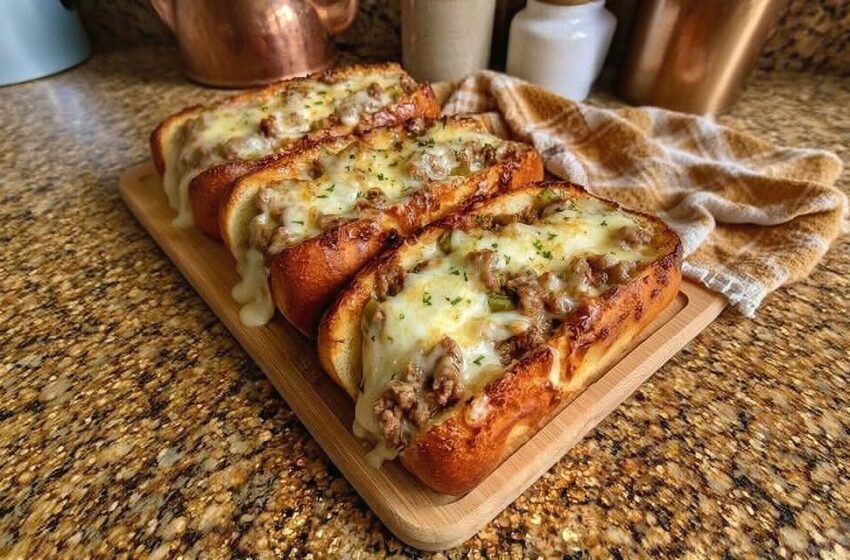
A great Philly cheesesteak lives or dies on a handful of details most people never think about: how thin the beef is sliced, how the vegetables are timed against the meat, and whether the cheese actually melts into the sandwich or just sits on top like an afterthought. This version leans into all three, pairing paper-thin ribeye and griddle-caramelized peppers and onions with two layers of cheese — melted provolone underneath, and a warm, pourable cheese sauce poured generously over the top. The result is deliberately, unapologetically messy, in the way a genuinely good cheesesteak should be.
Why Thin-Sliced Beef Makes or Breaks This Sandwich
The single biggest difference between a mediocre cheesesteak and a great one usually comes down to how the beef is cut. Authentic Philly-style cheesesteaks use meat sliced so thin it practically shaves off the block, which lets it cook through in under two minutes on a hot griddle without ever turning tough or chewy. Thick-cut steak, by contrast, needs longer to cook and tends to end up dense and stringy inside a sandwich, fighting against the soft roll instead of working with it.
Getting that deli-thin slice at home is genuinely difficult with a knife alone, which is why a quick trip to the freezer matters so much here. Firming the ribeye for 30 to 45 minutes before slicing changes the texture of the raw meat just enough that a knife can glide through cleanly, without the meat sliding or squishing under the blade the way fully soft, room-temperature beef tends to do. It’s a small step, but it’s the difference between ragged, uneven pieces and the kind of clean, thin shavings a Philly cheesesteak shop would produce.
Two Cheeses, Two Different Jobs
Most cheesesteak recipes settle for one cheese, but this one uses two, and each is doing something different. Provolone slices, melted directly over the beef and vegetables while covered with a lid, form a cohesive, stretchy layer that binds the meat and vegetables together — the kind of melt you get from a real slice of cheese rather than a sauce.
The Ricos condensed cheese sauce, thinned with chicken broth and seasoned with smoked paprika, plays a completely different role. Poured over the assembled sandwich at the very end, it adds a rich, pourable layer that seeps down into the meat and bread rather than sitting as a solid sheet on top. That combination — a structural, meltable cheese underneath and a loose, flavorful sauce poured over everything — is what gives this sandwich its extra-indulgent, drippy character compared to a more restrained, single-cheese version.
Why Steaming the Cheese With a Splash of Water Works
The step of adding a small splash of water to the hot griddle and immediately covering the meat and cheese with a dome or lid isn’t just for show — it’s a genuine technique borrowed from griddle cooking generally. That splash of water hits the hot surface and instantly turns to steam, and trapping that steam under a lid creates a brief, enclosed environment that melts the provolone quickly and evenly from all sides, rather than only from direct contact with the heat below. It’s a faster, more thorough melt than simply waiting for residual heat to do the job, and it keeps the beef from overcooking while the cheese catches up.
The Recipe
Prep time: 20 minutes
Cook time: 15 minutes
Total time: 35 minutes
Ingredients
For the Philly Cheesesteak:
- 1 lb. ribeye steak
- ½ yellow onion
- ½ green bell pepper
- 3 slices provolone cheese
- 2–3 hoagie rolls, depending on size
- ½ teaspoon garlic powder
- ½ teaspoon onion powder
- ½ teaspoon Cajun seasoning
- Salt and pepper, to taste
- 1 tablespoon avocado oil
- 1 tablespoon unsalted butter
For the Cheese Sauce:
- About 1 cup Ricos condensed cheese sauce
- ¾ cup chicken broth
- ¼ teaspoon smoked paprika
- ¼ teaspoon garlic powder (optional)
Instructions
- Make the cheese sauce. In a small saucepan over medium-low heat, add the Ricos condensed cheese sauce. Gradually whisk in the chicken broth, stirring constantly, until the sauce reaches a cheesy, slightly runny consistency. Whisk in the smoked paprika and optional garlic powder, adjusting with a little more broth or water if it needs to loosen further, then keep it warm over low heat.
- Prep the ingredients. Thinly slice the green bell pepper and yellow onion. Slice the ribeye steak against the grain into thin, bite-sized shavings — this is where a brief stint in the freezer beforehand makes the biggest difference.
- Cook the vegetables. Heat a large griddle or heavy cast iron skillet over medium-high heat and add a drizzle of avocado oil. Add the sliced onions with a sprinkle of salt and cook for about 3 minutes before adding the bell peppers. Sauté until they reach your preferred doneness — slightly less time if you like a bit of crunch remaining.
- Sear the beef. Push the cooked vegetables to one cooler side of the griddle. Add the shaved ribeye in a thin, even layer and season with the onion powder, garlic powder, salt, pepper, and Cajun seasoning. After about 2 minutes, flip the beef and continue cooking until it reaches your preferred doneness.
- Combine and melt. Once the beef is nearly done, toss it together with the peppers and onions. Lay the provolone slices directly over the meat pile, add a small splash of water to the hot griddle, and immediately cover with a melting dome or lid to trap steam and melt the cheese evenly.
- Toast the buns. Move the cheesy meat and vegetables to one side of the griddle. Butter the inside of the hoagie rolls and place them face down on the hot surface, toasting until deeply golden and crisp.
- Assemble and serve. Use a wide spatula to scoop the hot steak and cheese mixture into the toasted rolls, then top generously with the warm cheese sauce. Serve immediately, while everything is at its hottest and cheesiest.
Tips for Getting It Right
- Freeze the ribeye briefly before slicing. Thirty to forty-five minutes in the freezer firms the meat just enough to slice paper-thin without it sliding around under the knife.
- Don’t overcrowd the griddle. Spreading the beef into a thin, even layer rather than piling it up ensures a proper sear rather than a steamed, gray texture.
- Keep the cheese sauce warm but not boiling. High heat can cause processed cheese sauces to break or separate, so low, gentle heat is worth the extra patience.
- Toast the rolls at the same time as the filling finishes. Timing the bread and filling together means everything hits the table hot, rather than the bread cooling while you wait on the filling.
Why It’s Worth Making at Home
A cheesesteak built this way — thin-shaved beef, two layers of cheese, and a griddle technique borrowed straight from sandwich shop counters — delivers something closer to the real thing than most home versions manage. It takes a little extra attention in the prep stage, mainly around slicing the beef properly, but from there the actual cooking moves fast, all coming together on one hot surface in well under 20 minutes. For a weeknight dinner that still feels like a genuine indulgence, it’s hard to beat.