Some salads are good the second you finish tossing them. This one is different. Marinated Cauliflower Salad improves the longer it sits in the fridge, and that slow, hands-off change is what makes it so useful. You spend about ten minutes chopping and whisking, then let the refrigerator do the rest.
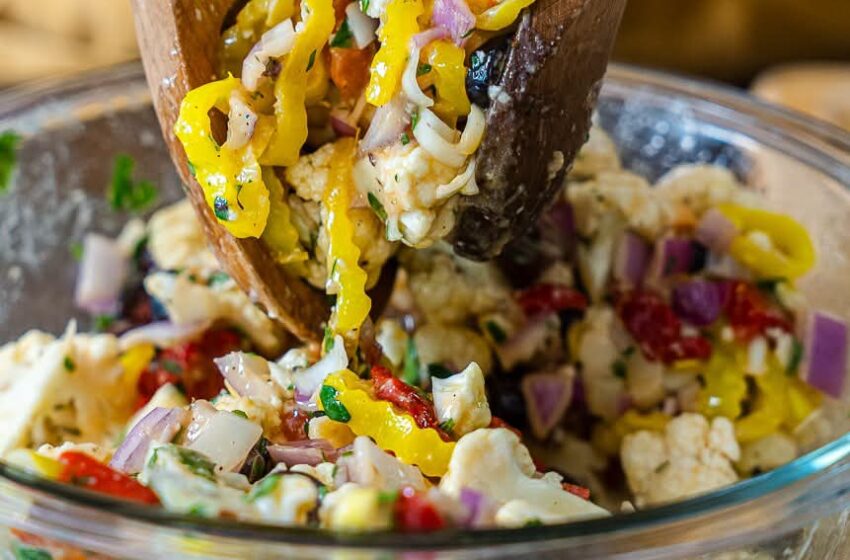
The recipe looks simple on paper, and it is. Raw cauliflower florets go into a punchy, herb-flecked dressing along with roasted red peppers, tangy banana pepper rings, briny olives, sharp red onion, and fresh parsley. After a rest in the fridge, every floret has soaked up the dressing, the vegetables have softened just slightly, and the crunch is still there. Nothing goes near the stove or the oven, which makes this a welcome dish for hot weather, busy weeknights, cookouts, and potlucks.
In this guide you will find everything you need to make it well: what goes into the bowl and why, the exact method with the reasoning behind each step, a printable recipe card, ways to adjust it, serving ideas, storage advice, and answers to the questions people ask most often.
Why You Will Love This Marinated Cauliflower Salad
Here is what makes this salad worth adding to your regular rotation.
- No cooking at all. The cauliflower stays raw. There is no boiling, roasting, or blanching, so the kitchen stays cool.
- Ten minutes of work. The active time is short. The marinating time takes care of itself.
- Built for making ahead. The flavor deepens as it sits, so making it the night before is an improvement, not a compromise.
- Big flavor from pantry staples. Jarred roasted red peppers, banana pepper rings, and olives do a lot of the work. Add a simple vinaigrette and you have a salad with plenty of personality.
- Crisp and tender at once. The cauliflower softens just slightly while keeping a satisfying crunch.
- Easy to carry. It is mixed in one bowl and served from the same bowl, which suits picnics and potluck tables.
- Friendly to many diets. The recipe is labeled gluten-free, diabetic-friendly, and vegetarian. (More on checking labels in the notes below.)
- Good for lunch prep. A batch in the fridge gives you something fresh and tangy to scoop into lunch containers all week.
At a Glance
| Detail | Amount |
|---|---|
| Serves | 6 |
| Prep time | 10 minutes |
| Inactive (chilling) time | 30 minutes minimum |
| Cooking | None |
| Best made | The night before |
What You Need to Make Marinated Cauliflower Salad
The ingredient list is short, and almost everything comes from a jar or the produce aisle. Here is the full list, followed by a closer look at what each item brings to the bowl.
The Salad
- 1 head cauliflower, chopped into small florets
- 3/4 cup jarred roasted red peppers, drained and sliced
- 3/4 cup jarred banana pepper rings, drained
- 1/2 cup sliced black or Kalamata olives
- 1/2 small red onion, diced
- 2 tablespoons fresh parsley, chopped
The Dressing
- 1/2 cup olive oil
- 1/4 cup red wine vinegar
- 1 tablespoon Dijon mustard
- 1/4 teaspoon garlic powder
- 2 teaspoons Italian seasoning
- 1/2 teaspoon salt
- 1/4 teaspoon black pepper
- 2 tablespoons grated Parmesan cheese
A Closer Look at the Ingredients
Cauliflower
The cauliflower is the base of the whole dish. Cut it into small florets so each piece is easy to eat in one bite and has more surface area to pick up dressing. Smaller pieces also soften a little more evenly during the rest in the fridge. Because the cauliflower is never cooked, look for a firm, tight head with no brown spots.
Roasted Red Peppers
Jarred roasted red peppers bring sweetness and a soft, silky texture that contrasts with the crunchy cauliflower. Drain them well before slicing so the jar liquid does not thin out the dressing.
Banana Pepper Rings
These are the tangy surprise in the salad. Jarred banana pepper rings add a bright, pickled kick that wakes up every bite. Drain them well, just like the red peppers.
Black or Kalamata Olives
Sliced olives add a salty, briny note. Black olives are milder, and Kalamata olives are richer and fruitier. Either works, so choose the one you like best.
Red Onion
Half a small red onion gives sharpness and a little color. Dice it fairly small so it spreads through the salad instead of overpowering a single bite.
Fresh Parsley
Chopped parsley adds freshness and a green, herbal finish. It also keeps the colors in the bowl looking lively.
Olive Oil and Red Wine Vinegar
These two make up the base of the dressing. The ratio here is two parts oil to one part vinegar (1/2 cup to 1/4 cup), which is a classic balance: tangy without being harsh, and rich enough to coat the vegetables. Use an olive oil you enjoy tasting, since there is nowhere for it to hide.
Dijon Mustard
A spoonful of Dijon adds a sharp, savory note, and it also helps the oil and vinegar blend into a dressing that clings to the vegetables instead of separating right away.
Garlic Powder and Italian Seasoning
These two dried seasonings give the dressing an herby, savory backbone. Because they are dry, they spread evenly through the dressing and keep their flavor through a long marinade.
Grated Parmesan
Even a small amount of Parmesan adds depth and pulls the dressing together. Two tablespoons is enough to give a savory, slightly nutty finish without turning the dressing into a cheese sauce.
How to Make Marinated Cauliflower Salad
This might be the easiest recipe in your warm-weather rotation. There is no complicated technique. The whole thing comes together in about ten minutes, and the refrigerator handles the rest.
Step 1: Whisk the Dressing in Your Serving Bowl
Start by making the dressing right in the bowl you plan to serve from. Add the olive oil, red wine vinegar, Dijon mustard, garlic powder, Italian seasoning, salt, pepper, and Parmesan. Whisk until everything is combined.
Making the dressing in the serving bowl saves you a dish and means you can toss the vegetables straight in. Choose a bowl large enough to hold all the vegetables with room to stir.
Step 2: Taste and Adjust
Taste the dressing before you add anything else. It should be punchy, tangy, and delicious on its own. This matters because the dressing is the only seasoning the salad gets. If it tastes flat now, the finished salad will too. Add a pinch more salt, a splash more vinegar, or a little more pepper until it tastes the way you want.
Keep in mind that the olives, banana peppers, and Parmesan are all salty, and the vegetables will mellow the dressing somewhat as they soak. A dressing that tastes slightly strong on its own is usually right.
Step 3: Add the Vegetables
Add the cauliflower florets, roasted red peppers, banana pepper rings, olives, red onion, and parsley to the bowl. Toss everything together until every piece is well coated.
Take your time with the tossing. The dressing should reach the cauliflower in the center of the bowl as well as the pieces on top.
Step 4: Cover and Chill
Cover the bowl and refrigerate for at least 30 minutes. If you can make the salad the night before, do. The longer it sits, the deeper the flavor gets and the more the florets soak up the dressing.
This is where the salad changes. The raw cauliflower softens slightly as it marinates, but it keeps a pleasant crunch. It also takes on the tangy, herby flavor of the dressing all the way through.
Step 5: Stir Again and Serve
Give the salad a good stir before serving. As it sits, some of the dressing settles at the bottom of the bowl, and stirring brings it back up over the vegetables. Then serve it and wait for people to ask what is in it.
Marinated Cauliflower Salad Recipe Card
Yield: Serves 6
Prep time: 10 minutes
Inactive time: 30 minutes minimum (overnight is even better)
Diet labels: Gluten-free, diabetic, vegetarian
Ingredients
- 1 head cauliflower, chopped into small florets
- 3/4 cup jarred roasted red peppers, drained and sliced
- 3/4 cup jarred banana pepper rings, drained
- 1/2 cup sliced black or Kalamata olives
- 1/2 small red onion, diced
- 2 tablespoons fresh parsley, chopped
For the dressing
- 1/2 cup olive oil
- 1/4 cup red wine vinegar
- 1 tablespoon Dijon mustard
- 1/4 teaspoon garlic powder
- 2 teaspoons Italian seasoning
- 1/2 teaspoon salt
- 1/4 teaspoon black pepper
- 2 tablespoons grated Parmesan cheese
Instructions
- In your serving bowl, whisk together the olive oil, red wine vinegar, Dijon mustard, garlic powder, Italian seasoning, salt, pepper, and Parmesan. Taste and adjust the seasoning as needed.
- Add the cauliflower, roasted red peppers, banana pepper rings, olives, red onion, and parsley to the bowl. Toss to coat everything with the dressing.
- Cover and chill for at least 30 minutes. The salad gets better the longer it sits, so overnight is great.
- Stir again before serving.
Why This Recipe Works
A few simple choices explain why this salad turns out so well.
Raw cauliflower is the right texture for marinating. Cooked cauliflower can turn soft and watery when it sits in dressing. Raw cauliflower holds its structure, and the dressing softens it only slightly, which gives you a salad that is tender at the edges and crisp in the middle.
The dressing is built to be assertive. Vinegar, mustard, garlic, herbs, and cheese all add something different, so the dressing tastes layered instead of one-note. Since cauliflower is mild, it needs that strength.
The jarred ingredients carry their own flavor. Roasted red peppers, banana pepper rings, and olives each arrive already seasoned and tangy, so a few cups of them flavor the whole salad with almost no effort.
Time does the work. Marinating lets the dressing move into the florets instead of just sitting on the surface. That is why a salad that tastes good after thirty minutes tastes better the next day.
Everything happens in one bowl. Whisking the dressing in the serving bowl means fewer dishes and a simple path from fridge to table.
Tips for the Best Marinated Cauliflower Salad
- Cut the florets small and even. Aim for bite-sized pieces. Small, similar-sized florets marinate evenly and are easy to eat with a fork.
- Drain the jarred vegetables well. Both the roasted red peppers and the banana pepper rings should be drained before they go into the bowl. Extra jar liquid dilutes the dressing. Pressing them gently in a sieve or patting them with a paper towel helps.
- Taste the dressing first. Adjust it on its own before the vegetables go in. It is far easier to correct salt and acidity in a small bowl of dressing than in a full bowl of salad.
- Plan ahead when you can. Thirty minutes is the minimum, but an overnight rest gives the best flavor.
- Stir before serving. The dressing settles to the bottom as the salad sits. A good stir redistributes it.
- Taste again before serving. After a long rest, you may want a small pinch of salt or a splash of vinegar to bring the flavors back into focus.
- Choose your olives deliberately. Black olives give a mild, gentle saltiness. Kalamata olives give a stronger, fruitier punch.
- Use a large bowl. More room makes tossing easier and helps the dressing reach every floret.
Variations and Ideas
The recipe works as written, but it is flexible. These are optional ideas to try once you know the base recipe.
- Add more cheese. For a heartier salad, stir in small cubes of mozzarella or provolone after the salad has chilled.
- Make it brighter. A squeeze of fresh lemon juice just before serving adds a fresh lift.
- Add heat. A pinch of red pepper flakes in the dressing gives the salad a gentle kick.
- Add more vegetables. Halved cherry tomatoes, thinly sliced celery, or diced cucumber all fit the flavors. Add the watery ones close to serving time so they do not dilute the dressing.
- Swap the olives. Use only black olives for a milder salad, or only Kalamata for a bolder one.
- Try a different herb. Fresh basil or oregano can stand in for or join the parsley.
- Make it a meal. Stir in chickpeas or white beans, or top the salad with grilled chicken, for a more filling lunch.
- Go dairy-free. Leave out the Parmesan, or replace it with a dairy-free grated alternative, and taste the dressing for salt.
What to Serve with Marinated Cauliflower Salad
This salad is a natural partner for simple, hearty main dishes, because its tang cuts through richness.
- Grilled chicken, steak, or sausages. The sharp dressing is a good contrast to anything charred from the grill.
- Burgers and hot dogs. Serve it alongside as a cooler, tangier alternative to a creamy side.
- Sandwiches and wraps. A scoop next to a sandwich works like a pickle and a salad in one.
- Pasta and baked dishes. The brightness balances rich, cheesy dishes such as lasagna or baked pasta.
- Roasted or grilled fish. The peppers and olives pair naturally with Mediterranean-style flavors.
- A picnic or buffet spread. Because it travels well in its bowl and improves with time, it suits any table where food sits out for a while.
Keep in mind the usual food-safety guidance for any dish containing cheese or fresh vegetables: do not leave the salad out in the heat for long stretches, and return it to the fridge once everyone has served themselves.
Storage and Make-Ahead Tips
This is one of the best make-ahead salads you can cook, since waiting makes it better.
- Make it ahead: Prepare the salad the night before you plan to serve it. It needs a minimum of 30 minutes, and an overnight rest is ideal.
- Refrigerate: Store the salad covered in the fridge. Keep it in the same bowl, or move it to an airtight container for transport and storage.
- Keep an eye on texture: The longer the salad sits, the softer the cauliflower becomes. If you prefer more crunch, eat it within a day or two of making it.
- Stir before serving leftovers: Dressing settles at the bottom, so stir each time you go back for more.
- Freezing: This salad is not a good candidate for the freezer. Raw cauliflower and fresh vegetables lose their crispness when frozen and thawed, so make only what you plan to eat.
Frequently Asked Questions
Does the cauliflower need to be cooked first?
No. The raw cauliflower goes straight into the dressing. As it marinates, it softens slightly while keeping a satisfying crunch, and it absorbs the tangy, herby flavor without ever touching a stovetop.
How long does the salad need to marinate?
At least 30 minutes. For the best flavor, make it the night before. The longer it sits, the more the florets soak up the dressing.
Can I make this salad ahead of time?
Yes, and you should. It is designed to improve with time in the fridge, which makes it ideal for parties, potlucks, and weekly lunch prep.
Why make the dressing in the serving bowl?
It saves you a dish and lets you toss the vegetables directly into the dressing. Just choose a bowl big enough to hold everything comfortably.
What are banana pepper rings, and can I substitute something else?
Banana pepper rings are pickled, mild peppers sold in jars, often near the pickles or olives. They add a tangy, slightly spicy brightness. If you cannot find them, pepperoncini are a similar choice, though the flavor will differ slightly from the original recipe.
Can I use fresh roasted peppers instead of jarred?
You can roast your own red peppers, peel them, and slice them. Jarred peppers are the easy route, and they are what the recipe calls for.
Is this salad gluten-free and vegetarian?
The recipe is labeled gluten-free, diabetic, and vegetarian. As with any recipe, check the labels on your jarred and packaged ingredients, such as the Dijon mustard, Italian seasoning, and Parmesan, to confirm they suit your needs. Some Parmesan is made with animal rennet, so strict vegetarians should look for a vegetarian-friendly version.
Can I use bagged cauliflower florets?
Yes. Pre-cut florets save time. Just check that the pieces are small enough, and chop any large ones down.
What if the salad tastes too sharp?
A little time in the fridge mellows the dressing. If it is still too sharp when you serve it, a small drizzle of olive oil or a pinch of sugar can round it out.
What if the salad tastes bland?
Check the seasoning. A pinch of salt, a splash of red wine vinegar, or a bit more Parmesan usually brings it back to life. Make sure you drained the jarred vegetables well, since extra liquid dilutes the flavor.
How long will leftovers keep?
Keep leftovers covered in the refrigerator. Cauliflower softens the longer it sits, so the salad tastes best within the first couple of days.
Can I double the recipe?
Yes. Use a larger bowl and keep the proportions the same. Taste the dressing before adding the vegetables, as with the original batch.
Final Thoughts
Marinated Cauliflower Salad proves that a good side dish does not have to be complicated. A head of cauliflower, a few jars from the pantry, and a quick vinaigrette turn into something crisp, tangy, and full of flavor, with no cooking and about ten minutes of effort. Because it improves with time, it is as useful on a busy weeknight as it is on a crowded potluck table.
Make it the night before, give it a good stir, and set it out. People will ask what is in it, and the answer will surprise them with how simple it is.