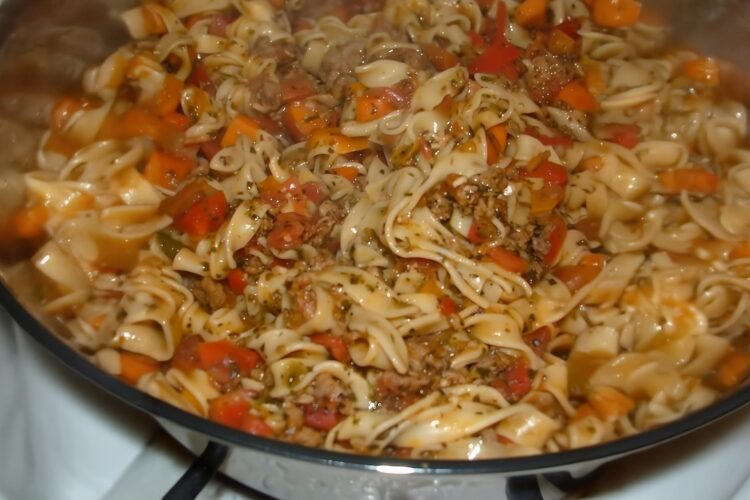
The Bold, Rustic, Skillet Pasta With Spicy Sausage, Sweet Peppers, and a Splash of Wine That Makes the Whole Thing Taste Like It Simmered All Afternoon
There is a category of pasta dish that exists somewhere between a reliable weeknight staple and a genuinely special occasion meal — effortless enough to make on a Tuesday without any advance planning, impressive enough to set in front of dinner guests without apology, and comforting enough to become one of those meals that people start requesting by name before you have even finished clearing the plates from the last time you made it. Italian Drunken Noodles land squarely in that category, and once you make them for the first time, you will understand immediately why they tend to stay in the rotation permanently.
Wide pappardelle noodles tossed in a skillet sauce built from deeply browned spicy Italian sausage, sweet caramelized bell peppers and onions, garlic, Italian seasoning, a full splash of dry white wine that deglazes the pan and lifts every bit of concentrated flavor from the browned fond into the sauce, and a generous can of diced tomatoes simmered into something rich and rustic and deeply satisfying. Every element is built in deliberate layers — the sausage first, then the vegetables, then the aromatics, then the wine, then the tomatoes — and that layering is what gives the finished dish a complexity and depth that tastes like patient, slow cooking even though the entire skillet comes together in under an hour.
The name comes from the wine — a splash poured into the hot pan that sizzles dramatically, lifts all the browned bits into the liquid, and simmers into the sauce where it adds an incredible depth of flavor that no amount of extra seasoning could replicate. The finished dish does not taste of wine. It tastes savory, rich, bright, and deeply Italian in the best possible way.
🍝 Why This Pasta Will Earn a Permanent Spot in Your Weekly Rotation
- 🌶️ Spicy Italian Sausage Changes Everything: Good Italian sausage — fennel-scented, generously seasoned, browned in chunky pieces until the exterior is deeply caramelized — is the backbone of this entire dish. It contributes a richness and a savory depth to the surrounding sauce that no other protein could provide in quite the same way.
- 🫑 Three Colors of Bell Pepper for Sweetness and Beauty: Red, yellow, and orange bell peppers caramelized in the same pan as the sausage drippings develop a sweetness and a slight jammy softness that provides the perfect counterpoint to the richness of the meat and the acidity of the tomatoes — and makes the finished dish look vibrant and spectacular in the bowl.
- 🍷 Wine Is the Secret Weapon: A half cup of dry white wine poured into the hot pan after the garlic sizzles and allowed to reduce until nearly evaporated does something to the sauce that cannot be achieved any other way — it lifts the concentrated browned fond from the pan into the liquid and adds a layer of acidity and complexity that makes the whole dish taste carefully and professionally constructed.
- 🍜 Wide Noodles Are the Correct Choice: Pappardelle’s broad, flat, slightly ruffled surface is specifically designed to carry substantial, chunky sauces exactly like this one. Every strand catches pieces of sausage, strands of caramelized onion, and pools of tomato sauce in a way that thinner pasta simply cannot.
- 🔄 Even Better the Next Day: The flavors of this dish deepen and meld considerably during overnight refrigeration, making the next day’s reheated leftovers — loosened with a splash of water or broth — taste even more complex and satisfying than the freshly made version.
📖 The Italian-American Culinary Tradition Behind This Dish
Italian Drunken Noodles belong to the broad, beloved category of Italian-American pasta cooking that developed in the immigrant communities of the American East Coast and Midwest throughout the early-to-mid 20th century — a cooking style that took the fundamental techniques and flavor principles of Southern Italian peasant cooking and adapted them to the ingredients, the budgets, and the abundant portions that defined American cooking culture.
The combination of Italian sausage, bell peppers, and onions is one of the most deeply embedded flavor triads in Italian-American cooking — appearing in sausage sandwiches at street fairs, in baked casseroles at church dinners, in sheet pan dinners and skillet suppers across the country. It works because each element complements the others so perfectly: the fat and fennel-spice of the sausage balanced by the natural sweetness of the caramelized peppers and onions, the whole combination anchored by the acidity and body of a tomato sauce.
The addition of wine to deglaze the pan — what the name “drunken” references — is a technique borrowed directly from traditional Italian cooking, where wine is used throughout the cooking process not as a flavoring agent in the finished dish but as a tool for extracting and concentrating the flavors that have built up in the pan during browning. The alcohol evaporates completely during the brief simmer that follows the pour; what remains in the sauce is the concentrated flavor of everything the wine pulled from the pan, which makes the finished dish taste dramatically more complex than its cooking time would suggest.
🛒 What You Will Need
Servings: 4 | Equipment: large pot for pasta, large heavy-bottomed skillet or Dutch oven
The Pasta
- 8 oz pappardelle noodles, uncooked — wide, flat, slightly ruffled egg pasta that is the defining textural element of this dish. Pappardelle’s broad surface area catches and holds chunky, rustic sauces better than any other pasta shape — each strand comes out of the skillet coated in sauce, with pieces of sausage and pepper tucked against its ruffled edges. If pappardelle is unavailable, wide egg noodles make the most practical and equally satisfying substitute. Avoid thin or delicate pasta shapes — this sauce needs noodles with presence and structure.
The Protein
- 4 links spicy Italian sausage, casings removed — squeeze the meat from the casings directly into the hot skillet and break it into chunky, irregular pieces as it browns. The casings are removed so the sausage can be broken into the rough, generous chunks that create the best textural presence in the finished dish. Spicy Italian sausage — seasoned with fennel seeds, garlic, red pepper, and paprika — provides the most complex and characterful result. Sweet Italian sausage produces a gentler, more family-friendly dish. Both versions are authentically delicious.
The Vegetables
- 1 large onion, quartered and thinly sliced — cooked in the sausage drippings until deeply caramelized and golden, adding a sweetness and savory depth that forms the aromatic foundation of the entire sauce.
- 1 red bell pepper, 1 yellow bell pepper, and 1 orange bell pepper, thinly sliced — three colors of bell pepper, added after the onions are caramelized, sautéed until just tender with a few caramelized spots. The combination of red, yellow, and orange provides both visual beauty and a nuanced sweetness — each color has a slightly different flavor profile and together they create a complexity that any single color alone could not.
- 4 cloves garlic, pressed or finely minced — added after the peppers and cooked for about 30 seconds before the wine goes in. Garlic blooms briefly in the hot fat, releasing its aromatic compounds into the surrounding oil and becoming the bridge between the vegetable base and the wine and tomato sauce that follow.
The Sauce
- ½ cup dry white wine — Chardonnay or any dry, unoaked white wine you would genuinely enjoy drinking. Pour into the hot pan immediately after the garlic, and the sizzle and steam will be dramatic and immediate. Use a spoon to scrape the entire bottom of the pan as the wine bubbles, releasing every bit of the browned fond into the liquid. Allow the wine to reduce until nearly evaporated before adding the tomatoes — you want the alcohol and excess liquid to cook off, leaving behind only the concentrated flavor.
- 1 can (28 oz) diced tomatoes with juice — the body and acidity of the finished sauce. Diced tomatoes rather than crushed or pureed provide the chunky, rustic texture that makes this dish look and feel like a proper Italian-American skillet pasta rather than a smooth, uniform sauce. The tomato juice from the can contributes the liquid that transforms the pan contents from a sauté into a sauce.
- 1½ tsp salt, 1 tsp Italian seasoning, ½ tsp cracked black pepper — the primary seasoning of the dish, added to the onions and carried through the entire sauce.
The Finish
- 2 tablespoons flat-leaf parsley, chopped — stirred into the sauce just before tossing the noodles, adding a clean, fresh green note that brightens the richness of the meat and tomato sauce.
- ¼ cup fresh basil, julienned, divided — half stirred into the sauce with the parsley, half scattered over the finished bowls as a garnish. Fresh basil at the very end of cooking preserves its fragrance and bright green color far better than basil cooked into the sauce from the beginning.
- Drizzle of olive oil for finishing — a thin drizzle of good olive oil over the finished pasta adds a silky richness and a fruity fragrance that ties all the components together and gives the dish its final glossy, restaurant-quality appearance.
- Shaved or grated Parmesan, optional — scattered over individual bowls at the table for a salty, nutty, deeply savory finishing touch that is optional only in the strictest technical sense.
👨🍳 Step-by-Step Method
Prep time: 20 minutes | Cook time: 30 minutes | Total time: 50 minutes | Servings: 4
Step 1 — Cook the Pasta: Bring a large pot of generously salted water — it should taste pleasantly seasoned, not flat — to a rolling boil. Cook the pappardelle according to package directions, but pull it out 1 to 2 minutes before the recommended al dente time. The noodles will finish cooking in the skillet sauce, and if they are already fully cooked when they go in, they will become soft and overcooked by the time they are tossed and served. Before draining, scoop out and reserve at least 1 cup of pasta cooking water — this starchy liquid is what makes the sauce cling beautifully to the noodles rather than pooling at the bottom of the bowl. Drain the pasta and keep warm.
Step 2 — Brown the Sausage: Heat 2 tablespoons of olive oil in a large, heavy-bottomed skillet or Dutch oven over medium-high heat until shimmering. Add the sausage meat, removed from the casings, and press it into the pan in rough, generous chunks. Cook for 3 to 4 minutes without stirring to allow the first side to develop a deep, caramelized crust — that crust is concentrated flavor. Then break the sausage into irregular pieces with a wooden spoon and continue cooking until completely browned with no pink remaining and the exterior is deeply caramelized. Remove the browned sausage with a slotted spoon and set aside. Leave the rendered fat in the pan — this is where the next layers of flavor begin.
💡 Pro Tip: The instinct to stir the sausage constantly as it browns is understandable but counterproductive. Constant stirring prevents the contact between the meat and the hot pan surface that creates Maillard browning — the caramelized crust that contains most of the sausage’s flavor contribution to the finished sauce.
Step 3 — Caramelize the Onions: Add the sliced onion to the fat remaining in the skillet over medium heat. Cook, stirring occasionally, for 8 to 10 minutes until the onions are completely soft, golden at the edges, and beginning to caramelize. Add the salt, Italian seasoning, and black pepper and stir to incorporate.
Step 4 — Add the Peppers and Garlic: Add all three colors of sliced bell pepper to the caramelized onions. Sauté for 2 minutes until the peppers are just beginning to soften. Add the pressed or minced garlic and stir continuously for 30 seconds — enough to bloom the garlic’s aromatic compounds without allowing it to scorch.
Step 5 — Deglaze With Wine: Pour the white wine into the hot pan — it will sizzle dramatically and release a burst of steam. Using a wooden spoon, scrape the entire bottom of the pan vigorously to lift all the browned bits — the fond — into the liquid. These bits are concentrated flavor and losing them to the pan surface rather than incorporating them into the sauce is a genuine culinary waste. Allow the wine to simmer and reduce until nearly evaporated — approximately 2 to 3 minutes. The pan should look almost dry with just the vegetables and a small amount of liquid remaining.
Step 6 — Build the Sauce: Add the entire can of diced tomatoes with all their juice and return the browned sausage to the skillet. Stir everything together thoroughly to combine. Bring to a simmer and cook for 3 to 4 minutes, stirring occasionally, until the tomatoes have melded with the onions, peppers, and sausage into a unified, chunky, deeply colored sauce. Taste and adjust seasoning with additional salt or pepper if needed.
Step 7 — Toss the Noodles: Add the drained pappardelle directly to the skillet with the sauce. Using tongs or two large spoons, toss everything together gently but thoroughly until every strand of noodle is evenly coated in the sauce and the sausage and peppers are distributed throughout. If the sauce seems too thick — the noodles should be saucy but not dry — add splashes of the reserved pasta cooking water, a few tablespoons at a time, tossing after each addition until the sauce reaches a glossy, coating consistency that clings to the noodles without pooling at the bottom of the pan.
Step 8 — Finish and Serve: Stir in the chopped parsley and half the julienned fresh basil. Drizzle a thin stream of good olive oil over the entire pan and toss once more. Divide into deep bowls and scatter the remaining fresh basil and a generous amount of shaved or grated Parmesan over each serving. Serve immediately while the noodles are at their most perfectly coated and the basil is still fragrant.
🍽️ Serving Suggestions and Storage
Serve this pasta in generous portions in deep bowls where the sauce can pool around the noodles. Crusty bread or garlic bread alongside for mopping up the extra sauce in the bowl is strongly recommended and never a wrong decision. A crisp green salad with a simple lemon vinaigrette provides the fresh, acidic counterpoint that makes the richness of the pasta feel balanced rather than heavy. For drinks, a medium-bodied red wine — Chianti, Zinfandel, or Barbera d’Asti — complements the tomato and sausage flavors beautifully. For storage, refrigerate cooled leftovers in an airtight container for up to 4 days. Reheat gently in a skillet over medium-low heat with a splash of water or broth stirred in to loosen the sauce — the flavors will have deepened overnight and the reheated version is genuinely, sometimes surprisingly, better than the freshly made one.
💡 Tips and Variations
For a milder, family-friendly version, substitute sweet Italian sausage for spicy and reduce or omit the red pepper flakes. For deeper tomato richness, stir a tablespoon of tomato paste into the pan along with the garlic before adding the wine — the tomato paste darkens in the fat and adds an intensely concentrated tomato flavor that makes the sauce taste more complex. For added earthiness and texture, add 1 cup of sliced cremini or portobello mushrooms to the pan after the sausage is removed and sauté until deeply golden before continuing with the onions. For a creamy, vodka-sauce-adjacent version, stir ¼ cup of heavy cream into the finished sauce just before tossing the noodles — the cream enriches the tomato sauce into something lush and velvety that clings even more beautifully to the wide noodles. For fresh greens, add 2 large handfuls of baby spinach to the skillet with the tomatoes and stir until wilted — it adds color, nutrition, and a slight freshness that balances the richness of the meat and cheese.
❓ Frequently Asked Questions
Can I substitute the white wine with something non-alcoholic? Yes — substitute the wine with an equal amount of chicken broth combined with a teaspoon of white wine vinegar for acidity. The result will be slightly less complex but still deeply flavorful, and the deglazing function will work just as effectively.
My sauce seems too thin after adding the tomatoes — how do I thicken it? Continue simmering the sauce uncovered for an additional 5 to 8 minutes before tossing the noodles — the extended simmer will reduce and concentrate the liquid into a thicker, more coating consistency. You can also reserve a slightly smaller quantity of pasta water and add it more judiciously when tossing the noodles.
Can I use a different type of pasta? Yes — hearty egg noodles, tagliatelle, or rigatoni all work well with this sauce. Avoid thin or delicate pasta shapes that will be overwhelmed by the chunky, assertive sauce. The pasta needs presence and structure to stand up to everything happening in this skillet.
🌟 A Final Word
Thirty minutes of active cooking. One large skillet. A short list of genuinely flavorful ingredients layered in a specific sequence that each builds on what came before it. And a bowl of pasta at the end that tastes like the kitchen has been working for considerably longer and with considerably more effort than it actually has.
That is the real achievement of Italian Drunken Noodles — not complexity disguised as simplicity, but genuine simplicity producing genuine complexity through the simple, reliable alchemy of good technique applied to great ingredients. The sausage browned deeply. The onions caramelized properly. The wine poured in at the right moment and allowed to do its work. The tomatoes simmered until they became sauce rather than just ingredients. The noodles tossed in the pan until every strand is coated and glossy and permeated with everything it touched.
Make this on a Tuesday when you want something that feels like a weekend. Make it for dinner guests who will ask you how long it took and not quite believe the answer. Make it ahead on Sunday and eat the even-better reheated version all week. And accept, gratefully, that some pasta dishes are not just dinner — they are the reason people linger at the table a little longer, eat a little more than they planned, and ask if there is any left before the first round of plates is even cleared.