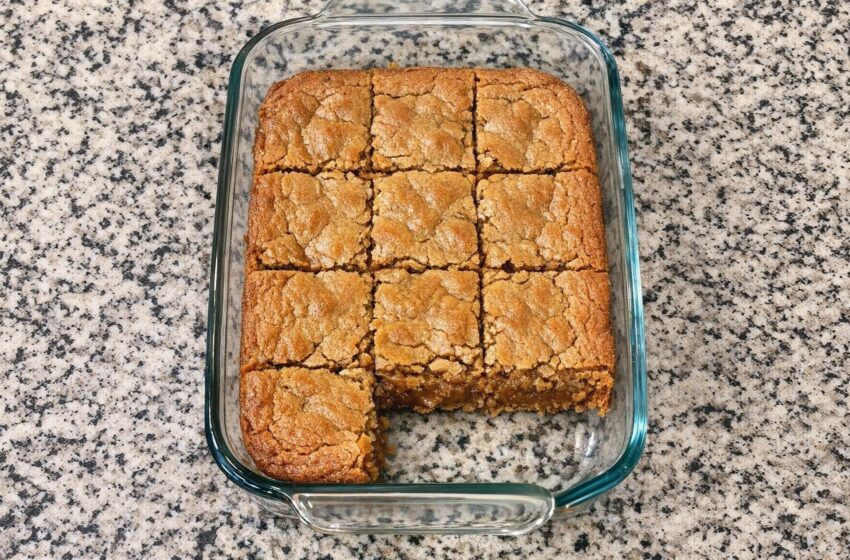
Every bake sale seems to have that one tray that vanishes before anyone else’s has even been unwrapped, and more often than not, it’s built on a recipe far simpler than anyone assumes. These peanut butter blondies fit that description exactly — just peanut butter, brown sugar, and eggs, stirred together and baked into rich, chewy bars with a soft center and a gently crackled top. No flour, no butter, no long ingredient list. Just three pantry staples, transformed into something people ask for the recipe of, every single time.
Why Peanut Butter Can Replace Both Fat and Flour
The reason this recipe works with so few ingredients comes down to what peanut butter is actually made of. It’s already a dense, fat-rich paste with enough natural binding power to hold a baked good together without needing a separate source of flour or butter. The fat content in peanut butter does the job butter would normally do — enriching the batter and contributing to a moist, tender texture — while its ground-nut structure gives the finished bars enough body to set properly once baked, standing in for the structural role flour typically plays.
That’s why this recipe can skip flour entirely and still produce something that holds together as a proper bar rather than falling apart — peanut butter alone is dense and binding enough to carry that structural weight on its own.
Why Brown Sugar Rather Than White
Brown sugar isn’t just a sweetener here — its molasses content adds moisture and a deeper, slightly caramel-like flavor that plain white sugar wouldn’t provide. Because this recipe has so few ingredients working together, that extra depth from the brown sugar’s molasses matters more than it might in a recipe with a longer list of flavor contributors. It reinforces the same warm, slightly toasty character that a good peanut butter already carries, rather than introducing a flat, purely sweet note.
Brown sugar’s higher moisture content, compared to white sugar, also plays a direct role in keeping these blondies chewy rather than crisp or cakey — an important detail in a recipe with no added liquid beyond the eggs.
Why the Eggs Matter So Much in Such a Short Ingredient List
With no flour and no separate leavening agent, the eggs here are doing considerably more work than they would in a standard baked good. They provide the primary source of structure and lift, their proteins setting as the bars bake to give the blondies enough cohesion to slice cleanly rather than crumbling apart. They also contribute moisture, working alongside the peanut butter’s natural fat content to keep the finished bars from turning dry or dense.
Why Watching the Bake Time Closely Really Matters
Because this recipe has no flour to provide a buffer of structure, and because it relies so heavily on sugar for both sweetness and moisture, the window between a gooey, slightly underdone center and an overbaked, dry bar is narrower than in a typical blondie or brownie recipe. The instruction to avoid overbaking if you want a gooey middle isn’t just a preference note — it’s a genuine reflection of how quickly this batter’s texture can shift once it crosses from just-set to fully baked, given the concentrated sugar content driving that transition.
The Recipe
Servings: 9 squares
Ingredients
- 1 cup creamy peanut butter
- 1 cup packed brown sugar
- 2 large eggs
Directions
- Preheat and prep. Preheat the oven to 350°F and lightly grease an 8-inch glass baking dish, or line it with parchment for easier lifting and slicing.
- Mix the batter. In a medium mixing bowl, stir together the peanut butter, brown sugar, and eggs until smooth, thick, and fully combined.
- Spread into the dish. Spread the batter evenly into the prepared baking dish, smoothing the top with a spatula.
- Bake. Bake for 20 to 25 minutes, until the top is puffed and lightly golden and the center is just set. Avoid overbaking if you want a gooey middle.
- Cool and slice. Let the blondies cool for at least 20 minutes before slicing into squares and serving.
Tips for the Best Results
- Use regular creamy peanut butter for the most reliable texture. Natural peanut butter can work, but if it’s very oily or separated, the bars may turn out denser or greasier than intended.
- Let the blondies cool fully before cutting for the cleanest slices. Wiping the knife between cuts, and briefly chilling the pan if needed, helps achieve especially neat squares for a bake sale tray.
- Watch the bake time closely near the end. The sugar-heavy batter can go from perfectly set to overdone quickly, so checking a few minutes before the timer goes off is worth the extra attention.
- Pull the pan as soon as the center looks just set for a fudgier texture. For firmer bars, a few extra minutes in the oven works, but keep a close eye during that additional time.
Variations Worth Trying
- Add chocolate chips. Folding in a handful before baking adds pockets of melted chocolate throughout.
- Add chopped peanuts. A bit of extra crunch complements the smooth, dense texture of the base recipe.
- Add a pinch of sea salt. Sprinkled over the top before baking, it provides a nice contrast against the sweetness, in the same way sea salt enhances a classic peanut butter cookie.
Serving Suggestions
These blondies are rich enough to serve in small squares, whether slightly warm or fully cooled. A cold glass of milk, a cup of coffee, or hot tea all make natural pairings. For a more dessert-focused presentation, a scoop of vanilla ice cream or a few sliced strawberries alongside helps balance out the deep, concentrated peanut butter flavor.
Why This Recipe Earns Its Reputation
What makes these blondies such a reliable go-to isn’t just how quickly they come together — it’s how disproportionate the payoff is relative to the ingredient list. Three pantry staples, a few minutes of mixing, and a short bake produce something genuinely rich and satisfying, with a texture that rivals far more involved recipes. For a last-minute bake sale contribution or a quick sweet fix, it’s easy to understand why this one keeps getting requested by name.