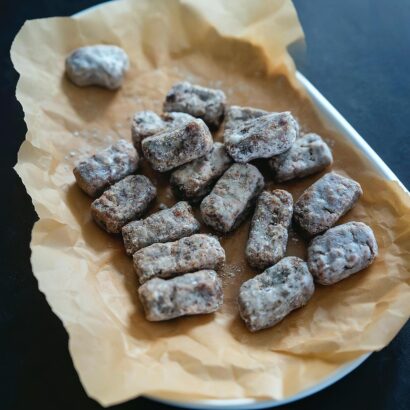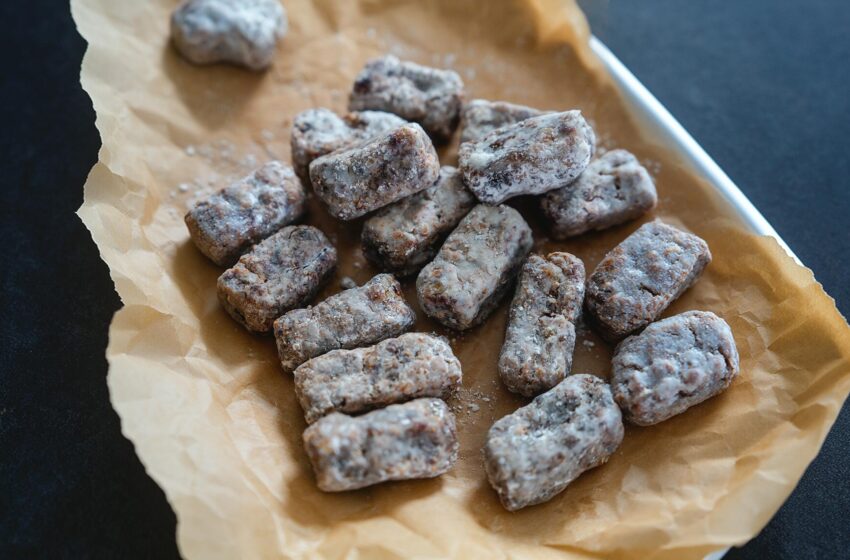
Few desserts come with a name as puzzling as Chinese Chews. Despite what the name suggests, there’s no real tie to Chinese cuisine here — just a simple, old-fashioned combination of dates, walnuts, and a soft, chewy batter rolled in powdered sugar. The origin of the name has stumped home cooks and food historians for decades, but the treat itself has stuck around in family recipe boxes since well before most of us were born.
A Recipe With Real History Behind It
Chinese Chews trace back further than most vintage desserts still made today. The recipe first appeared in the June 1917 issue of Good Housekeeping magazine, submitted by a home cook named Mrs. L. G. Platt of North Bend, Oregon. From there, it spread widely through newspapers and community cookbooks over the following decades, becoming a fixture of Christmas baking trays across the country. More than a hundred years later, nobody has landed on a solid explanation for the “Chinese” in the name — some think it may have come from dates and walnuts once being seen as exotic, “Eastern” ingredients, but it remains one of those small culinary mysteries that’s never been fully solved.
Somewhere Between a Cookie and a Candy
Part of what makes Chinese Chews so appealing is how unfussy they are. There’s no butter, no elaborate flavorings, and no frosting involved — just flour, sugar, eggs, dates, and walnuts mixed into a thick batter and baked as a single square. The dates do double duty here, adding natural sweetness while also giving the finished bars their signature chewy texture, while the walnuts bring just enough crunch to keep every bite interesting. Once baked, the warm square is sliced, rolled by hand into little logs, and coated in powdered sugar — a finish that keeps the pieces from sticking together and makes them perfect for filling cookie tins or gift boxes.
What You’ll Need
- ¾ cup all-purpose flour
- 1 cup granulated sugar
- 1 teaspoon baking powder
- ½ teaspoon salt
- 1 cup chopped dates
- ¾ cup chopped walnuts
- 2 eggs
- 1 cup powdered sugar, for rolling
Contains eggs, gluten, nuts, and wheat.
Yield: Serves 12 · Prep: 10 minutes · Bake: 25 minutes
How to Make Chinese Chews
- Preheat and prep. Preheat your oven to 350°F and grease an 8×8-inch metal baking dish.
- Mix the dry ingredients. In a large mixing bowl, sift together the flour, granulated sugar, baking powder, and salt. Stir in the chopped dates and walnuts until evenly distributed.
- Add the eggs. Add the eggs to the mixture and stir until no dry spots remain — the batter will be thick.
- Bake. Transfer the batter to the prepared baking dish and bake for 24–28 minutes. Be careful not to overbake; if the chews dry out too much, they won’t roll into shape properly afterward.
- Slice and roll. Let the baked square cool for about 10 minutes, then slice it into small rectangles. Roll each piece between your hands to compress it into a log shape.
- Coat in sugar. Roll each chew in powdered sugar, then let them cool completely before storing.
Tips for the Best Results
- Don’t overbake. Pulling these from the oven right at the 24–28 minute mark keeps them soft enough to roll into shape without crumbling.
- Work while they’re warm. Slicing and rolling the chews shortly after baking makes the shaping process much easier than waiting until they’ve fully cooled.
- Chop the dates and walnuts evenly. Uniform pieces help the batter hold together better once it’s sliced and rolled.
- Store them properly. A second light coating of powdered sugar before serving helps keep the pieces from sticking together in storage.
Storage
Store fully cooled Chinese Chews in an airtight container at room temperature, where they’ll keep well for about a week — which is part of why they became such a popular make-ahead treat for the holidays in the first place.
Final Thoughts
Chinese Chews may come with an unsolved mystery attached to their name, but there’s nothing mysterious about why they’ve lasted over a century in recipe boxes: a handful of pantry staples turn into something genuinely delicious, with a texture that lands somewhere between a cookie and a candy. Whether you’re baking them for a holiday cookie tray or just want to try a true piece of vintage American baking history, this is one classic worth bringing back.