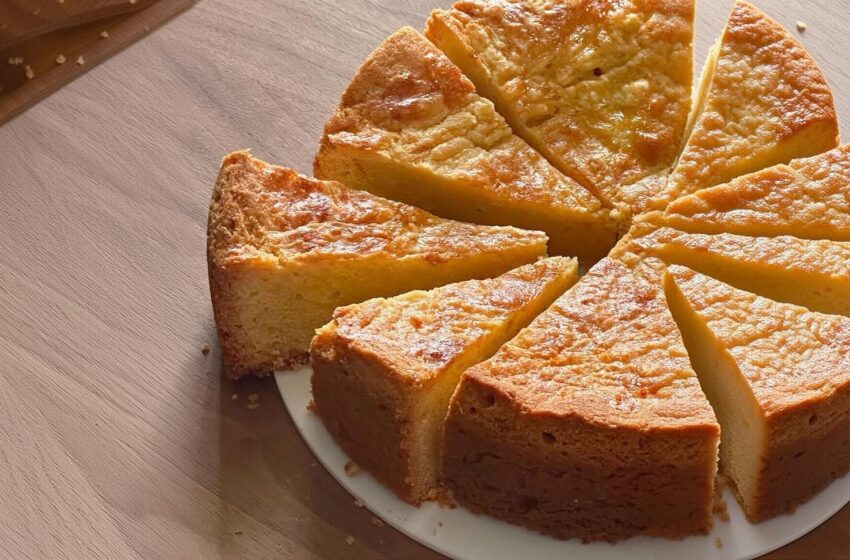
Not every great dessert needs a towering layer of frosting to earn attention. Dutch Butter Cake, known in its home country as boterkoek, proves that point simply and elegantly — a dense, buttery cake with an almost equal ratio of butter to flour by weight, finished with nothing more than a crosshatched egg wash on top. The result is a dessert that occupies a genuinely unique middle ground: part tart, part shortbread, part cake, with a texture that’s simultaneously crumbly and tender, chewy and delicately melt-away.
It’s the kind of unpretentious, deeply satisfying bake that’s been a staple in Dutch kitchens for generations, and one that translates easily into any home kitchen without needing the traditional specialty pan it’s often made in.
Why the Butter-to-Flour Ratio Defines This Cake’s Entire Character
What separates this cake from a standard butter cake is the sheer proportion of butter relative to flour — nearly equal by weight, which is dramatically more butter than a typical cake recipe would call for. That ratio is what pushes the texture toward shortbread territory rather than a light, airy cake crumb. With so much fat coating the flour’s proteins, gluten development stays limited, producing a dense, tender result that holds together with a slight crumble rather than a soft, spongy bite. It’s the defining characteristic of boterkoek, and it’s exactly why this cake reads as something distinct from an ordinary butter cake, despite sharing many of the same base ingredients.
Why Citrus Zest Plays Such an Important Role
With such a simple, short ingredient list — flour, butter, sugar, eggs, a touch of nutmeg — there’s very little standing between the batter and blandness if the flavoring isn’t handled well. Orange zest (or lemon zest, as an easy substitute) solves that problem efficiently. Zest carries a concentrated dose of a citrus fruit’s aromatic oils, delivering bright, fragrant flavor without adding meaningful liquid or acidity that would otherwise throw off the batter’s careful butter-to-flour balance. Beaten directly into the butter and sugar at the start, that zest infuses through the whole batter, giving the finished cake a genuine citrus lift rather than relying purely on vanilla and butter for its entire flavor identity.
Why the Dough Gets Smoothed With Plastic Wrap Rather Than a Spatula
Because this dough is notably thick — closer to a cookie dough than a pourable cake batter — spreading it evenly into the pan with just a spatula can be awkward and can leave an uneven, lumpy surface. Pressing a sheet of plastic wrap directly onto the dough and smoothing it down through the wrap solves that problem cleanly, letting you press and spread the thick dough evenly across the entire pan without the dough sticking to your tool of choice. It’s a simple trick, but one that makes a meaningful difference in achieving a flat, uniform surface before the crosshatch pattern and egg wash go on.
Why the Crosshatch Pattern Isn’t Just Decorative
The signature crosshatched surface, achieved by dragging the tines of a fork across the egg-washed dough before baking, does more than create boterkoek’s recognizable look. Those ridges increase the dough’s surface area slightly, which helps it bake up with a bit more texture and a more pronounced golden color once baked, compared to a perfectly smooth surface. Combined with the egg white wash brushed on beforehand, that ridged pattern browns attractively and consistently, giving the finished cake its classic, immediately identifiable appearance.
The Recipe
Yield: Serves 8 to 10
Prep time: 18 minutes
Cook time: 25 minutes
Ingredients
- 2¾ cups all-purpose flour
- 1 teaspoon fine salt
- ¼ teaspoon ground nutmeg
- 1½ cups unsalted butter, softened
- 1¼ cups granulated sugar
- ¼ cup packed light brown sugar
- 2 teaspoons orange zest
- 1 large egg, room temperature
- 1 large egg yolk, room temperature
- 1½ teaspoons vanilla extract
- 1 large egg white, lightly beaten
Preparation
- Preheat and prep. Preheat the oven to 350°F. Grease a 9-inch springform pan with baking spray and line the bottom and sides with parchment paper.
- Combine the dry ingredients. In a bowl, combine the flour, salt, and nutmeg.
- Cream the butter, sugars, and zest. In another bowl, beat the butter, granulated sugar, brown sugar, and orange zest until smooth and well combined, about 3 to 4 minutes, scraping the bowl periodically.
- Add the eggs and vanilla. Add the egg and egg yolk until fully incorporated, then add the vanilla.
- Add the dry ingredients. Gradually add the dry ingredients until just incorporated — the dough will be thick.
- Press into the pan. Press the dough into the prepared pan. Use plastic wrap over the top to evenly spread the dough to all parts of the pan, then discard the plastic wrap.
- Add the egg wash and pattern. Brush the top with the beaten egg white, then use the tines of a fork to create a crosshatch pattern in the dough.
- Bake. Bake until a toothpick comes out clean and the top has a golden hue, about 25 to 30 minutes.
- Cool. Let the cake rest for 5 minutes in the pan before removing it to cool on a wire rack.
Tips for the Best Results
- Use room-temperature eggs. They incorporate more smoothly into the thick, buttery batter than cold eggs would.
- Don’t skip the plastic wrap trick for smoothing the dough. It genuinely makes achieving an even surface much easier with a dough this thick.
- Brush the egg wash evenly before creating the crosshatch pattern. This ensures consistent browning across the whole surface.
- Watch closely near the end of baking. Because this cake is dense and butter-rich, it can go from perfectly golden to overly dark relatively quickly.
- Let the cake cool before slicing. A brief rest helps it firm up slightly, making for cleaner slices.
Serving Suggestions
This cake pairs naturally with tea or coffee, its not-too-sweet, richly buttery flavor making it an easy match for a hot drink any time of day. Because it isn’t tied to any specific season or occasion, it works just as well as an everyday treat as it does for a gathering — a genuinely versatile, seasonless staple worth keeping in regular rotation.
Why This Simple Cake Deserves More Attention
In a dessert landscape often dominated by elaborate frosting and towering presentation, Dutch Butter Cake makes a quiet but compelling case for restraint. Its appeal comes entirely from technique and ratio — a careful balance of butter to flour, a bit of bright citrus zest, and a simple crosshatched egg wash finish — rather than any flashy decoration. The result is a cake that’s crumbly yet tender, rich yet not overly sweet, and satisfying enough to make people wonder why they don’t bake it more often.

