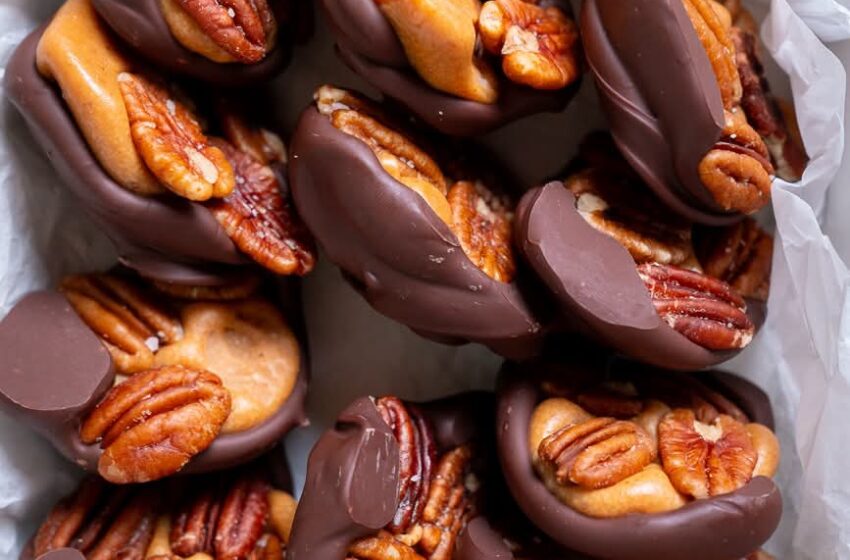
Not every great holiday treat requires flour, eggs, or an oven-baked sponge to earn attention. Georgia Browns prove that point simply and elegantly — a rich, handmade candy that stacks buttery roasted pecans beneath a pool of chewy homemade caramel and a thick cap of semi-sweet chocolate. The result is a confection that occupies a genuinely unique space: part classic “turtle” candy, part gourmet chocolate shop staple, with a texture that is simultaneously crunchy, gooey, and deeply decadent.
It’s the kind of unpretentious, incredibly high-reward sweet that feels distinctly special during the holidays, translating easily into any home kitchen for a guaranteed crowd-pleaser that rivals anything you’d buy in a boutique confectionery.
Why Roasting the Pecans Defines This Candy’s Entire Character
What separates this candy from a cloyingly sweet, store-bought treat is the crucial first step of treating the nuts. By tossing the pecan halves in melted butter and salt before roasting them in the oven, you push the flavor profile toward a complex, savory depth rather than a flat, raw crunch. The butter toasts the oils in the nuts, while the salt provides an essential savory contrast that effortlessly cuts through the heavy sugars of the caramel and chocolate that follow.
Why Hitting 245°F Plays Such an Important Role
With a caramel base built on brown sugar, condensed milk, and corn syrup, precision is everything. Boiling the mixture to exactly 245°F (the “firm ball” stage in candy making) solves the problem of unpredictable textures. Hitting this specific temperature ensures enough water evaporates so that the caramel sets up firm enough to hold its shape over the pecans, yet remains delightfully chewy rather than turning into a rock-hard brittle. It’s the defining characteristic of this recipe, and exactly why a candy thermometer is your best friend here.
Why Adding Vanilla Off the Heat Isn’t Just a Suggestion
Because this recipe relies on boiling sugar at very high temperatures, adding flavor extracts too early is a recipe for disaster. Stirring in the vanilla extract and the final pinch of salt after removing the saucepan from the heat ensures the delicate alcohol-based vanilla doesn’t immediately vaporize and cook off. It’s a simple, quick step, but one that makes a meaningful difference in preserving that warm, aromatic flavor in the finished caramel.
The Recipe
Yield: Makes 18 candies Prep time: 20 minutes Cook time: 30 minutes
Ingredients
For the Pecans:
- 2 cups pecan halves
- 3 tablespoons butter, melted
- 2 teaspoons salt
For the Caramel:
- ¼ cup water
- 1 cup dark brown sugar
- 1 cup sweetened condensed milk
- ⅔ cup corn syrup
- 7 tablespoons butter
- 1 teaspoon vanilla extract
- ½ teaspoon salt
For the Topping:
- 1¾ cups semi-sweet chocolate, melted
Preparation
- Roast the pecans. Preheat your oven to 325°F (165°C) and line a large cookie sheet with parchment paper. In a medium bowl, toss the pecan halves with the 3 tablespoons of melted butter, then season with the salt. Spread the nuts in a single layer on the prepared cookie sheet and bake for 13 to 15 minutes until fragrant and toasted. Set aside to cool completely.
- Boil the caramel. In a small, heavy-bottomed saucepan, combine the water, dark brown sugar, sweetened condensed milk, corn syrup, and 7 tablespoons of butter. Bring the mixture to a boil over medium heat, stirring frequently to prevent scorching on the bottom.
- Monitor the temperature. Maintain the boil until the mixture reaches exactly 245°F on a candy thermometer. Immediately remove the saucepan from the heat and carefully stir in the vanilla extract and ½ teaspoon of salt.
- Build the base. Line a fresh baking sheet with parchment paper. Arrange the cooled, roasted pecans into small groupings of 3 to 4 nuts each, spacing the clusters a couple of inches apart.
- Add the caramel. Spoon a generous dollop of the hot caramel directly over the center of each pecan cluster. The caramel will spread slightly and bind the nuts together. Allow the caramel to cool and set completely.
- Top with chocolate. Once the caramel is firm to the touch, spoon the melted semi-sweet chocolate evenly over the top of each candy, covering the caramel.
- Set and store. Allow the chocolate to cool and harden completely. Store the finished Georgia Browns in an airtight container in a cool, dry place.
Tips for the Best Results
- Use a candy thermometer. Guessing when caramel is done by eye often leads to candy that either runs all over the pan or breaks your teeth. A clip-on candy thermometer takes the guesswork out of hitting 245°F.
- Prep your assembly station early. Once the caramel hits its target temperature, it will begin to set as it cools. Have your parchment paper laid out and your pecan clusters pre-arranged so you can spoon the hot caramel immediately.
- Temper or thin your chocolate. If your melted semi-sweet chocolate feels too thick to spoon easily, stir in a half-teaspoon of coconut oil or vegetable shortening to thin it out and give it a beautiful, glossy shine once it sets.
- Watch the boil. Caramel expands significantly as it boils. Ensure your saucepan has tall enough sides so the sugar mixture doesn’t bubble over onto your stove.
Serving Suggestions
These rich candies pair naturally with a hot cup of black coffee or a shot of espresso, their sweet and salty profile making them an easy match for a bitter beverage. Because they look so professional and travel exceptionally well once the chocolate is set, they work just as beautifully packed into decorative tins for holiday gifting as they do resting on a dessert tray after a heavy winter meal — a genuinely versatile, gourmet staple worth keeping in your confectionary rotation.
Why This Simple Candy Deserves More Attention
In a culinary landscape often dominated by complicated pastries or store-bought boxes of chocolates, Georgia Browns make a quiet but compelling case for homemade candy making. Their appeal comes entirely from clever layering — a careful balance of buttery roasted nuts, precision-boiled caramel, and a snappy chocolate shell — rather than any flashy baking techniques. The result is a treat that is crunchy yet chewy, sweet yet perfectly salty, and satisfying enough to make people wonder which boutique chocolate shop you bought them from.