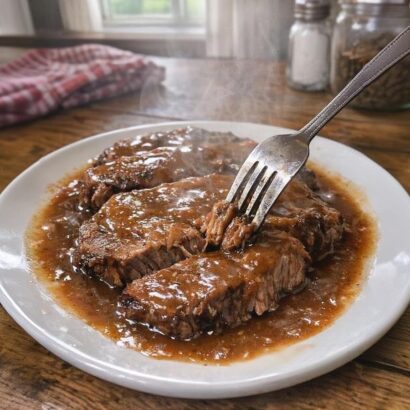
There’s a particular category of Midwestern casserole that skips nearly every conventional step — no pre-boiling pasta, no browning meat, no simmering a sauce on the stovetop — and instead builds an entire meal directly in the baking dish, letting the oven handle everything at once. This meatball stew belongs to that tradition. Dry egg noodles, frozen meatballs, broth, and canned soup go into a glass dish exactly as they are, and a couple of hours later, dinner is done.
It’s the kind of dish that’s shown up on Amish and country tables for generations, precisely because it demands so little hands-on effort while still delivering something warm, hearty, and genuinely comforting.
Why the Noodles Never Get Boiled First
The most distinctive thing about this recipe is what it skips: there’s no pot of boiling water, no draining pasta before it goes into the dish. Instead, dry egg noodles are spread directly into the baking dish and left to soften entirely from the broth-and-soup mixture poured over them, absorbing that liquid as the covered dish bakes.
This works because the noodles are given plenty of time and moisture to fully hydrate inside a sealed environment. Covering the dish tightly with foil traps steam and keeps the liquid from evaporating away too quickly, giving the dry noodles the sustained moisture they need to soften completely over the course of the bake — essentially replicating what boiling water would normally do, just inside the oven instead of on the stovetop.
Why the Meatballs Go In Frozen, Not Thawed
Using frozen, fully cooked meatballs straight from the freezer, without thawing them first, is a deliberate part of what makes this such a low-effort recipe. Since the meatballs are already fully cooked, the goal during baking isn’t to cook them through from raw — it’s simply to reheat them and let them absorb some of the surrounding broth’s flavor. Starting them frozen doesn’t compromise that process at all; by the time the noodles below have softened and the dish has baked long enough, the meatballs have had more than enough time to fully thaw and heat through, arriving at the table just as hot as if they’d been thawed in advance, with the added convenience of skipping that step entirely.
Why the Dish Gets Covered, Then Uncovered
This recipe uses a two-stage baking process, and each stage does something different. The first 45 minutes, covered tightly with foil, traps steam and moisture, giving the dry noodles the sustained hydration they need to soften properly. Removing the foil for the final 15 to 20 minutes changes the environment entirely, allowing some of the moisture to cook off and the sauce to reduce and thicken slightly, while the top layer of meatballs gets a bit more direct heat. That final uncovered stretch is what turns the dish from a fully liquid mixture into something closer to a properly thickened stew, with the sauce clinging rather than pooling thin around the noodles.
The Recipe
Servings: 6
Ingredients
- 8 oz dry wide egg noodles
- 1½ lb frozen fully cooked meatballs
- 3 cups beef broth
- 1 (10.5 oz) can condensed cream of mushroom soup
Directions
- Preheat and prep. Preheat the oven to 350°F (175°C) and lightly grease a 9×13-inch glass baking dish.
- Add the noodles. Spread the dry egg noodles evenly over the bottom of the dish. Do not cook them first — they’ll soften in the oven as they absorb the broth.
- Mix the broth and soup. In a medium bowl or large measuring cup, whisk together the beef broth and condensed cream of mushroom soup until fairly smooth. A few small lumps are fine.
- Pour over the noodles. Pour the broth and soup mixture evenly over the dry noodles, making sure they’re all moistened. Gently press down any noodles sticking up so they’re mostly covered with liquid.
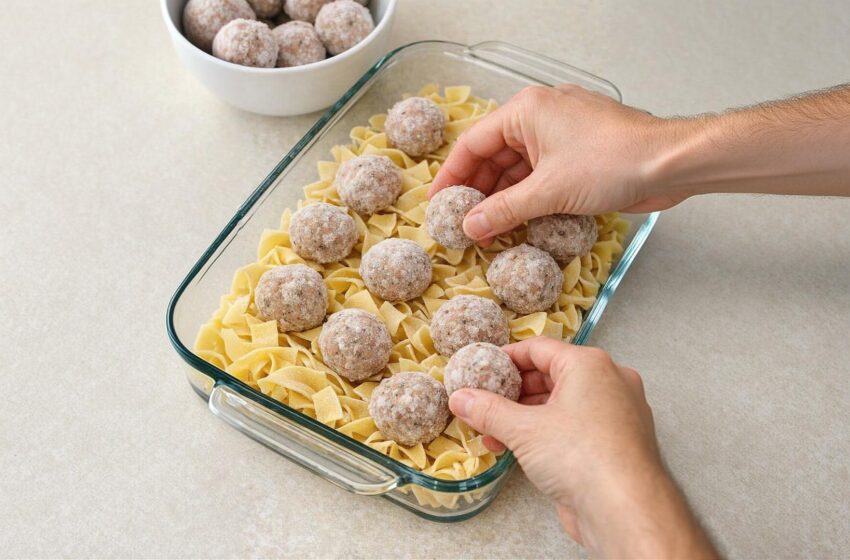
- Add the meatballs. Arrange the frozen meatballs in a single, fairly even layer over the noodles. No need to thaw them first.
- Cover and bake. Cover the dish tightly with foil and bake on the center rack for 45 minutes.
- Uncover and continue baking. Carefully remove the foil, watching for hot steam, and gently stir the noodles around the edges, leaving most of the meatballs on top. Return the dish to the oven, uncovered, and bake for another 15 to 20 minutes, until the noodles are tender, the meatballs are heated through, and the stew is bubbling around the edges.
- Rest before serving. Let the stew rest for 5 to 10 minutes on the counter before serving. This short rest lets the sauce thicken slightly, making it easier to spoon into bowls.
Tips for the Best Results
- Don’t skip the covered baking stage. This is what gives the dry noodles enough time and moisture to properly soften.
- Make sure the noodles are mostly submerged before baking. Any pieces sticking up too far above the liquid may not soften evenly.
- Let the dish rest before serving. Cutting into it immediately, while it’s at its hottest and loosest, makes for a runnier, less cohesive serving than waiting the full rest period.
- Watch for steam when removing the foil. It escapes quickly and can cause burns if you’re not careful.
Variations Worth Trying
- For a creamier stew: stir in an extra ½ cup of cream or whole milk when mixing the broth and soup.
- For a lighter flavor: substitute chicken broth for beef broth. Any condensed cream soup works well here — cream of celery or cream of chicken both bring a nice old-fashioned flavor.
- For added color and nutrition: scatter 1 to 2 cups of frozen mixed vegetables or peas over the noodles before adding the meatballs; they’ll cook right alongside everything else.
- For a bit of tang: add a teaspoon of Worcestershire sauce to the broth mixture.
- To stretch the dish for a crowd: use a full 12 oz bag of noodles and add an extra ½ to 1 cup of broth, making sure the noodles stay mostly covered before baking.
Make-Ahead and Storage
This stew can be assembled earlier in the day, covered, and refrigerated until ready to bake. When baking from cold, add about 10 extra minutes to the covered baking stage and check the noodles for tenderness before moving to the uncovered stage. Leftovers reheat well, though if the noodles have soaked up too much liquid by the next day, a splash of broth or milk stirred in while reheating brings the texture back.
What to Serve With It
This stew is hearty enough to serve as a complete meal on its own, but a few simple sides round it out nicely. Buttered peas or green beans add some freshness, and a slice of soft white bread or a warm dinner roll is perfect for mopping up any extra broth. A crisp lettuce salad with a tangy dressing helps balance the richness, and a jar of pickled beets or cucumbers on the side lends that classic old-fashioned Midwestern touch.
Why This Stew Keeps Showing Up on Midwestern Tables
What makes a dish like this one so enduring is exactly what it doesn’t ask of the cook. No pre-boiling, no browning, no separate sauce to build — just a handful of pantry and freezer staples layered directly into a baking dish, left to become dinner almost entirely on their own. For a busy weeknight, a potluck contribution, or a Sunday supper that needs to come together without much fuss, it’s easy to see why this kind of build-it-in-the-dish casserole has remained a staple for so long.