Not every great breakfast pastry requires a heavy cream cheese frosting or a dense, sticky-sweet cinnamon core to earn its place on the table. The Ring-a-ling Sweet Roll proves that point simply and elegantly — a 1955 prize-winning classic that utilizes a bright, orange-scented dough and a spiced almond filling. The result is a pastry that occupies a genuinely unique space: part Swedish cardamom bun, part classic sweet roll, with a texture that is simultaneously tender, flaky, and beautifully lacquered with a subtle citrus glaze.
It’s the kind of sophisticated, high-reward bake that translates beautifully into any home kitchen, offering a crowd-pleasing breakfast treat that feels remarkably light and avoids the cloying heaviness of standard cinnamon rolls.
Why the Twist Technique Defines This Pastry’s Entire Character
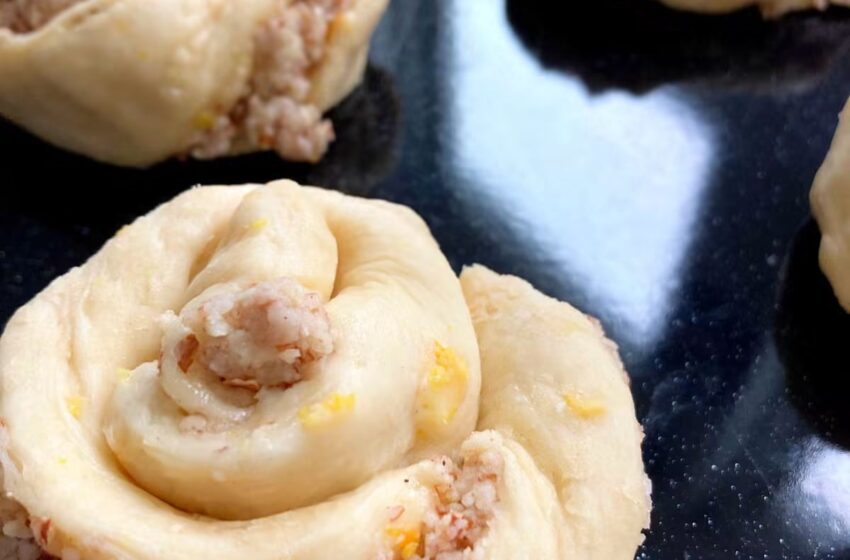
What separates this recipe from a standard, jelly-roll-style sweet roll is the deliberate folding and twisting of the dough. Rather than rolling the dough into a single large log and slicing it, the dough is folded in half over the almond filling, cut into thin strips, and individually twisted 4 to 5 times before being coiled into a spiral. This specific technique exposes more surface area to the heat of the oven, creating crispy, flaky, caramelized edges on the outside of the twist while keeping the enclosed center incredibly soft. The twisting motion also actively binds the buttery almond filling directly into the structure of the dough.
Why the Mid-Bake Glaze Plays Such an Important Role
With a pastry built on a delicate almond and orange flavor profile, dumping a thick, heavy icing over the top after baking would completely mute the nuances of the dough. Brushing a simple mixture of orange juice and powdered sugar over the rolls during the final three minutes of baking solves that problem efficiently. Returning the glazed rolls to the hot oven caramelizes the sugars in the juice, creating a thin, shiny, lacquered crust that seals in the interior moisture without overpowering the pastry with pure sugar.
The Recipe
Yield: 20 to 22 rolls Prep time: 2 hours (mostly inactive rising time) Cook time: 12 to 17 minutes
Ingredients
For the Dough:
- 4 to 4½ cups all-purpose flour, divided
- ½ cup granulated sugar
- 2 teaspoons kosher salt
- 2 teaspoons fresh orange zest (from about 1 to 2 oranges)
- 4½ teaspoons (2 packets) active dry yeast
- 1 cup whole milk
- ⅓ cup unsalted butter
- 1 large egg, at room temperature
For the Filling:
- 1 cup powdered sugar
- ⅓ cup unsalted butter, thoroughly softened
- 1 cup finely ground almonds (almond flour or meal)
- ½ teaspoon ground cinnamon
- ¼ teaspoon ground nutmeg
For the Glaze:
- 3 tablespoons powdered sugar
- ¼ cup fresh orange juice
Preparation
- Mix the yeast base. In a large mixing bowl or the bowl of a stand mixer, whisk together 2 cups of the all-purpose flour, the granulated sugar, salt, fresh orange zest, and the active dry yeast. Set aside.
- Warm the liquids. In a small saucepan over low heat, combine the whole milk and ⅓ cup of butter. Heat gently just until the butter is melted and the liquid is warm (about 110°F to 115°F). Do not let it get too hot, or it will kill the yeast.
- Form the dough. Pour the warm milk mixture into the dry flour mixture. Add the egg. Beat with an electric mixer on medium speed for 2 to 3 minutes. Switch to a wooden spoon (or a dough hook) and gradually stir in enough of the remaining 2 to 2½ cups of flour until a stiff dough forms.
- First rise. Knead the dough briefly until smooth. Place it in a lightly greased bowl, cover with a clean towel, and let it rise in a warm, draft-free place for 35 to 50 minutes, or until doubled in size.
- Prep the filling. While the dough rises, combine the powdered sugar, softened butter, ground almonds, cinnamon, and nutmeg in a small bowl. Mash together until a thick paste forms.
- Fold and fill. Punch down the risen dough. On a large, lightly floured surface (or a silicone baking mat), roll the dough into a 12×22-inch rectangle. Spread the almond filling evenly over the bottom lengthwise half of the rectangle. Fold the top half of the dough completely over the filling to enclose it (you will now have a 6×22-inch rectangle).
- Cut and twist. Use a bench scraper or a sharp knife to cut the dough crosswise into 1-inch strips, yielding about 20 to 22 short strips. Take each strip, twist it gently 4 or 5 times, and then coil it flat onto a parchment-lined baking sheet like a snail shell. Tuck the end underneath to secure it. (If any filling falls out during this process, simply scoop it up and drop it into the center of the coils).
- Second rise. Cover the baking sheets loosely and allow the shaped rolls to rise for 30 to 45 minutes until puffed.
- Bake. Preheat your oven to 375°F (190°C). Bake the rolls for 9 to 12 minutes until they begin to turn light golden brown.
- Glaze and finish. While the rolls are baking, whisk the orange juice and 3 tablespoons of powdered sugar together. Quickly remove the baking sheets from the oven, brush the tops of the rolls generously with the orange glaze, and return them to the oven to bake for 3 to 5 more minutes until deeply golden and lacquered. Serve warm.
Tips for the Best Results
- Use a bench scraper. A metal bench scraper is the ideal tool for cutting the folded dough into clean, even strips without dragging the filling out of the center.
- Don’t overheat the milk. When melting the butter into the milk, use a thermometer if you are unsure of the temperature. Anything above 120°F runs the risk of killing your yeast, which will result in dense, flat rolls.
- Embrace the mess. Twisting the filled dough is inherently messy, and the almond paste will try to escape. Work quickly, and remember that any exposed filling will simply toast and caramelize beautifully against the baking pan.
Serving Suggestions
For a presentation that honors the sophisticated, citrus-forward nature of this pastry, serve the rolls warm on a clean, light wood surface or a white marble board. Keep the styling beautifully simple with plain linen napkins, letting the bright, airy natural daylight catch the lacquered orange glaze on the twists. They pair exceptionally well with a strong, hot cup of black coffee or an Earl Grey tea, making them an ideal, elegant morning treat or a comforting afternoon snack.