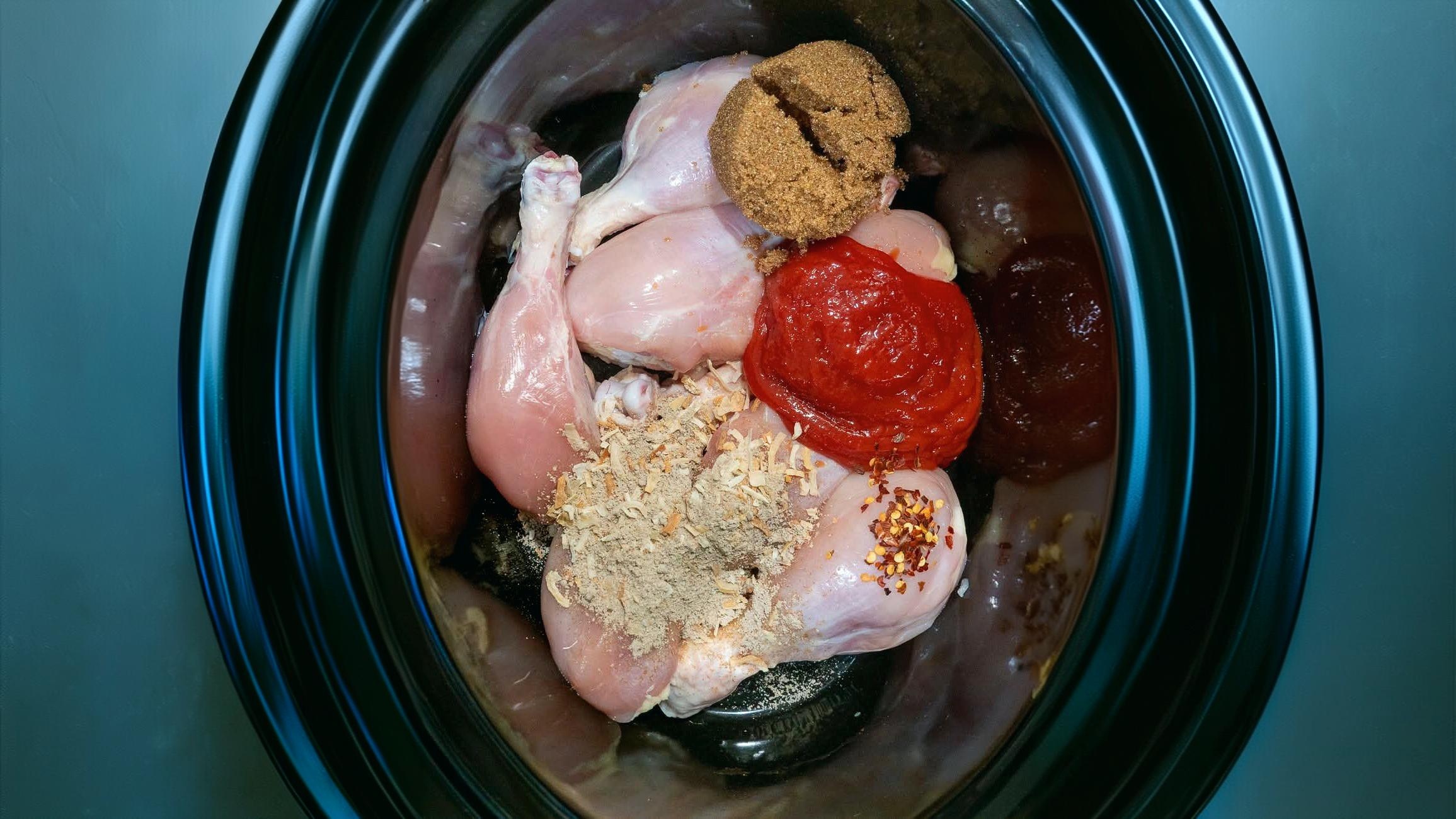
The Sticky, Sweet-Savory, Fall-Off-The-Bone Chicken That Proves the Slowest Dinners Require the Least Work From You
There is a paradox at the heart of slow cooker cooking that every experienced cook eventually discovers and comes to deeply appreciate: the meals that take the longest to cook are often the ones that demand the least from the person making them. Slow Cooker Hurry Chicken is a perfect expression of that paradox. Seven pantry ingredients, five minutes of active preparation, and then three to five hours of completely unattended cooking produce sticky, deeply glazed chicken with a sauce so well-balanced between sweet and savory — with just enough heat to keep every bite interesting — that it earns a permanent place in the weekly dinner rotation from the very first time it appears on the table.
The name is both a joke and a genuine philosophy. When dinner feels like a rush, the instinct is to reach for something fast. The wiser move, on the days when morning preparation is possible, is to reach for something slow that requires almost nothing from you — because nothing in the kitchen takes less active effort than a properly configured slow cooker.
🍗 The Chef’s Analysis: Seven Ingredients, Multiple Layers of Flavor Science
Understanding what each of these seven ingredients is actually contributing to the finished dish transforms a cook who follows this recipe into one who genuinely understands it — and who can adapt and improve it with confidence.
Bone-in chicken drumsticks or thighs, skin removed are the professional cook’s ideal cut for slow cooker braising, and the skin removal is a deliberate and important technique decision. Chicken skin cooked in a moist, enclosed environment — precisely what a slow cooker provides — does not render or crisp. Instead, it becomes rubbery and gelatinous, creating a barrier between the sauce and the meat that prevents the glaze from penetrating the surface where the flavor impact is greatest. Removing the skin before cooking allows the sauce direct contact with the meat’s surface, producing chicken that is seasoned and glazed throughout rather than simply beneath an unpleasant skin layer. The bone, however, remains — and its retention is equally deliberate. The collagen in the joint and connective tissue around the bone converts to gelatin over hours of low, moist heat, contributing a natural silkiness and body to the surrounding sauce that boneless chicken simply cannot provide.
Ketchup is the primary structural ingredient of the sauce, and it is performing considerably more sophisticated work than its humble label suggests. A properly made ketchup contains concentrated tomato solids rich in natural glutamates — the flavor compounds responsible for umami, the fifth taste — as well as vinegar for acidity, sugar for sweetness, and a proprietary spice blend that typically includes allspice, cloves, and cinnamon. In this sauce, the ketchup provides the tomato body that gives the glaze its viscosity, the acid that balances the brown sugar’s sweetness, and the spice complexity that makes the finished sauce taste more layered and developed than a three-ingredient preparation should.
Brown sugar contributes caramelization and depth that white sugar cannot replicate. Its molasses content — which gives it both its characteristic color and its complex, slightly bitter flavor — caramelizes during the long, low cook at a rate that produces toffee and caramel aromatic compounds that add genuine sophistication to the glaze. The interaction between the brown sugar’s molasses and the ketchup’s tomato acids during the extended slow cooker braise produces new flavor compounds through a process similar to the Maillard reaction — this is precisely why the combination tastes more complex than a simple sweet-and-sour sauce despite being built from such straightforward ingredients.
Worcestershire sauce is the umami amplifier in this recipe, and its contribution is significant despite its small quantity — just one tablespoon. Worcestershire contains fermented anchovies, tamarind, malt vinegar, molasses, onion, garlic, and spices, producing a concentrated, deeply complex condiment with an extraordinarily high glutamate content. Those glutamates reinforce the natural glutamates in the ketchup’s tomato solids and the onion soup mix’s dehydrated aromatics, creating a layered umami foundation that makes the finished sauce taste deeply savory in a way that simple seasoning could never achieve.
Red pepper flakes provide what professional cooks call background heat — a gentle, building warmth that does not announce itself immediately on the palate but makes itself known in the finish of each bite, providing complexity and keeping the sweetness of the brown sugar and ketchup from feeling one-dimensional. A quarter teaspoon is a moderate quantity — enough to be perceptible, not enough to be uncomfortable for most palates.
Dry onion soup mix is the ingredient that ties the sauce’s flavor profile together in a way that none of the other ingredients accomplish individually. Its dehydrated onion, beef extract, salt, and aromatic seasoning components hydrate and bloom over hours of slow cooking, infusing the sauce with a savory, onion-forward depth that gives the finished dish its characteristic “something extra” quality — the flavor note that people taste and cannot immediately identify but know they want more of.
Cornstarch whisked into water is the professional thickening technique at work here. Cornstarch mixed with cold water before being added to the sauce prevents the formation of lumps that would occur if it were added directly to the warm liquid, and its gelatinization at cooking temperatures produces a glossier, more translucent thickened sauce than flour-based thickening would achieve — precisely the quality needed for a sticky, lacquered glaze.
🌟 Why This Recipe Earns Permanent Rotation Status
- The Sauce Achieves a Perfect Sweet-Savory-Heat Balance: Ketchup’s acidity and tomato depth, brown sugar’s caramelizing sweetness, Worcestershire’s fermented umami, and red pepper’s background heat together produce a balance that professional sauce makers would recognize as genuinely well-constructed.
- Bone-In Chicken Contributes Gelatin to the Sauce: The collagen in drumsticks and thighs converts to gelatin over hours of low heat, giving the finished sauce a natural, silky body that makes it cling to the chicken in a way that boneless chicken preparations cannot replicate.
- Gluten-Free Without Any Modification: All seven ingredients are naturally gluten-free, making this an exceptionally accessible recipe for households with dietary restrictions.
- Five Minutes of Active Preparation: Whisk the sauce, coat the chicken, press a button — the entire active component of this dinner fits within a commercial break.
- The Optional Reduction Elevates It to Restaurant Quality: Simmering the cooking liquid after the chicken is done — a professional finishing technique called reduction — concentrates the flavors dramatically and produces a stickier, lacquered glaze that looks and tastes genuinely impressive.
🛒 What You Will Need
Servings: 6 | Equipment: Slow cooker (crockpot), mixing bowl, whisk
The Seven Core Ingredients — A Chef’s Detailed Notes
- 6–8 bone-in chicken drumsticks or thighs (about 3 lbs), skin removed — skin removal is non-negotiable for the best result. Thighs provide slightly more meat and a richer flavor due to their higher intramuscular fat content; drumsticks are more economical and produce an equally satisfying result. A combination of both is perfectly appropriate.
- 1 cup ketchup — choose a brand with a balanced sweet-to-acidic ratio and genuine tomato flavor. Avoid thin, watery ketchups that will produce a loose sauce, and avoid excessively sweet varieties that will tip the sauce’s balance toward cloying.
- ⅓ cup brown sugar, packed — packed measurement matters here since the density difference between packed and loosely measured brown sugar is significant. Dark brown sugar, with its higher molasses content, produces a deeper, more complex glaze; light brown sugar produces a more straightforward sweetness. Either works; the choice is a matter of preferred flavor intensity.
- 1 tablespoon Worcestershire sauce — a small quantity with an outsized flavor impact. Do not substitute with soy sauce — while both are fermented and umami-rich, Worcestershire’s complex spice blend and tamarind content contribute dimensions that soy sauce cannot replicate.
- ¼ teaspoon red pepper flakes — adjust to your household’s heat tolerance. Double for perceptible warmth throughout; omit entirely for a completely mild preparation suitable for children.
- 1 packet dry onion soup mix — whisk thoroughly into the sauce before adding to the slow cooker to ensure even distribution. Undissolved clumps of dry mix produce pockets of overseasoned sauce.
- ⅓ cup water + 1 tablespoon cornstarch — the cornstarch must be whisked into the cold water before being added to the sauce mixture. Adding cornstarch directly to a warm liquid produces lumps that are nearly impossible to eliminate.
👨🍳 Step-by-Step Method
Prep time: 5 minutes | Cook time: 5 hours on LOW or 3 hours on HIGH | Servings: 6
Step 1 — Build the Sauce
In a medium mixing bowl, combine the ketchup, brown sugar, Worcestershire sauce, red pepper flakes, and onion soup mix. Stir vigorously until the brown sugar is fully dissolved and the dry soup mix shows no visible lumps — the finished sauce should be uniformly deep reddish-brown, glossy, and thick.
Chef’s note: Take a moment to smell and taste the raw sauce before adding it to the slow cooker. What you are tasting is a preview of the finished dish’s flavor profile, still raw and unintegrated — sharp, sweet, and aggressively seasoned. After hours of slow cooking, these aggressive individual flavors will meld, soften, and integrate into the balanced, complex sauce the recipe promises. Understanding this transformation helps develop the intuitive cooking sense that distinguishes an experienced cook.
Step 2 — Add the Cornstarch Slurry
In a small separate bowl, whisk the cornstarch and cold water together until completely smooth with no visible starch granules remaining. Add this slurry to the sauce mixture and stir to combine thoroughly. The cornstarch will gelatinize during cooking, contributing the glossy thickness and clingy consistency that makes this sauce so visually and texturally appealing.
Chef’s note: Cold water is specified for the slurry for a specific culinary reason — cornstarch granules swell and gelatinize when heated, but if they encounter hot liquid before being fully dispersed in cold water, they gelatinize immediately on contact and form lumps rather than distributing evenly. The cold water slurry technique ensures every starch granule is fully suspended before heat is applied.
Step 3 — Prepare the Slow Cooker and Chicken
Coat the slow cooker insert with nonstick spray, paying attention to the sides where the caramelizing sauce will contact the surface. Remove the skin from all chicken pieces if not already done. Arrange the skinless chicken in the slow cooker in as close to a single layer as possible.
Chef’s note: For a significantly more developed flavor in the finished dish, consider searing the skinless chicken pieces in a hot, lightly oiled skillet for 2 to 3 minutes per side before adding them to the slow cooker. The Maillard reaction browning produced by this optional step generates flavor compounds that slow cooking cannot replicate — the difference in flavor depth between seared and unseared chicken is immediately detectable and meaningful.
Step 4 — Coat and Cook
Pour the sauce over the arranged chicken and turn each piece to ensure complete, even coating on all surfaces. Cover and cook on LOW for 5 hours or HIGH for 3 hours, until the chicken is fully cooked through and reaches an internal temperature of at least 165°F (74°C) in the thickest part away from the bone, and the meat pulls away from the bone with very gentle pressure.
Chef’s note: LOW is the preferred setting for everything this recipe is attempting to achieve. At LOW temperature, the collagen in the bone-in chicken converts more completely to gelatin, the caramelization of the brown sugar occurs more gradually and evenly, and the sauce’s flavors have more time to meld and integrate into something genuinely harmonious. HIGH produces a safe, fully cooked result in less time, but the quality of the sauce and the texture of the meat at the end of 5 hours on LOW is noticeably superior.
Step 5 — The Optional Reduction (Strongly Recommended)
Transfer the cooked chicken to a warm serving platter and tent loosely with foil. Pour the cooking liquid into a small saucepan and bring to a vigorous simmer over medium-high heat. Cook for 5 to 8 minutes, stirring frequently, until the sauce reduces by roughly one-third and reaches a consistency that coats the back of a spoon with a distinct, glossy layer. This professional finishing technique concentrates the flavors dramatically — the sauce becomes stickier, more intensely flavored, and lacquered in character. Brush or spoon it generously over the plated chicken.
Chef’s note: This optional reduction step is the single most impactful upgrade available to this recipe and requires only 8 additional minutes of active attention. The difference between sauce poured directly from the slow cooker and sauce that has been reduced on the stovetop is the difference between a good weeknight dinner and something that genuinely impresses. It is strongly recommended.
🍽️ Serving Suggestions and Storage
The sweet, sticky, deeply savory sauce demands something absorbent to showcase it fully. Fluffy steamed white rice is the most natural partner — its neutral flavor allows the complex sauce to take complete center stage, and each grain absorbs the glaze beautifully. Buttered egg noodles provide a rich, slightly eggy base that complements the sweet-savory sauce harmoniously. Mashed potatoes create the most comforting, satisfying plate, with the sauce pooling around the potato in a way that makes every bite deliver both starchy richness and sweet-savory intensity. Roasted vegetables — broccoli, Brussels sprouts, or green beans — provide the bitter, fresh contrast that cuts through the richness of the glaze and balances the plate both texturally and nutritionally.
Store cooled leftovers in a sealed container in the refrigerator for up to 4 days. The sauce thickens further as it cools — reheat gently over low heat with a small splash of water to restore its original consistency. The flavor improves overnight as the sauce continues to penetrate the chicken and the flavors deepen.
💡 Chef’s Variations and Professional Upgrades
Finish under the broiler for a lacquered crust: After the slow cooker cook is complete, arrange the chicken on a foil-lined baking sheet, brush generously with the reduced sauce, and broil for 3 to 4 minutes, watching carefully. The sugar in the sauce caramelizes rapidly under the broiler’s intense heat, producing a deeply colored, sticky, lacquered exterior that no amount of slow cooking can achieve — a technique borrowed directly from Chinese-American glazed chicken preparations.
Add pineapple for a tropical dimension: A half cup of drained crushed pineapple added with the sauce contributes natural sweetness, acidity from malic acid, and bromelain — an enzyme that actively tenderizes the chicken as it cooks. The result is noticeably more tender meat and a slightly tropical, more complex sauce.
Increase the heat with sriracha or chipotle: A tablespoon of sriracha replaces the red pepper flakes for a more immediate, vinegar-forward heat; a teaspoon of chipotle in adobo sauce adds smoky heat with depth — both are excellent upgrades for households that prefer more pronounced warmth.
🌟 A Final Word
Seven ingredients, five minutes of active preparation, and either three hours on HIGH or five hours on LOW — that is the complete and honest story behind chicken so sticky, so deeply glazed, and so well-balanced between sweet and savory and gently hot that it earns the weekly rotation slot it inevitably occupies after the first time it appears on the table.
The ketchup provides the tomato body and acidity. The brown sugar caramelizes into genuine complexity. The Worcestershire amplifies the umami foundation. The onion soup mix contributes the savory depth that makes people lean forward and ask what the flavor is. The cornstarch produces the gloss that makes the sauce cling and coat. And the bone-in chicken contributes the gelatin that gives the sauce its silk.
This is slow cooker cooking at its most intelligent — a hands-off method that produces a hands-on-worthy result, every single time.

