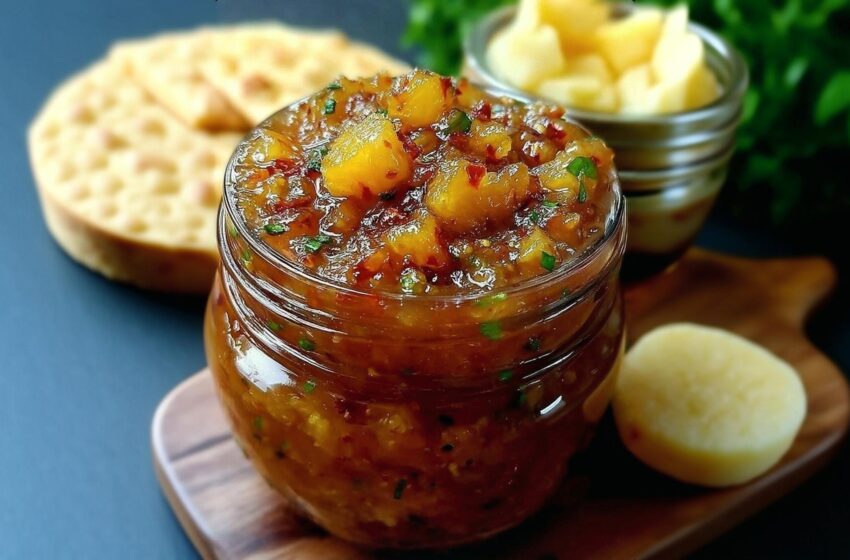
Bottled sweet chili sauce is a pantry staple in a lot of kitchens, but the homemade version has a real advantage over anything poured from a jar: fresh pineapple. This sweet chili pineapple sauce leans on real, ripe fruit rather than concentrate or purée, simmered down with fresh chili, garlic, and ginger into a glossy, tropical condiment that’s noticeably brighter and more nuanced than most commercial versions. It comes together in one saucepan, keeps well in the refrigerator, and works across a genuinely wide range of dishes — from a glaze for grilled chicken to a dipping sauce for spring rolls.
Why Fresh Pineapple Makes Such a Difference
Using diced fresh pineapple, rather than canned or juice-based alternatives, changes both the texture and depth of this sauce. Fresh pineapple carries natural enzymes and a bright, slightly tart edge alongside its sweetness — qualities that soften and mellow as the fruit simmers, but still contribute a more complex, layered sweetness than the more one-dimensional sugariness of canned pineapple, which has typically already been packed in syrup and cooked once during processing.
As the pineapple simmers alongside the other ingredients, it breaks down considerably, releasing its natural juices directly into the sauce and building body without needing any thickener beyond a bit of continued reduction.
Why Chili Peppers Go In Fresh, Not as a Powder or Paste
Using fresh chopped chili peppers rather than chili powder or a pre-made paste gives this sauce a brighter, more immediate heat, along with a bit of fresh chili flavor that powdered forms lose during processing and storage. Because the heat level is entirely dependent on how many peppers go in — and whether the seeds, which carry much of a chili’s heat, are included or removed — this method also gives you direct control over spice level in a way a powder measured by the teaspoon doesn’t offer quite as intuitively.
Why the Sauce Gets Blended, Then Simmered Again
This recipe doesn’t stop once the pineapple has softened and the ingredients have melded — it goes a step further, blending the mixture until smooth (or to whatever chunkiness you prefer) and then returning it to the saucepan for a second simmer. That second stage matters for consistency. Blending breaks down the pineapple’s remaining texture into a more cohesive purée, but that purée is still relatively loose right out of the blender. A further simmer allows some of that liquid to reduce and evaporate, thickening the sauce into a proper glossy, clinging consistency rather than something thin and runny.
Why Rice Vinegar Is the Right Acid Choice
Rice vinegar brings a milder, slightly sweet acidity compared to more assertive vinegars like white distilled or apple cider vinegar. That gentler profile matters here, since the goal is a sauce where sweetness and heat are the dominant flavors, with acid playing a supporting role to brighten and balance rather than compete for attention. A sharper vinegar could easily throw off that balance, making the finished sauce taste more tart than tropical.
The Recipe
Course: Sauce
Cuisine: Global
Difficulty: Easy
Servings: 10
Prep time: 15 minutes
Cook time: 35 minutes
Ingredients
- 2 cups diced ripe pineapple
- 2–3 fresh chili peppers, chopped
- 1 cup brown sugar
- ½ cup rice vinegar
- 3 garlic cloves, minced
- 1 tablespoon grated ginger
- Salt and pepper, to taste
Directions
- Combine the ingredients. In a saucepan, combine the diced pineapple, chopped chili peppers, brown sugar, rice vinegar, minced garlic, and grated ginger.
- Season and simmer. Season with salt and pepper to taste. Bring to a simmer over medium heat.
- Cook down. Reduce the heat and let the sauce simmer for 20 to 25 minutes, stirring occasionally, until the pineapple has softened and the flavors have melded together.
- Cool slightly. Remove from heat and let the mixture cool slightly.
- Blend. Transfer to a blender and blend until smooth, or to your desired consistency for a chunkier sauce.
- Thicken. Return the blended sauce to the saucepan and simmer for an additional 5 to 10 minutes to thicken.
- Cool and store. Remove from heat and let the sauce cool before transferring it to a jar or airtight container for storage.
Tips for the Best Results
- Use genuinely ripe pineapple. Underripe fruit lacks the natural sweetness this sauce depends on, and using it can leave the finished sauce tasting flat or overly tart.
- Adjust the chili peppers to your spice tolerance. More peppers, or leaving the seeds in, increases the heat considerably; removing seeds and using fewer peppers keeps things milder.
- Strain the sauce for a smoother texture, if desired. After blending, passing the sauce through a fine strainer removes any remaining fibrous bits from the pineapple.
- Don’t rush the second simmer. This is what thickens the sauce into a proper glaze-like consistency rather than something thin and watery.
- Store in the refrigerator for optimal freshness. The sauce keeps well for up to two weeks when properly stored.
Variations Worth Trying
- Swap the sweetener. Honey can replace brown sugar for a different sweetness profile.
- Add umami depth. A splash of soy sauce introduces a savory note that rounds out the sweetness and heat.
- Add fresh herbs. Finely chopped cilantro stirred in after cooking adds a bright, herbal note.
- Add citrus. A hint of lime juice brightens the sauce with a citrusy edge.
Serving Suggestions
This sauce is genuinely versatile across both sweet and savory applications. Drizzled over grilled chicken or shrimp, it works as a sweet-and-spicy glaze. Used as a dipping sauce for spring rolls or dumplings, it adds an exotic contrast. Brushed onto roasted vegetables before serving, it adds a burst of tropical flavor, and mixed with mayonnaise, it becomes a flavorful aioli for sandwiches or wraps.
Frequently Asked Questions
Can I adjust the spiciness?
Yes — control the heat by adding more or fewer chili peppers, and remove the seeds before adding them for a milder version.
Is this sauce suitable for canning?
It’s best enjoyed fresh, though it can be preserved by following proper canning procedures for longer-term storage.
Can I freeze it?
Yes — freeze in airtight containers for up to three months, thawing in the refrigerator before use.
What dishes pair well with it?
This sauce complements grilled meats, seafood, stir-fries, and even works as a topping for desserts like ice cream or pancakes.
Why This Sauce Is Worth Making From Scratch
Homemade condiments earn their place in a kitchen when they genuinely outperform the store-bought version, and this one does exactly that. Fresh pineapple, real chili peppers, and a bit of patience during the simmering and blending process produce a sauce with more depth, brightness, and balance than most bottled alternatives can offer. Once you’ve made a batch, it’s easy to see why so many people keep coming back to it as their go-to condiment for grilling, dipping, and everything in between.

